 Subject: Cup of tea - PEP BB foraging.sand.tea
|
|
| I made dandelion tea. I used the smaller leaves and cut off most of the spines. It's okay, but milder than I expected; better with a spoonful of honey. I'm going to try the dandelion root tea next. | |

|
Subject: Cup of tea - PEP BB foraging.sand.tea
|
|
| Out for a swim at the quarry today and thought I would get some wild strawberry leaves for a cuppa once I got home. | |
|
Subject: Cup of tea - PEP BB foraging.sand.tea
|
|
| I collected some wild strawberry leaves for me tea. I would never have thought to try it. | |
|
Subject: Cup of tea - PEP BB foraging.sand.tea
|
|
Our rose hips are just starting to turn red. Today I was able to gather enough for a cup of tea.
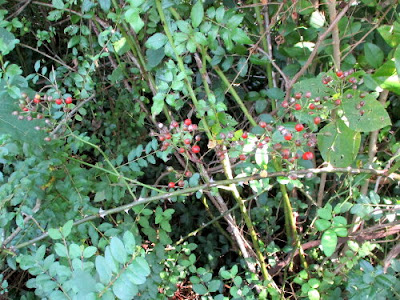 Wild rose hips 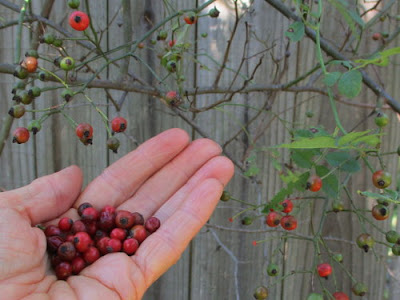 Enough rose hips for a cup of tea. 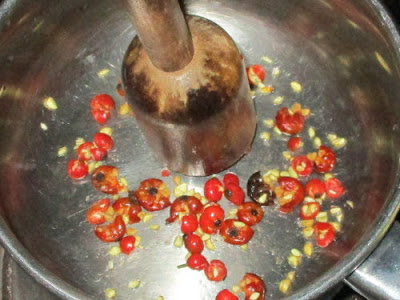 Bruising the hips to release the flavor. 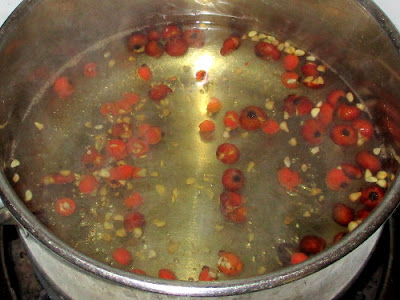 Small handful of hips to one pint water, simmered for 15 minutes. 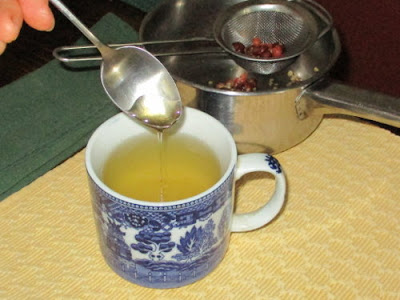 Rose hip tea with a drizzle of honey. |
|
|
Subject: Cup of tea - PEP BB foraging.sand.tea
|
|
|
Thanks, but I'm def gonna work on this further. Just cleaning the spruce tips wasn't enough. But boiling them will ruin the nutrition.
I think I might have to try and mash them in something, then put that in the water. |
|
|
Subject: Cup of tea - PEP BB foraging.sand.tea
|
|
|
After having read the list of allowed plants, despairing that I couldn't find any in the local state park, I went out looking for Spruce.
Blue Spruce in particular, is very distinct from other spruces and pines, and very distinct from Yew and other toxic trees. Nice thing about Blue Spruce is the entire tree is edible. Bark, cambium, 'fruit', and the boughs themselves. It was even used by the US Army back in the 1800s, as part of their rations. https://youtu.be/RgLC_DRd2cg |
|
|
Subject: Cup of tea - PEP BB foraging.sand.tea
|
|
This is Colorado in early fall, so some of these plants aren't common on the prairie. But I found something just as nice.

Moonshine Yarrow and some common Milkweed. It looks like a Datura, and is a distant relative. 
Here they are with the aromatics remove from the stalk, seeds removed from the pods, since it's mostly fluff to help the seeds spread. 
The usual suspects. Distilled water and a nice, heavily used kettle. 
And here they are steeping in the pot. I've got a cup in hand right now. So, I added some sugar and a bit of apple cider vinegar. Milkweed is somewhat toxic, so I added a small amount of the seeds. Milkweed, like most datura relatives, can interfere with heart function in high doses. This takes the form of lower blood pressure, and potential arrhythmic heartbeat. In smaller doses, it does help to calm and regulate the bowels. Supposedly. |
|
|
Subject: Cup of tea - PEP BB foraging.sand.tea
|
|
A little morning walk alongside the water, before the sun became too hot. To pick some herbs for a cup of 'morning tea'.

Stinging nettles, plenty of them 
Picked some tops of nettles for my tea 
Yarrow grows at the other side of the path, higher and dryer 
Mint grows very close to the water (when the water is higher it even grows in the water) 
All herbs gathered 
Give them a short boil. Then wait for a few minutes 
Pour in the tea mug through a tea strainer 
A nice cup of morning tea! |
|
|
Subject: PEP BB foraging.sand.tea - cup of tea
|
|
If you don't know the difference between pine and yew after a foraging course ... it wasn't a good course! |
|