SEPP = Seriously Excited about Permaculture Pampering
BEER = Better Extreme Early Retirement
TL = The Land
(bonus round) LSMFT = Lucky Strike Means Fine Tobacco. Does no one recall 1960s television commercials, where every other one was for cigarettes?
Richard Nurac wrote: I use the wood chips as a weed barrier but first place cardboard or newspapers down to block the sunlight and, incidentally, to prevent the woodchips mixing with the soil and draining nitrogen.
Paper, is made of wood pulp, so it draws the nanoscopic amount of nitrogen that wood chips will. I wrote about the nitrogen miss information, surface losses of nitrogen when wood touches the soil is not enough to be concerned about when compared to the benefits they add.
Howdy,
Whether you love or hate kudzu, it is an amazing plant. One I've personally used for food and medicine. Unfortunately, like so many other things, the quality has dropped while the price has risen. A few (several?) years ago, my income became less stable and I had to stop buying it. I fully intended on growing it, though I couldn't find plants for sale at the time, and then other things distracted me for a while. I really *really* really want this plant back in my life. It seems absurd that it should cost so much to purchase considering the cost so many spend to try and eradicate it.
So... before I once again consider growing my own, I thought I'd try this:
Perhaps someone would like a hand manually removing some from their property? Is there anyone that 1) has kudzu, 2) doesn't want it/has more than they want, 3) doesn't poison it, 4) would like/be okay with me harvesting the roots, 5) lives near-ish to me? That last one is probably the trickiest, but ya never know.
Feel free to ask stuff, make comments, etc either here or via the purple moose.
Yikes! I visited this thread a couple weeks ago and decided not to post since the thread seemed dead. Now, BOOM! It's alive again!
The original post wanted to assemble a minimum cost 3 month "just in case" food supply to tide one over in an emergency. In a later post the author mentioned that he hoped to keep the cost under $200. Pretty easy in those days since 3 months of rice and beans would have cost less than $50. It can still be done for under $100.
That post was made in 2011 and in the intervening years, food costs have risen by over 50% with a good fraction of that happening over the last year or so. By comparison, the price of gold at the end of 2011 was about $1,550/ounce (admittedly a bad year to buy gold). Today it is selling for about $1,800/ounce. Only a 16% increase. Rice and beans as an investment outperformed gold by a margin of nearly 3 to 1!
Food inflation is projected to continue rising steeply over the next year or two so whatever you can buy now will end up saving money over time.
I suggest that food storage be considered an investment, not a cost. If you want a 3 month emergency food cushion, dip into your savings NOW and buy 3 months worth of items that you are already eating with a 3 month or greater shelf life, then rotate as you buy more to keep them fresh. These days food inflation pays better dividends than most standard investments.
Just a little protip: with extra sweet vegetable ferments (carrots and beets, but also ginger bugs), the natural wild process sometimes produces a bunch of dextran a week or two into the fermentation. Dextran is this thick viscous sugar compound that's reminiscent of mucous and really off-putting. Many people can't handle pulling food out of it and eating, just because of the snottiness. But take heart! It's pretty common for your microbes to just metabolize the dextran away if you give it another week or two. So, if you get snotty beets, don't freak out, just leave it alone and try later.
Bought gallon container of Cole slaw dressing . Can it be broken down in pint jars and be canned? How long is process time if water bath or pressure canning?
Dan Fish wrote:I have a little chain mail looking scrubber that works great for cast iron. Somewhere at least...
I have one of those too. Two, actually, one is a larger mesh and the other is finer (like the one pictured). I use the fine one dry sometimes on my cast iron. It also works really well on stainless steel pots and pans.
My fig tree produces pretty bland figs too. We do eat them fresh or I make fresh fig cake, which is tasty. Where we really like them, is in mixed fruit jam.
Fig & Orange Jam
3 cups crushed figs
1 cup water
1/4 cup lemon juice
1 whole orange finely chopped
1 tsp cinnamon
4 cups sugar
1/3 C (rounded) bulk low sugar pectin
Combine figs, orange, lemon juice, and water. Simmer until the orange peel is tender. Meanwhile mix pectin with about 1/4 cup sugar. Stir pectin and cinnamon into the figs and bring to a boil. Add sugar and bring to a boil again. Pour into sterile pint jars, cap, and process in boiling water bath for 15 minutes.
orange and fig jam on biscuits
Two other really yummy combinations for jam are fig and apricot, and fig and cranberry. The fig-cranberry combination tastes a lot like strawberry jam!
cranberry fig jam
While I was digging around for recipes, I found the cake recipe. Bland figs are fine for this cake.
fresh fig cake
1 heaping cup fresh figs - halved or quartered
1/2 C butter, softened
1 C sugar
1/4 C honey
2 eggs
2 C flour
1 tsp baking powder
1/2 tsp baking soda
1 tsp ground ginger
1 tsp vanilla
Preheat oven to 350°F (180°C). Cream butter & sugar. Beat in eggs. Mix together dry ingredients and gradually beat into batter. Add vanilla. Fold in figs. Pour into prepared bundt or tube pan. Bake about 50 minutes or until toothpick comes out clean. Cool 15 minutes before turning out of pan.
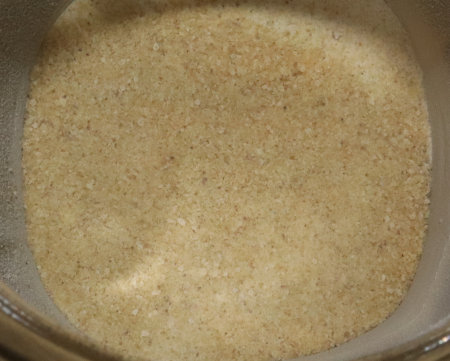
In a large glass or plastic container, dissolve the yeast in warm water. Stir in the flour and sugar, mix until smooth. (DO NOT USE A METAL SPOON)! Cover loosely and store in a warm place overnight.
The next day, stir and refrigerate.
Stir once each day for the next four days. On the fifth day, stir, then divide in half. Give half away with feeding instructions.
Feed starter with 1/2 cup white sugar, 1 cup flour, and 1 cup milk. Stir until smooth. Cover and place in refrigerator. Stir once each day for next four days.
On the tenth day feed again with 1/2 cup white sugar, 1 cup flour, and 1 cup milk. Return to refrigerator and stir once each day for the next four days.
On the fifteenth day it is ready to be used for baking. Reserve one cup of the starter in the refrigerator and continue to follow the stir and feed cycle (Stir once a day for four days, stir and feed on the fifth day, ready for use on the tenth day.)
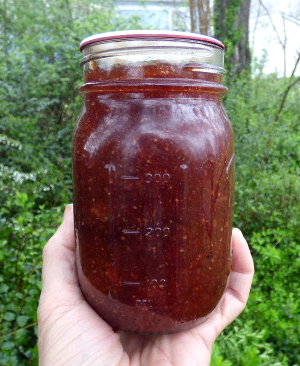
The Friendship Cake Starter is the red liquid in the jar in the picture with several cakes.
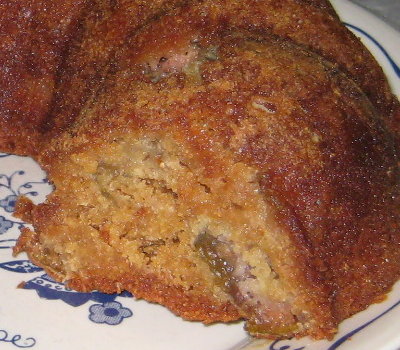
As everyone can see from the pictures, we are talking about two different cakes. Although both are called "Friendship Cakes".
As everyone can see from these pictures the Herman Cake is more like a "sourdough cake" and the Friendship Cake like the recipes I posted above is more like a 'brandy cake".
Since I have never had or seen a Herman Cake, I am sure it is equally as good as what I know as a Friendship Cake.
From the pictures above the Herman Cake looks like a much darker richer cake, at least to me.
I would love to make and taste one, I just don't feel that either cake is something I can do in the near future...
At the very least this thread has turned into a really fun learning experience.
Diego de la Vega wrote:Does anyone here make money? This is a very blunt question, but let me be more specific. Does anyone here make enough money on their agriculture (permaculture) sales to support themselves (pay bills, mortgage, clothing, electric, etc).
Diego
I have a similar question, but the only real reason I need money right now is to pay off my student loans from my previous college degree. I borrowed way too much money (about $75,000) and now the loan sharks are after me. I am disappointed that so many employers demand 7-8 hours work days with no weekend time off. With my current living arrangement, I need to set aside more time for planting and harvesting during some parts of the year than others, so an eight hour work day is unsuitable for me to have a proper maintenance schedule for plant and animal care that is alligned with the seasons. This is especially a problem during later Fall and Winter when the sun sets earlier than 5:00 PM in my region and I still have some cold weather crops in the ground that I need to harvest after sunset.
Wow Kate, I loved your post! I guess I will leave some of my quinces outside for a few days until I can deal with all the ones already inside.
I made the “Quince and Butternut Squash Soup with Curry” recipe from “Simply Quince” and it was really good! The baby loved eating some today! I also made the “Quintessential Quince Paste” and hoping to give some of it out as Christmas/Thanksgiving gifts.
ripon hassan wrote:Here in India, there is popular traditional dessert called jalebi is made by using this lacto - fermentation method.
Yoghurt is mix with all purpose flour and make a dough by adding little water. Cover and keep overnight at room temperature
Hi Ripon, I found your recipe and would like to ask.
Your dough - how wet or hard is it when you leave it overnight? You do not really give any measurements, and for somebody with no experience in your dishes it is hard to follow.
Hi , I did multi layers of cardboard and thick mulch.
Once the cardboard breaks down the cooch thrives.
Sits dormant waiting to hit the sun.
One year max in Victoria Australia and it's running rampant again.
Only way is to dig it out..I'm doing it now.
Nightmare job actually easier on areas I didn't mulch so much as it tends to grow along the top of the clay.
But in the thick mulched areas it's a bohemeth running all over the place thick white roots like spaghetti.
I sheet mulch every 3 years.
No grass property just natives and mulch.
Prob ok if a food forest but in my vege patch it just keeps popping up.
Dig it up and even then any bits left behind will take off.
Good luck ..hard yards = more fun.
Well I've got lots quite a few apples this year for the first time. My crabapples actually turned out to be nice sweet ones, a bit small for easy eating! But I got an unexpected yield from a tree that I thought would never crop here (it was the first tree I successfully grafted so had sentimental value to me). I think when properly ripe, they would be a nice crisp apple like a Egremont russet, these are not quite there, although may ripen a bit in storage. Many are rather damaged (the mice here like to climb trees!) so I have quite a few to use that won't keep for long. I think making a pectin extract could be a good plan thank you Leigh!
I hate the stuff, but I have to wear it along with a hat and long pants/sleeves. I burn too easily, and with progressive sun damage the burns are potentially a health hazard. So pass the "barbecue sauce" ...
Hi Steve, I was researching Spanish Broom as a nitrogen fixer as it grows everywhere here and I came across this old post of yours. Did you use it amongst your fruit trees or olives in the end? What did you discover? Any helpful tips? Many thanks.
You might consider looking into the history of wheelbarrows, which have been around in the West since at least 1220, and in China about a thousand years earlier than that; they were necessarily made out of wood.
I never have been able to figure out what an actual hippie was, or is. Maybe an "old Hippie" is something many might agree on, but it is still nebuous. So. back in the day, we called ourselves FREAKS man. Always been a FREAK. Lost out on some things because of that, but I never regretted not adhering to mainstream, not conforming, or doing it my way.
I have a knockout rose that I have had for years in zone 5. I have literally not watered it or fertilized it in at least 5 years & I chop it to the ground in fall because it is so ugly then. It comes back big & beautiful. So roses might be a good idea.
Red, it's an excellent question. And welcome aboard!
As much as I love dutch/white clover, I'm trying to get my hands on some microclover. I want something low growing and low maintenance for my fire breaks.
We would appreciate your input if/when you give this a try.
I heard there has been some talk within the USDA and FTC about actually trying to fully define "sustainable" for food and other products. It's a word being used a lot in marketing but without definition it can become an empty marketing term. Perhaps incorporating many permaculture principles and practices into this definition could be helpful in making permaculture more attractive to all growers. Certifications like that can come with a whole lot of paperwork, time and extra expense though.
Maya Rapp wrote:I absolutely despise peat pots. I always end up having to peel them off the plant/soil. I've tried using them in my grow shelves, and they just get slimy and disgusting. It's been my experience that the plant roots just won't grow through the darned things. My husband bought a bunch, and I had to ask him never to buy them again. The ones I have used, I peel them off the plant, bust them up into little pieces, and put them in my potting soil. I have better luck with crappy potting soil with too much wood products in them than I have trying to start plants in peat pots.
I kind of agree and disagree. They do have a tendency to fall apart if they are too wet, especially when it comes time to handle them. If they are slimy, there is something else going on. Now a days, many peat pots are paper pots sold as peat pots, so you have to watch out for that. I'm 60 and have never encountered a slimy peat pot, wet and cool, yes, slimy, never. Letting the pots dry a little before you water again is helpful because the dried pot "air prunes" the roots and the roots will not penetrate most of the time due to the lack of water. Planting in peat pots a little bigger than you think is necessary is also a good idea because it allows for more root growth. I think the plastic potting trays are a lot easier to handle but they are not as plant friendly, especially if the plants are left in them too long before transplanting which results in root binding. Its all give and take, so don't despair.
"Flower-rich semi-natural grasslands are home to many butterflies" (gorgeous picture...)
Why have grass when you can plant a meadow habitat for the little guys (bugs, butterflies and other visitors)?
Consider, butterflies are not just beautiful, and pollinators and endangered, they are small angelic beings that bless our spaces with their healing presence.
Maybe it is time we stopped considering everything as though it owes us something for being allowed to be present in our lives. We might learn something unexpected and humbling. Love from New Zealand!
ted agens wrote: I have been told by "old timers" to not prune in the spring as it could cause rot and other issues. Of course it could be different for you in Texas (I ma in NCentral PA)
Yes, yes, yes, and especially YES!!!
The effects of pruning and the level of cambium activity are directly correlated.
The cambium layer is at its highest level of activity from early Spring to mid Summer (climate dependent). Buds become active and growth is vigorous during this period. Apical dominance directs most growth, but not all growth, to the shoot tip. Cutting off the shoot tip during this period will induce buds further down the shoot to start growing - many of them! Water sprouts will form readily. But, an active cambium means the cuts will heal quickly. Also, the "Spring wood" of this year's growth ring forms by cambium activity.
Cambial activity slows greatly in mid Summer to early Fall (climate dependent). In mid Summer, the level of cambium activity decreases, but the cambium does not become inactive. Growth of shoots slows and almost stops, and this year's buds start to harden for dormancy. The "Summer wood" of this year's growth ring forms by cambium activity during this period. To me, this is the best time to prune: dry weather, rapid healing, less rampant growth of water sprouts (cutting off water sprouts also means more cuts exposed to disease), etc.
During Winter, there is no cambial activity (an active cambium would be producing new cells which are highly vulnerable to death by freezing) and the tree remains dormant waiting for the warmer weather of Spring to start a flush of new growth.
So, pruning in Winter is, in at least one way, like pruning in Spring with regard to the eager growth of water sprouts as the tree is just waiting a bit longer to start growth with cabium activity renewal in the warmer weather of Spring.
In a medium saucepan, combine water, butter and seasoning mix.
Bring to a boil over medium-high heat; reduce heat to medium and simmer for approximately 5 minutes.
Stir in bread cubes and cook 1 to 2 minutes or until liquid is absorbed, stirring and fluffing with a fork.
Cover; remove from heat and let stand for 5 minutes before serving.
After the stuffing was done I put the version steak on the George Forman Grill just to brown the meat. I put the browned venison steak on top of the stuffing. Then I poured some gravy over the steak. I cooked the covered casserole at 350' for about 45 min.




:max_bytes(150000):strip_icc():format(webp)/895963-e772e7134ab64e88b8033c6b7da0093e.jpg)


:max_bytes(150000):strip_icc():format(webp)/1042293-f6bc5a40ee1d481b881bedae373e0458.jpg)