J Bentley

+ Follow
since Dec 03, 2022
Merit badge: bb list bbv list
For More
Apples and Likes
Apples
Total received
In last 30 days
4
Forums and Threads

Recent posts by J Bentley

Hello - I looked through the forums and did not find much information about raising trout. (Should this be in a different thread?) My family rarely eats fish, even though we enjoy it. Local farmed trout is now selling for $15/lb, and it tends to be fed with fish meal pellets made from depleted ocean stock. Our local wild fish populations are under pressure like their counterparts in the ocean, especially since local hatcheries were damaged by Hurricane Helene in 2024. And those hatchery-raised rainbow trout in the rivers were fed with.... ocean stock.

So what about small-scale farming? Neighbors have done this with some success. They used cat food or commercial trout feed, and one of them raised enough to sell fish at a local farmer's market. He eventually burned out from the ATM (aggravation, time, and money) associated with raising and processing trout for sale, and he let his ponds go. "Throwing chum in a bucket -- that's what I did every Friday night for 2 years." The other neighbor had a water line failure that killed his trout years ago, and he has not restarted the pond. My goal would be raising enough for 1 trout meal a week, hopefully with some extra to share.

There is an existing excavation for a pond and a dependable water source on our property. I would need to clean out the depression (no pun intended), place a drain, put in underlayment and EPDM liner, and add a relatively short water inlet from existing spring overflow. The cost would be maybe US $600 plus a lot of time and effort, plus buying fingerlings. One question that remains is what to feed trout. There are plant-based feeds, soldier fly larvae, and other options. Those feeds are likely more expensive, but my thought is it would still be cheaper than paying $10-15/lb at the store. And more importantly, we could be contributing to our local food supply and supporting sustainable feed producers. We acknowledge that eating meat/fish generally represents a higher resource footprint than plant-based foods, and we recognize it requires killing things, but we personally tend to function better if we eat some meat.

So maybe this could be a way to stay fed even if food prices continued to go up. And not feel so much like a planet wrecker. And still be able to have some fun on Friday nights.

Maybe?
Thank you for sharing thoughts about harvesting plentiful resources (lawn clippings, cardboard, etc.) and being able to flex and let go of plans that don't seem to bear fruit. And as you also remind us, community connections are another important cultivar that can help us thrive.
     Our mountainous Zone 4 area has a lot of oaks -- not too much Phytophthora blight here yet... :^/ Our house and garden spots are tucked into a little keyhole in the tree canopy. The trees thrive to the extent that every few years we have to hire a crew to remove large limbs or sometimes completely remove trees around the house. The cost for the tree work seems to double every time, but we use the wood to heat our house, cook food, mulch beds, build structures, and grow shiitake. The added sunlight helps gardens grow and provides solar PV and thermal input. Some of our neighbors are skilled hunters, and with the ongoing surge in our local deer population, they have been giving us a couple of whole deer every year. We take shiitake and berries over to them, and so it's like the oaks are also providing us with a super delicious, locally sourced, organic, free-range protein source that might otherwise be eating our garden.
     Multiple mention of acorns in this thread have made me wonder about those too. On one hand, it seems like a lot of precious time would be needed for gathering acorns, shelling and soaking them, and then figuring out how to prepare them. But maybe that is part of what we are trying to learn - investing time and effort now so that we can be healthier members of healthier communities. This fall the squirrels may have even more opportunities to bark and throw things at me from the limbs overhead. I just did a family survey about eating acorns, and the consensus reply was, "I would try one..." :^)

PS: The historical egg price info was fascinating.

"And you, of tender years,
Can't know the fears
that your elders grew by"
Thanks for all the thoughtul and heartfelt input on food stability and life skills in this thread. Food is indeed getting more expensive, and I often wonder how people without gardens and with limited income are managing.
     People like my grandparents grew up in subsistence farming families in the US Midwest in the early 1900s. They and others in their generation managed to not only raise families and feed others during the Great Depression but also promote engineering, compose world-changing music, persist through WW2, and contribute to many other impressive accomplishments of humankind during their era. Many of them worked day jobs and then procured impressive amounts of food in their "free time." How did they do it?
    Nowadays, many of us do our best to provide some token amount of self-produced food while still relying on the mainstream food supply system for most of our needs. We may struggle with the trade-off between working for pay and paying for things we can't do because we are working. How expensive would food and other things need to be before we would stay home more to cultivate food? What crops and techniquies could help make that easier? Paul and others have been promoting answers, and for that I am thankful.
    In my limited attempts at permaculture homesteading in the Smoky Mountains area of the US, I have seen that nature sometimes shows us what to do. For example, we thought a perennial asparagus plot would improve our quality of life and reduce imports from distant places. We planted aspraragus crowns in raised beds and watched the young plants grow. But as the plants developed, chipmunks and who-knows-what-else ate our our precious asparagus before we could get to it. I devoted an embarrassing amount of time and effort trying to protect the plants from predation, but working a full-time job put me at a major disadvantage. I was no match for the other asparagus lovers.
    After several years of minimal asparagus harvests, we noticed that the raspberries from the bed next door were steadily marching uphill. The rasperries have since taken over all the asparagus beds, and our raspberry harvest has increased significantly without much added input on our part. This unplanned crop transition took years, and things may change again as weather and biology shift. But we now have plentiful amounts of a delicious, preservable, volunteer fruit that that costs frightening amounts in our local store. We buy asparagus sparingly (spearingly? ha ha) and miss our fresh garden spears, but I no longer feel as hostile towards chipmunks, and I think my serum cortisol levels have improved. But even as I type this, one side of my upper lip is snarling... ;^)
    We also tried growing tomatoes, then corn, and then sweet potatoes in a damp bed near a small creek. None of those plants did well under my care in that location. Then we rescued some multicolored potatoes that had become soft and grown eyes in the back of someone's refrigerator. I stuck them in that "cursed" bed 3 years ago, and ever since we have harvested buckets of tasty potatoes without doing much extra work. There also seems to be a squash volunteer that pops up there every spring. We train the vines away from the parking spot next to the bed, and in the fall we usually get 2-3 big keeper squash.
    Apparently I am slowly reinventing the wheel that my grandparents had already internalized and mastered. Trial and error takes time. Do we have enough time?
Cheers!
Hello - we live in the Smoky Mountains area of North Carolina. 4 years ago we installed 8 rooftop solar panels, MPPT controller, 48v inverter, and 6 repurposed lithium batteries. The install happened after years and countless hours of research, planning, learning, saving, etc. We didn't plan for it to be a DIY install, but pro installers said our site would not support solar. They had trucks, advertising, and a HR department to fund, and they were scrambling for low-hanging fruit -- prime grid-tie solar sites with big price tags. One pro suggested we needed "a man in a van" to help us. It took about a year to find that person, an electrician and solar expert who was also very busy and had to drive 90 minutes each way to our home for some crucial installation steps that were beyond my abilities. He also allowed us to get the system permitted in our rural county.
    I made some mistakes in the design process, which we were able to fix with a little bit of additional equipment and a lot of research hours and tinkering. The 2500w system with 13kwh of batteries cost us about $12k, not including hundreds of hours of my time designing, researching, and installing. Despite lots of help on websites, I felt like we were reinventing the wheel for our mountainous, heavily wooded site. The system has helped us through several extended power outages, and we feel a sense of relief that the sun provides at least half of our electricity on average.
   A year later we added solar thermal for preheating hot water, thanks to Gary and others at builditsolar.com . Heating water had been our biggest electricity draw, and the solar thermal system has proven to be the best value, bang for buck. For about $3000, we get 100% of our hot water for a few months a year, and a nice boost the rest of the time. Right now the evacuated tubes are covered with snow, as are the PV panels, but somehow the drainback cycle has already run several times.
   In hindsight, the only big thing I would change would be our choice of inverter. The Schneider SW4048 has been robust so far, but I think it was misrepresented as a good choice for "self-consumption," a system that harnesses as much solar as possible with minimal grid support. Now I would choose a Victron Quattro inverter - even more expensive but far more appropriate for our situation.
   Spending $15k+ on renewable energy seems like a lot, and others have done better for far less money, but the decisions we made were the best we could manage at the time. We had a deadline for federal tax credits (which have since been reinstated per the IRA). Shifting from planning into action was exciting, terrifying, and more expensive than we had predicted. But I think it was worth it. Hopefully our kid will agree in the years to come. Like Neil Young told the crowd at the end of his set, "Do what you can, people!"

3 years ago
Thanks to all for your feedback. While it would seem great to use these coolers for something meaningful and permanent like a building foundation, it does make me nervous to think about tons of cordwood masonry resting on the foam and/or its filling. Even if the bottoms were cut off, making the coolers into a form for a filling with predictable compressive strength, there are still other concerns. The coolers are not Faswall and were not designed to be used in construction. It might make more sense to use them as infill, but there would still be the issue of properly protecting them from the elements, rodents, etc. And even then, would the coolers eventually become toxic or shorten the lifespan of the building? I like the thought of feeding the coolers to mealworms and then feeding the mealworms to trout or chickens, but it looks like current research isn't conclusive about potential toxicity. For now I will look the other way as I walk past the pile of unwanted coolers, which are sooner or later bound for a dumpster, a creek, or maybe even some other person's building project.
3 years ago
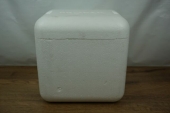
Hello, and thanks for the many good postings on this site. My workplace generates a steady stream of white foam coolers and freezer blocks used for shipping medications and vaccines. We try to give the coolers and blocks away, but they often go into the dumpster. The coolers are about 14"x11" and 10" tall without the lid. Corners are rounded, and the walls are about 2.5" thick. Liquids will eventually leach out if allowed to stay in the coolers. Has anyone tried using these like Faswall blocks, perhaps packed with sand and covered with lathe/mortar, cob, etc.? I'm thinking they would work better if the lids were left off. XPS and EPS are used under footing walls, but would the cooler foam have sufficient bearing strength to serve as a footing wall? They are a good length for the 12" cordwood log ends we have, and we wouldn't need to further insulate the foam footings. Thanks for any input, as there doesn't seem to be much information about this on the web.
3 years ago