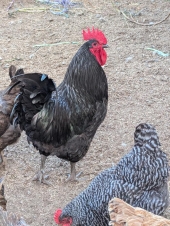
Schatzi Hall wrote:My rooster, Soupy, started to attack me, but then he got attacked by a fox and saved the hens. I brought him in the house and kept him alive, though that wasn’t easy. I had to stitch up his wounds. He finally made it back to the coop, but then mites and a very cold winter. He lost lots of feathers. He’s alive and crowing again and we are now best friends. I call him Super, now. Bad boy to great boy rooster! He’s tough!
greg mosser wrote:leaving heads behind is weird! brain is one of the most calorie-dense parts of the body. every time i’ve had raccoon predation problems, the heads are the first to go.
Jay Angler wrote:I have learned to trust momma birds. They seem to know when a baby isn't going to make it.
Anne Miller wrote:If the attack is at night cold be raccoons or weasels.
During the day it might be hawks or owls.
John Weiland wrote:
Abigail M Johnson wrote:....Make stew? We do eat roosters all the time but I am just seeing what others have as their rules. I have learned a lot on here by asking. Thanks guys!
Depends on how old he (.....was?...just hedging here....). If I'm going for whole-bird processing, then probably best to make a big pot of stew to tenderize meat. If mid-range to younger and rather skinny, you could just go for he legs and breast without full cleaning. Still cook out in water, but the meat is great in things like egg-rolls, enchiladas, etc. where some spicing may help the flavor. Yeah, it's a bit wasteful not cooking the carcass but that goes to the coyotes....who need to have Easter dinner as well!![]()
Carla Burke wrote:Personally, I would gently massage it into the correct position, as often as possible. I *might* straighten out on its own, but that's not been my experience.
Jay Angler wrote:
Abigail M Johnson wrote: And I was actually walking through the chicken yard to check on a brooder we had set up in a new place. So it was way different than what I am normally doing in the yard.
So for the future, having a "rooster first" routine before entering the area, where you call his name and say stuff he doesn't understand but reminds him you're friendly, may prevent a future rooster problem.
That said, a rooster that attacks from the rear and draws blood isn't likely to get a second chance from me either. My suggestions are more along the theory of learning how to prevent future problems and teaching kids how to stay safe around farm animals.