adamtheha Hatfield

+ Follow
since Sep 09, 2010
Merit badge: bb list bbv list
For More
Apples and Likes
Apples
Total received
In last 30 days
0
Forums and Threads

Recent posts by adamtheha Hatfield

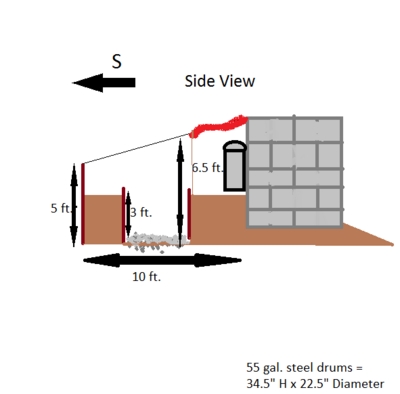
I tried something like this on a larger scale, I was actually trying to make a walipini, same idea as a trench greenhouse.  I had water infiltrating from below, and the surrounding soil immediately, and now the hole is full to the top...
If I were to do this again, I would either
1. build on a slope.  Channel the water over, and under with vapor barriers in the soil.  Some water would get in, and maybe a trench could be dug on the backside to catch that, and a pipe to channel it out.
2.  Go no more than 2 feet down, and create a gravel bed with piping running through it.  The warm air would be forced by a fan from the warm top, through the gravel, depositing it's heat for nighttime use.

Since I already have a flooded hole, #2 option looks better.  BTW, this is already being done, google "subterranean heating and cooling" for more info.
14 years ago
I would suggest a very thick layer of mulch over the root zone.  It will insulate the ground, and prevent early budding.  This is a common trick of growers here in Canada.
14 years ago
I don't think any of his demo's were air powered, at least he claims that they are steam operated.  The steam can't be seen because it's being recondensed and fed back to the boiler.  If he is using an air compressor, it would be a fraud!
14 years ago
IF you have a heated (or warmish) garage, the SVO should go straight into the tractor.  You could run a generator off the PTO and skip converting a separate generator.  Cold may not be good for SVO, but it is murder on batteries, and you would consume double the power to keep the batts warm. 
Running a genny to charge batteries works like this ~35% efficiency to produce the power, lose another 10% storing in the batteries, and another 10% converting back.  If you don't use the tractor for a month, subtract another 2-3% for self-discharge.
I don't know how much Veggie oil you have access to, but using it directly sounds way better to me!  You could just carry a spare can of oil with you into the field, and run the tractor all day long, but your batteries won't give you that.
14 years ago
I bought an 8 watt LED bulb, and put it on my outdoor socket.  I am amazed at how much light it gives, and the fact that the light is "warm", not that sterile white that I hate.  I plan to replace many of my CFLs with LEDs in the next year or so.  They are terrific for outdoors, you get instant light no matter what the weather!
14 years ago
If you're worried about both light and heat, why not plant things that require less of both?  Peas, carrots, lettuces, and spinach would be great winter crops, plus if you for whatever reason, can't light the stove on one night, some or most of your crops might live through a bit of frost.
What about running the vent pipe under the soil itself?  Put some insulation underneath to channel the heat upwards, and 12 inches of soil on top. I don't know if that would be too heavy, might need some bracing.  Dig into the ground, and build the stove a foot or two below grade to make running the vent easier.

Running vent through a cob wall would probably work ok, but my concern is this: heat rises, and the place it is needed the most is down at the soil level.  Having that heat in the wall would be ok, but I just think it would be MOST effective under the soil, keeping the roots warm, which is what a lot of plants like anyway.
You could easily dig it up and move it, but once you embed it in a wall, it's there for good!

14 years ago
If it were up to me, I would allow the house to cool quite a bit at night, but we have a baby, and I have a wife : ) so I get up to stoke the fire.
All of my wood is free, so I actually burn quite a bit.  I love the heat from a fire, and I'm a bit spoiled by it, especially when I visit city people with their houses at 68 degrees. 
None the less, I wear long-johns from October to April here in Canada, I don't think I could do my city job without them!
14 years ago
They are air powered, the air just has steam in it.  One of the videos shows steam escaping from vents, but the author says normally you would collect and recycle the steam (makes sense).
I get the feeling that you need to have some tight tolerances with these, particularly with the pistons, but watching the videos I fully understand the principle behind it's operation, and I firmly believe that it is sound and true, not faked.
I think that you would only get about 300-500 watts from the 2 piston engine, but over a 10-12 hour period that would add up.
I'm going to buy the plans, maybe by fall.  I will keep googling to see if there is anyone making or testing them in the meantime, and I will post my findings.

14 years ago
I came across this a few weeks ago
www.greensteamengine.com
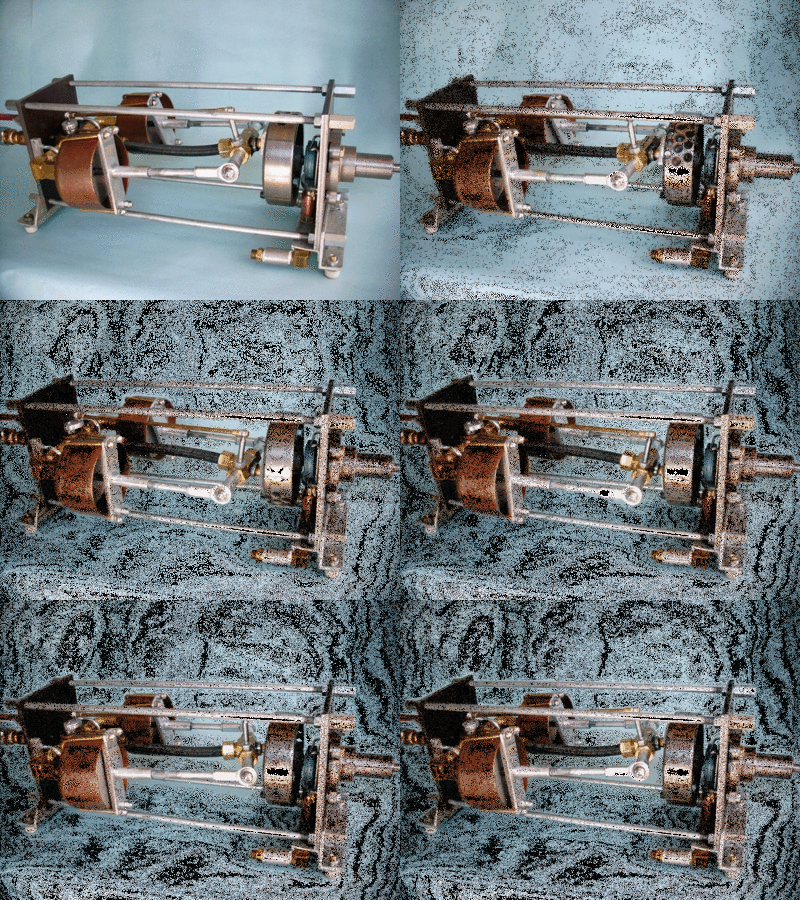
It's looks amazing, so simple, and they have videos of many different models running.
One problem, they don't offer the engine for sale, only the plans, and some hard to find parts.  The Youtube page hasn't been visited by the owner in 3 months, so I'm worried that I wouldn't actually get anything at all if I tried to buy the plans.

Has anyone talked to this guy, seen one of these engines, bought the plans, or anything like that?

Here in Canada, I run wood heat 6-8 months of the year, so I could just put a boiler on top of the stove, running the engine when I need it the most, winter.

Thoughts?
14 years ago