Michael Forney

+ Follow
since Jan 08, 2012
Merit badge: bb list bbv list
For More
Apples and Likes
Apples
Total received
In last 30 days
0
Forums and Threads

Recent posts by Michael Forney

I've been reading Ianto and Linda like gangbusters and am ready to start experimenting. Before I get too far, what is the best wall treatment for showers and bathrooms.
The pics of concrete stucco collapses in Devon make the point loud and clear that cob needs a breathable skin.

But what about the shower?
12 years ago
cob
Matt, totally agree. The septic guy we talked to suggested curtain drains, I just smiled and held my tongue. (An herculean effort given my chatty nature). Hugels are interesting to me both as a microclimate and for water storage in the logs.

Brenda, we aren't that steep. A tractor has hayed the entire slope more or less on contour. But levelish scallops have been something I have been thinking might be useful too. Starting with trees is a great idea, especially working guilds out from them. Thanks.
14 years ago
Thanks a ton Toby.
What are strategies you think would work for working with wet north slopes that aren't completely in shade?

This topic doesn't seem to have a lot of coverage in the forum though this seems like the most affordable and available land for a lot of us.
14 years ago
I think of cold air like balls in a pachinko machine rolling down the hill and hitting things in the way. Cold air is like water, just more viscous though so it can stick.
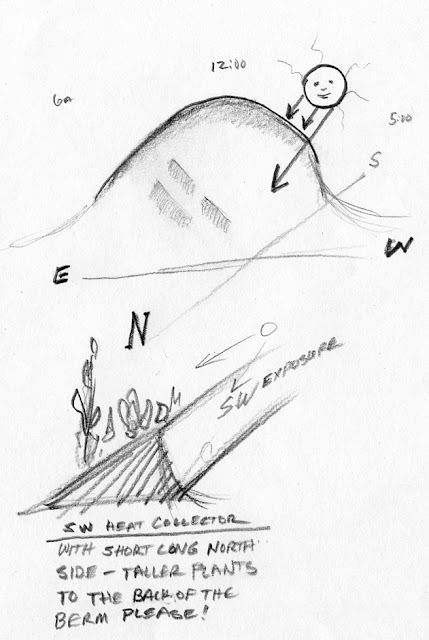
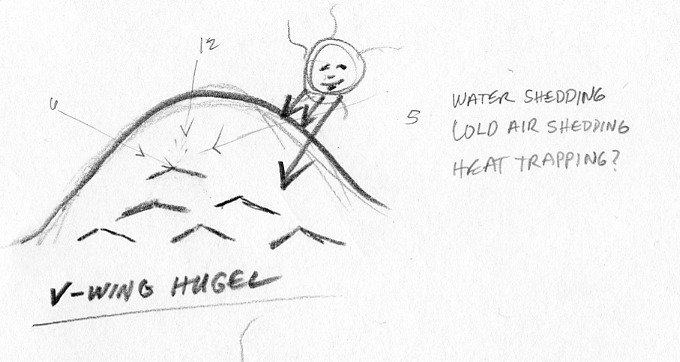
Any surface with a little valley or stand of trees can hold cold air and create a frost pocket. If you look at the drawings above, each layout has varying evacuation speed. Brick layout seems like it would get the most light but air and water movement on it will be pretty slow. The angles should evacuate both pretty fast but sacrifice light.

What I really want to do is experiment without committing to digging, aside from modeling this in my head or on paper I am at a loss on how to find the best layout for my hill.
14 years ago
Some MORE thoughts. I have 4 things I would like to optimize.
Sunlight, Waterflow, Cold air flow, Warm air flow or holding warmth.

I think orientation of hugels is the key.

Heat, water, and cold air flow optimized


Light optimized, sacrifices cold air and water flow


Low berm frost protection, and maybe warm air trap, sacrifices water flow


Heat, water, cold air optimized, sacrifices some light (orient for winter sun patterns maybe)
14 years ago
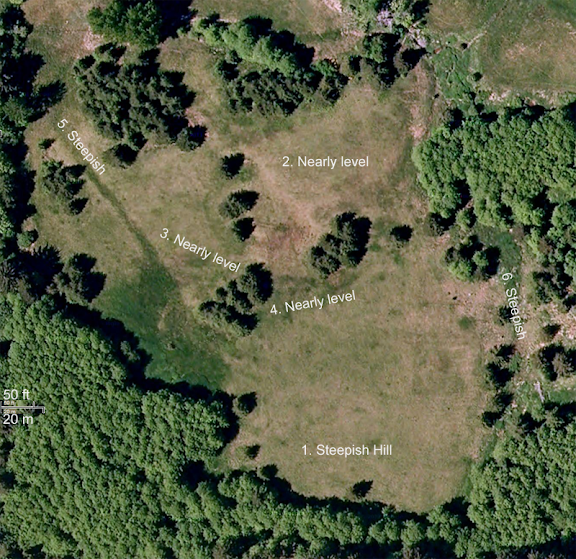
Thanks for responding Matt, I was feeling mighty lonely. Yes the bottom of the photo is south, and it is uphill. All that water is coming from the southern neighbor who recently clear-cut cut the hill behind us. I am trying to negotiate for the slash but I need some equipment to move it. Right now all I have is an old diesel land cruiser, not sure it is up to the task in this muck.

We definitely need to cut a swale across the top of the property but I am thinking I need to line it with geo cloth to slow the absorption and lessen the chances of a landslide.

The round field in the center bottom of the picture is a hill which seems like is serving as a water break, with surface water appearing in either side during the wet months.

The next weekend we get down there I intend to try and map contours with my GPS and take some temps in areas I suspect are frost pockets.
For now we are in planning stages, but we may have found a cheap trailer we can stick there for now while we develop infra.

I'll be reading your stuff eagerly!
14 years ago
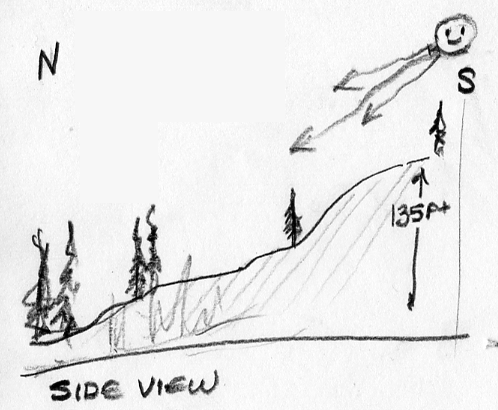
We have a North Facing Slope in the center of western Washington. Of the 23 acres there are about 1.5 acres of roughly level spots. About half is in pasture right now, with 10-15 year old alder on the other half (not in the picture), and a few clumps of trees sitting above the level bits and framing the bottom of the levelest bit. Midpoint in the hill seems to get reasonable light in winter. Soil is 20-24" of silty loam on clay. Rich but might have stability issues on the big slopes.

Here is generally what it looks like... familiarize yourself then check the questions below.


Look at the green... this was taken in summer, and the dark green indicates winter water saturation. Lots of it.

Ideas we are thinking about:
1. If we were to hugelkulture on the flattish parts at an angle to the contour, so as to slow water but not collect it we could begin to create some southern facing micro slopes. My concern about going with the contour means that the first hugel would be sodden and frost pocketed but the lower ones would be dry.

2. Lots of late flowering fruit forest on the edges. But where? I am thinking about slowly swapping the down-slope (top of the picture) firs with leafy trees to make the flow of cold air better in winter and also to maintain a visual border with the neighbors.

3. Sepp Holzer style terracing. This is soft deep silty loam. I am very, very, very cautious about this. We are thinking about positioning a house in the clump of trees west of #4. on the still nearly level before it drops. We'll start with a swale and see how it goes from there.

4. A swale and a road. We want to put a road in, otherwise it will get wicked sloppy. We'll follow the western border up and take a hard turn across western #5 and up to the homestead.

5. ponds in the water runway... Eastern #6 is a grassy 8ft wide groove of water flow in the winter. We want to catch some of it and hold it for a while at the top, then hold it down at the bottom. Technically this will be for fire protection. But the clean stuff at the top pond might have been used for watering animals in the olden days, and the lower duck pond for watering veggies when things needed a little fertigation. There would be no harm in getting a little micro-hydro from the connection between the two in the present day.

6. Maintaining 2ft pasture strips between any open beds, to help in rotation, limit mud, provide food for our chickens and to give clover and mixed pasture greens a chance to heal this land that has been hayed every year.

7. Elliot Coleman style mobile greenhouses in #2

8. Getting a mix of trees into the woods. Especially ones that might coppice well. Need to get deer feeding plants out there too to keep them out of the people food beds.

9. Getting a mix of native berries into the edge and woods. Huckleberry, Salal, Oregon grape. There is nothing but alder and blackberry back there now, and the center clumps of firs. Sad.

What am I missing?
What strategies would you try if this were yours to nurture?
Where are the best places for the big perennials?
What shade loving guilds might work well with all the shady edges?
What might be the best way to create mini-southern slopes without messing up things downhill from them?
Where else might beneficial micro climates be established?


What we don't think will work (but I like to be proved wrong.)
- Reflecting ponds. Unless they are in front of a hugel
- lots of terracing, seems a little dangerous with this soil.
- Sun traps?
- Passive solar earth berm pig huts
- Citrus

14 years ago