
Steve Clausen

+ Follow
since Oct 28, 2024
Merit badge: bb list bbv list
For More
Upstate NY, Zone 5b, 43 inch Avg. Rainfall
Apples and Likes
Apples
Total received
In last 30 days
1
Forums and Threads

Recent posts by Steve Clausen

I don't think I've made the biggest mistake yet, but this century is still young, so who knows. I make a lot of little mistakes that I consider learning opportunities. I guess a biggest mistake would be one where my entire harvest is decimated--luckily I haven't had that one yet.

If I had to list a biggest mistake so far, it would be trying to garden with a preconceived notion of what a "proper" garden should look and feel like; based on images and text of neat rows of crops. As a beginner gardener I was lured into that fantasy that a mini-monoculture would be easy and neat and, the notion of "oh just how hard could that be." My impetus to getting onto backyard gardening in the first place was to grow my own food free of any poisons or artificial fertilizers. I wanted to grow food as our forefathers and mothers did; naturally, and with compost I made on my own. The pests put stop to that notion fairly quickly. And this is where a lot of people probably give up and revert their garden back to lawn.

Well, I'm persistent, and in looking for solutions to naturally attack the myriad of pests that where attacking my plants led to sites like permies, and others. I am determined to grow food uncovered, and unsprayed and I'm slowly getting there. Every year I plant more plants, and create more structures that bring in beneficial insects to balance the pest populations. I am now planting as many, if not more, flowers and other plants to attract beneficials as I am food for myself. I plant to not only bring in the beneficials, but some of the pests they need to eat in order to come to my garden in the first place. For example aphids are needed to attract beneficials, like lady bugs and lace wings, that eat them. Some aphids only eat certain plants, like the Oleander aphid, it attacks plants in the dogbane family, such as milkweeds. Oleander aphids don't eat my brassicas. Some Aphid eating beneficials will eat many types of aphids. If I can attract aphid eating beneficials to my garden with plants I don't eat ( trap plants ), then when the brassica eating aphids show up, I have an army of predators waiting to devour them before they set up camp.  

Oh, I see I've gone down a rabbit hole. hehehe. Have fun with your mistakes, they can spawn lot's of learning opportunities.
2 weeks ago

Nicholas Gainer wrote:I'm pretty sure that I let them dry out last time they failed in the cellar on heat mats with lights...   Sometimes I am busy and forget because they are in the cellar and not in an area that I can get to easily.  

This year was a better go at it because I used the enclosed porch and started in Mid May when temps don't get too cold in that part of the house.

Peppers are due to plant out in the garden 1st of July...   I have about 18 that are worthy of going into the ground.  That is a whole lot more than zero...  

I am a little extravagant and want to grow a giant patch of peppers...Maybe next year


  Still "playin' in the dirt" at age 62...    


Sounds like you're doing pretty good this year! They can be fussy sometimes. You have to find what works for you and your environment. I've been growing peppers from seed for many years now, and I usually have it down to a successful germination and grow, but this year I had an across the board failure and had to replant all of them. This year I had adopted a new automated capillary mat watering system for all my seedlings, not just peppers. Well, the peppers didn't like it one bit. So, after it was evident that they were not going to germinate, I replanted the whole lot of them using my known process, and that worked.

Keep playin in the dirt, it keeps you young

Nicholas Gainer wrote:.  Sometimes I get germination indoors early with lights and heat pads then they fail.  (Mostly because I get too busy with other things and "I" fail)...

.


What do you mean by they fail? damp off? too much water? not enough water? too cold where you're trying to grow the ones that do germinate?

I grow about 40-50 pepper plants a year and get a pretty good harvest. I grow a bunch of varieties, both hot and sweet. With germination, they need warm soil of 80-85f mostly; Id say 75f-90f , hotter for some varieties. Some need a humidity dome to germ, but then you need to watch for damping off. I keep mine on the heat until they're up and a couple of true leaves have formed. They need a good grow light; I use full spectrum LED. Lights can't be too far away. I find they germinate better in small soil cells; you can control the heat better than in a larger cell or pot. After they are growing nicely I'll pot them up and move them to a lower heating mat 75f, because my basement where I start them is usually 60f. Only after they are 5-6 inches tall do I take them off a heat mat. They still need a good light source however, a window sill probably won't due. They will die quicker of too much water, and can tolerate drying out a little--just a little. I use bottom watering trays.

Scott Billups wrote:I have about 1-acre that I actively plant, water, and manage.

I have a small woodchipper, and an electric lawnmower. I chip lots of branches and small trees from the 5-acres of forest, and I mow the grass on my septic field.

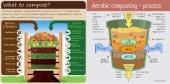
I combine woodchips and grass clippings in 2x 50-gallon plastic trash barrels for my compost. The barrels have 1in holes in the walls, and I put a 4in drain pipe with additional holes into the center. This is a mini-Johnson-Su reactor.

I also add-in coffee grounds from my local coffee shop, and yard cuttings, and kitchen waste.

I don't have a microscope myself, but a few years ago my town hosted a Permaculture jamboree where a microscope (& experts) were in attendance. They *loved* my compost.
Nice! Do you fill it all at once, or as you have materials? Do you need to keep it moist? I believe the Johnson-Su reactor has a water hose lightly sprinkling a mist from the top for an hour each day; of course he's in an semi-arid climate.
3 weeks ago
You have essentially what's called a "kitchen garden." My kitchen garden is 16 beds in a 40'x40' fenced in area (fenced to keep the varmints out.) The only really effective cover crops I can utilize in that space are winter rye, or winter rye with hairy vetch, and/or winter field peas. I can only use those on beds that will be planted in warm weather crops, such as: tomatoes, peppers, squash... Most of my other beds I want to be available for late March, early April crops, and winter rye needs to go until mid-May before I terminate it. I will sow buckwheat in between other crops however; buckwheat is a warm weather cover crop and improves soil tilth.  

You say you have clay/loom soil. That should be perfect for growing annual vegs. It seems like you're concerned with nitrogen mostly; is that right? What seems to be your particular issue? Do you see your plants suffering for a lack of N?

You say "Composting is great but is mostly about soil texture and soil biology than truly maintaining fertility. " I assume you mean that veg only compost has less nitrogen than animal manure compost; while that's true, veg compost is all I use, since I don't have animals and I don't bring any manure in from outside, and my plants do exceptionally well with it.

Nitrogen will be fixed by microbes, both on the leaves and stems of your plants, and in the soil. Use coffee grounds, and urine to boost N if needed.

I like your idea of making your own fish hydrolysate, assuming the carp comes from clean waters ( clean as in no excess harmful chemicals.)

Clay soil is full of nutrients, but it's usually locked up unless there is soil organic matter and microbes present. I would use compost, compost tea, tea and JADAM JWS to increase the soil biology, Soil biology feeds your plants directly, and also builds soil structure and fertility. When microbes have a flush in population, some will go dormant, and some will die; billions of dead microbes are necromass and that dead microbe load adds fertility to your soil in many ways--too much to talk about in one post.

How is your worm population in your garden beds?

In the beds that I am going to need to plant in early the next season, I usually prep them in late fall after a few frosts, assuming I don't have parsnips or carrots wintering over in them. I will cut dead veggis at the soil surface and keep the roots in the soil, and then add compost to the top and mulch with tree leaves, left over straw from my winter rye, or plant material from chop and drop. I will them add kitchen scraps, coffee grounds, et al right under the mulch in a compost in situ sort of manor. Come the next spring the beds are ready to plant into. I chop and drop weeds all season,

I see you have problems with slugs and mulch, I don't really have too many slugs so I can't offer too much; except I use in ground beds, not raised. I also keep small piles of sticks and rock piles around for ground beetles. Ground beetles and birds eat slugs.

Hopefully some of this rambling might help.

2 months ago
I think your approach is fine. A lot of "no till" folks do a one time tillage to get a garden up and running, and then of course from there on practice "no" or "low" till. The 20x20 area is rather large to lasagna style, and you need the sod either gone or incorporated into the soil so it can rot and become organic matter. I would organize it by rows because next season you may not be planting squash, and there's no stopping you from planting a 3 sisters planting group within a part of a garden row. A typical 3 sisters round is 3-4 feet in diameter. If your garden beds are 3 feet wide you can get a round in within a section of a row. Save the clover for living pathways between the rows, but you'll need to get in there with a mower and mow the paths; which might be a problem with squash vining all over the place. Maybe better to use woodchips for the paths. Grow something else in the actual garden bed rows between the 3 sisters; something that winter kills; maybe field peas as a cover crop. You could also densely broadcast lettuce, or arugula, or both, between the 3-sisters; knowing that you'll get some to eat and some the squash will cover over and or intermingle with. If the lettuce or arugula goes to seed, you, might get volunteers next season, which is not a bad thing--I love it when I have volunteer lettuce popping up here and there in my veg garden.
Just remember that in that stilt grass thatch is a ton of slit grass seeds.

As far a weeding tools go: I love my Japanese three pronged cultivator. I use it to weed and cultivate. Try to find a one with a long handle so you don't have to stoop; less tiring on you back.  This one at this link has a short handle, 15 inches, but that the tool. Any sharp hoe, like a Dutch hoe, is good too.
https://hardwickandsons.com/collections/cultivators-hoes-rakes/products/kusakichi-3-prong-ika-gata-hoe

Mow up your leaves with a bagging mower, or use a leaf shredder. This makes a great mulch and helps them break down quicker. Yes, you can just move the chopped up leaves aside and plant. If you leave the leaves whole the wind will blow them around easier when they dry out. Chopped up they stay moister and stay in place better. They can still get blown around your plants or seeds your starting, and birds and small animals may move them too, so just something to be aware of if you're seeding fine seeds, like carrots. A little bare soil just where you are trying to get seeds up is fine for a little while. You just generally don't want bare soil for any length of time. Annual veggies, or a kitchen garden, has to be delt with a little differently than permaculturing perennials--don't be afraid to break some rules.

If you have xtra leaves, but them aside in a protected pile to make leaf mold. Use the leaf mold like compost or a top dressing mulch. Leaf mold is awesome for building soil structure.

Woodchips can be used for some veggies--not good for carrots or some lettuces--good for transplanted seedlings of larger crops, like tomatoes and peppers. As you alluded to above, don't mix them with you soil and you'll be fine; they don't tie up nitrogen sitting on top of soil. Rake them off your bed if you need to work the soil a little after your crops are out, and then put them back on. It's better if the woodchips are small and broken down a bit. You mentioned you have access to a lot of woodchips; make a big pile and let some start to rot down for future use as top mulch for your veggie garden. Are you familiar with the Johnson-Su bioreactor? Turn some of those chips into awesome compost using one of those DIY bioreactors. Don't worry so much about whether the compost is fungal dominate or bacteria dominate; for a veggie garden it will all equal out. The plants will associate with the microbs they need to.  
I don't think those beds look too bad with weeds. Here are some observations from someone near your zone, climate and geography. Firstly, learn to embrace some weeds; dandelions for example are dynamic accumulators--meaning they bring up minerals from the deep subsoil--chop and drop them on your beds before they go to seed--this will feed your soil. I let a lot of small flowering weeds flower along the sides of my veggie beds to help bring in beneficial insects.

Don't use stilt grass for anything; kill it before it takes over. It is an invasive prolific seeder so, it is worse than a bare bed.

I use winter rye on only my beds that will have warm season crops the following year, like squash, tomatoes, etc. You need to let winter rye grow until it reaches the milk stage ( mid May here )  in order to terminate it via cutting or crimping; otherwise it will grow back, and you'll think it's a weed.

I prep the beds I will be using for cool season crops, such as arugula, kale, lettuce, etc... in the fall after everything is out. Since a cover crop, like winter rye or winter peas won't work, because it won't be out by April, I mulch the beds with straw, or leaves and pine needles--whatever I have. These beds are mostly entirely weed free come April. There may be an errant weed here and there, but they're easy to pull in good loose garden bed soil.

Sometimes I can't prep a bed in the fall or plant a winter cover crop, because I have crops that spend the winter in them; like parsnips, carrots, and rutabaga, for example. Then there may be a few weeds come spring, but they should be easy to hoe up. Any type of Grass is one you will need to nip in the bud as soon as you can.

My garden paths are a combo of woodchips, and living mulches. I've tried ajuga and mock strawberries in the paths; both of those didn't work well for me for various reasons, so I pulled them. I have now seeded some of my paths with Dutch white clover. That seems to work better. I just mow the paths with an electric bag mower and toss the clover clippings in the beds as mulch, or add them to the compost pile. The clover does want to spread into the beds some, but a quick pull/hoe and the drop it into the beds as mulch.

Finally: it get's easier as the beds mature, and the seed bank diminishes. Mulch helps. I use the winter rye I cut in mid May to mulch my veggies. Beware however, that bringing in compost, hay/straw from outside sources can bring in more weed seeds. Use the weeds as mulch--chop and drop before they go to seed. Weeds are just plants in the wrong ( for you ) place. There's a book titled: When Weeds Talk; I think it's available in pdf form on the internet. The book details what weeds are growing in your soil and what that means in terms of soil mineral imbalances.

Timothy Norton wrote:Brassicas produce a sulfur containing substance known as glucosinolates which help inhibit weed seed germination when the plant is chopped and tilled into the soil. I've been told that the mechanism of action is known as biofumigation. I'm told this compound is what gives brassicas like mustards their pungency. There are some studies that indicate that the use of glucosinolates to biofumigate soil may help with nematode and other plant parasite control.

I'm unsure if I'm going to utilize the biomass of my cover crop to make use of the glucosinolates as I would have to manually incorporate it into the soil and I'm usually busy in the spring. I'm more than likely going to chop and drop it leaving it as a surface mulch.

Brassicas also do a good job of reducing compaction.

Turnips can help the topmost region of the soil.
Radishes tend to have a deeper taproot than turnips.
Mustard, Kale and Rapeseed have really fibrous roots and do a good job getting even deeper into the soil.


Glucosinolates are also extremely healthy for us and primarily only found in Brassicas; like kale, cabbage, arugula, broccoli, etc...

Here's a good read on it:
https://nutrivore.com/nutrients/glucosinolates/
4 months ago
I do mostly hot composting. I build about 3-4 good piles a year, spring to fall, usually 4x4x3 feet. They get hot, sometimes 155f, that's too hot. I try to turn them every 3-5 days, but sometimes life gets in the way, and they don't get turned for a week or so. I utilize a couple of 3 ft 4 inch pvc drain pipes with more holes drilled into them, set vertically, to help get air into the center of the pile.  I also have some smaller diameter pvc pipes with lots of holes drilled in a circular pattern that I lay horizontal in the pile to bring in air.

I also do compost in place in my veg beds after the growing season is over, and if I don't have winter cover crops growing in those beds. I'll prep the beds in the fall and cover them with mulch, and then I'll sneak kitchen scraps under the mulch right up till the winter weather makes it not fun. By spring most of the scraps and coffee grounds have been consumed by microbes and worms.

I am going to try a new thing this coming spring's growing season. There's a concept called "core gardening", apparently done in Africa somewhere that get's a lot of rain in winter/spring, but droughts in summer. They burry reeds in their garden beds a foot or so down, and as the winter rains soak the beds the reed material absorbs the water and starts to rot and also becomes a sponge that hydrates the beds during drought. There's a guy in Michigan, I'll post the video below, that does this with hay or straw. I want to do this because of increasingly reoccurring 6-8 week long droughts in my area, usually in late May-June, or June-July. I hate watering my rather large veg garden, and don't like the idea of setting up irrigation. I would use the straw method, but I can't trust that the straw I would have to buy wasn't sprayed with some forever chemical, and while I grow winter rye for mulch, I can't grow enough to burry for a core. So I'm going to try my own version of this using 1 part my compost, 1 part biochar that I make and inoculate, and 1 part pumice stone that's about 1/8-1/4 inch stones. I mix these together and use that as the core of my beds. This should hold more moisture than the surrounding soil, so in the event of an extended drought the plants can access this moisture. Also I won't have any nitrogen tied up breaking down the straw, since I'll be using inoculated biochar and compost. The pumice is inert, so that acts as a sponge and a home for microbes to hold up, just like biochar.


6 months ago