

|

|
|
|
|
Tereza Okava wrote:I would add to Nancy's wise response: things can vary a lot, so consider your space as well as your environment.
You're getting answers here from all over the world. I have heavy tropical clay and garden year round-- any organic matter I put in vanishes almost immediately, but because we don't have the flood of deciduous leaves that temperate climates have in the fall, I need to rely heavily on animal manure.
Other places freeze hard in the winter and can pile up deciduous leaves. Have a good look at what is being done (and has traditionally been done) in your area and feel free to ask specifics-- we have Permies posting here from all over.
 but the wet should help me keep the compost wet during the winter.
Nancy Reading wrote:In a small space I think it is very difficult to achieve a zero inputs balance closed loop - think of an aquarium versus a lake. An aquarium takes much more looking after and fiddling with, cleaning out, whereas the lake looks after itself pretty much.
If I were you I would consider widening the area you consider as your space - look at your neighbours - do they even have a compost bin? What about coffee shops - coffee grounds make a pretty good (slug repellant?) soil additive. Have you a neighbourhood greengrocers? Ac has one nearby them that is providing almost more green waste than they can deal with due to the hot weather they're having! Businesses often have to pay to have "waste" taken away, so are pleased to have it gone.
(edit: cross posted - looks like you're heading in the same direction!)
 I didn't know they were good for that too.
Tereza Okava wrote:Hi there! i also have a very small urban garden. Unlike you, I have LOTS of fresh organic waste (we forage and cook a LOT, and I'm not eating orange/avocado/banana peels), plus rabbits for manure, and we chip up whatever they don't eat. I do bokashi in barrels to not waste any precious garden space. We have some threads around here specifically about that.
But if you have so little organic waste, I think Joao and William are right on the money-- put it back in your beds directly. Either tuck it under the soil if you really have so little, or blend it up in your blender with water and dump it on an area of the garden. In the meantime, you could also consider gathering leaves in fall (threads about that here too) or looking at other forms of compostables you might be able to find. Coffee grounds, for example.
It took me a long time to accept that I needed to add things to my dirt in order to see results. But the plants need to eat, and it needs to come from somewhere.
Mark Reed wrote:It sounded to me like the primary issue might be obtaining the material to compost rather than how to compost it. I myself do not compost as it is often thought of. I don't worry over proper mixture of green/dry or whether or not a proper temperature is achieved to make it biologically sterile. I just put stuff in piles or use it as mulch until it rots.
I'm also not accustomed to gardening in an urban environment, but I think gardening as much as you can, wherever you are, is really important. To get stuff to compost maybe you can scrounge it in the neighborhoods or in a rural area if one isn't too far off, and you have a way to collect and haul it. If your neighborhood or one close by has trees you might find people who would let you rake and take leaves or just swipe them already bagged up by the curb. A simple rule to me of what I might call "natural" gardening because I don't like any of the other words people use is just don't poison it. With that in mind try to make sure you don't collect stuff from a "chem lawn".
If you do have access to a rural area lots of good stuff often accumulates in roadside ditches, especially if the area is wooded. You might be able to jump out of your car with a big trash bag and swipe some. I'm not all that sold on the whole Hügelkultur thing especially if you don't really have space for it, but rotted wood is great to compost, bury in the ground or put in the bottom of containers. It needs to be well-rotted as in you can tear it up with your hands or it will take too long to break down, it works kind of like a sponge too. You might could even swipe that from a public park or something. You're allowed to collect and burn downed wood in campgrounds so why not just bag up some of the more rotted stuff and take it home.
I think closed loop system in a very small space might be tough, but I think the budget issue might be solvable and without wondering just exactly what might be in that purchased stuff.
Anne Miller wrote:Have you thought about composting in bins like 55 gallon drums or trash cans?
That would let you compost on a larger scale:
https://www.instructables.com/Double-Decker-Drum-Composter/
Burton Sparks wrote:To put a term to the concept being described, "lasagna gardening," or genetically layering up to a couple inches thick of compostable materials in an area you want to prepare to plant. Typically I think the term is introduced in the context of creating a new bed, but you could also do it right on top of the existing bed to break down over winter. Aside from chop and drop of plants that were growing in the bed and adding leaves and pee (things already mentioned), consider adding layers of grass clippings (thin layers), old straw, manure, etc.. Keep it a little moist and not too exposed to the wind to help with breakdown if you live in a dry environment. Don't use materials that would attract pests, are diseased, have pesticides or fungicides.
Joao Winckler wrote:Chop and drop directly onto the beds works well for small spaces too. Instead of hauling everything to a pile, just chop up any plant waste and leave it on the surface. Worms pull it down over time and it feeds the soil where you actually need it.
William Bronson wrote:Every bed is a place to compost.
I layer leaves onto my beds in the fall, pour pee onto the leaves over the winter and move the remaining material to a compost pile in the spring.
This adds nutrients directly to the place you want them to be anyway.
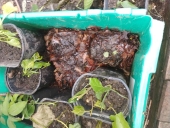
I've recently started using totes filled with leaves to put 5-6 nursery pots in.
This serves multiple purposes.
The leaves hold water like a sponge, providing it for the the plants on the pots, without drowning them.
At the same time the leaves decay, becoming leaf mold.
Something I've yet to try is a bucket stepstone.
Basically a bottomless bucket, sunk into the ground and covered with a stepping stone.
zach sabri wrote:
i am using a 50 compost /50 loam mix i am thinking next year for my roots section i might move over the 50/50 mix to the side and add a different mix with less nitrogen for the top 8 inches of soil
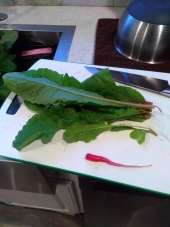
another update is my broccoli bolted instead of growing florets after a heat wave LOL. Its a good learning process this year and i will still harvest the leaves and stem from the broccoli