Derek Carter

+ Follow
since Oct 15, 2013
Merit badge: bb list bbv list
Biography
We specialize in bare root fruit trees, nut trees, berries, vines, native plants, nitrogen fixers, and other perennial permaculture plants. We select the varieties we grow for disease resistance (in our humid climate in the Arkansas Ozarks), flavor, overall variety in our diet, and hardiness to zone 7 or colder.
For More
Apples and Likes
Apples
Total received
In last 30 days
1
Forums and Threads

Recent posts by Derek Carter

It's been a while since I've posted... How do I get a thumbnail to show up next to this post?
6 days ago
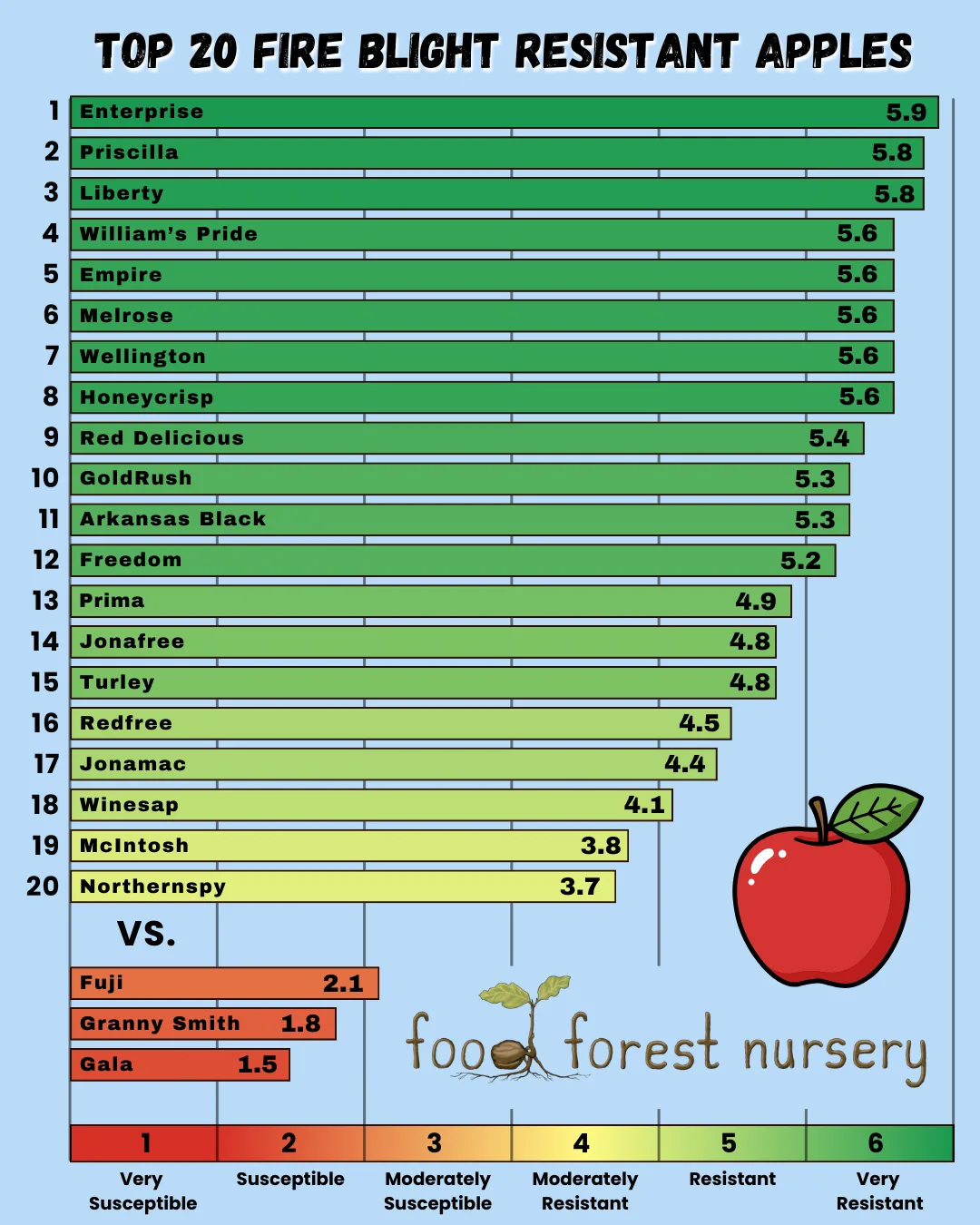
Disease resistance is a tough thing to quantify because it varies so much from region to region. Studies often have different ratings for the same variety, plus there is a lot of anecdotal information out there.

I got tired of getting different answers, so I compiled 11 independent university or Co-op apple fire blight resistance studies, averaged the results, and normalized them. I only looked at varieties that were in 5 or more of the studies to ensure the data was statistically significant. The downside to this is that some newer, possibly better-performing varieties that haven't been in as many studies may have been excluded from this list.

This chart is just the top 20 fireblight resistant varieties, but you can filter and sort the full database based on the number of studies, average rating, and popularity.

Complete List of 133 Varieties

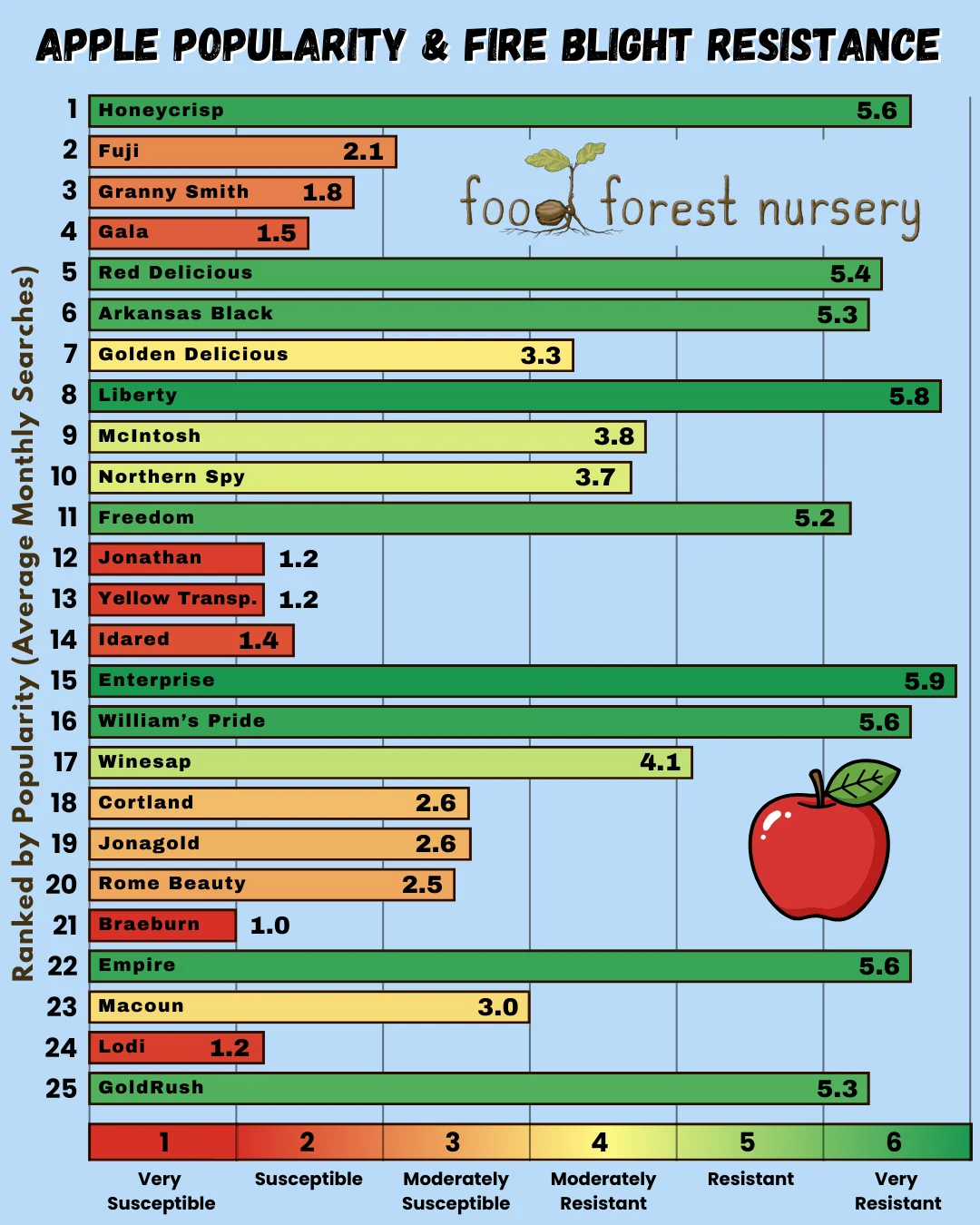
I also created a chart (below) comparing the Top 25 most popular apple varieties (based on average monthly Google search volume) against their fire blight resistance.

As you can see—and probably predicted—a lot of the popular grocery store apples are some of the worst performers when it comes to Fire Blight. This highlights the difference between breeding for "shelf stability/shipping" vs. breeding for "resilience."

A few interesting notes from the data:

The "PRI" Connection: The Purdue-Rutgers-Illinois breeding program dominates the top of the resistance list. You can see their signature naming convention in EnterPRIse, PRIscilla, William’s PRIde, and PRIma, but they also developed GoldRush, Jonafree, and Redfree, which all made the Top 20.

Scion vs. Rootstock: Keep in mind this tracks the resistance of the variety itself (the scion). While a resistant rootstock (like the Geneva series) is vital for keeping the tree alive, a resistant scion is what saves your harvest.

I am working on doing this for the other common apple diseases next. The goal is to compile them all together to come up with an "Overall Disease Resistance" score.

Also, if anyone knows of a study I did not reference, please send it my way so I can add it to the database.



6 days ago
Disease resistance is a tough thing to quantify because it varies so much from region to region. Studies often have different ratings for the same variety, plus there is a lot of anecdotal information out there.

I got tired of getting different answers, so I compiled 11 independent university or Co-op apple fire blight resistance studies, averaged the results, and normalized them. I only looked at varieties that were in 5 or more of the studies to ensure the data was statistically significant. The downside to this is that some newer, possibly better-performing varieties that haven't been in as many studies may have been excluded from this list.

This chart is just the top 20 fireblight resistant varieties, but you can filter and sort the full database based on the number of studies, average rating, and popularity.

Complete List of 133 Varieties

I also created a chart (below) comparing the Top 25 most popular apple varieties (based on average monthly Google search volume) against their fire blight resistance.

As you can see—and probably predicted—a lot of the popular grocery store apples are some of the worst performers when it comes to Fire Blight. This highlights the difference between breeding for "shelf stability/shipping" vs. breeding for "resilience."

A few interesting notes from the data:

The "PRI" Connection: The Purdue-Rutgers-Illinois breeding program dominates the top of the resistance list. You can see their signature naming convention in EnterPRIse, PRIscilla, William’s PRIde, and PRIma, but they also developed GoldRush, Jonafree, and Redfree, which all made the Top 20.

Scion vs. Rootstock: Keep in mind this tracks the resistance of the variety itself (the scion). While a resistant rootstock (like the Geneva series) is vital for keeping the tree alive, a resistant scion is what saves your harvest.

I am working on doing this for the other common apple diseases next. The goal is to compile them all together to come up with an "Overall Disease Resistance" score.

Also, if anyone knows of a study I did not reference, please send it my way so I can add it to the database.


6 days ago
Here is an Apple Pollination Chart I've been working on that organizes varieties based on flower group / flowering time instead of alphabetically since that is the main driver for compatibility.

It also identifies triploid varieties that have sterile pollen and do not pollinate any other varieties.

Let me know what you think and if there are any mistakes or additions you'd like to see.


1 year ago
Only 3 days left before I draw a winner!
1 year ago
Kyle,

I ship to zone 6b on March 25th.  Below is the shop filtered by everything compatible with zone 6.  You can do this filter on product category pages as well.

https://foodforestnursery.com/shop/?filter_hardiness-zone=6&query_type_hardiness-zone=or

For those in other regions here is the shipping schedule:

1 year ago
Hey everyone I wanted to announce a $1000 Food Forest Giveaway I'm lunching on my nursery website!

https://foodforestnursery.com/food-forest-giveaway/

Enter by December 24th to win a $1000 store credit towards a Food Forest bundle. Huge selection of fruit and nut trees, berries, and vines. No purchase required


1 year ago


We specialize in bare root fruit trees, nut trees, berries, fruiting vines, native plants, nitrogen fixers, and other perennial permaculture plants.  We select the varieties we grow for disease resistance (in our humid climate in the Arkansas Ozarks), flavor, overall variety in our diet, and hardiness to zone 7 or colder.

If you have PIE you get 15% anything you order!

If you don't have PIE yet you can still get a discount by ordering in BULK and using these codes at checkout:
5PLANTS - Get 5% OFF ant 5 or more plants
10PLANTS - Get 10% OFF ant 10 or more plants
20PLANTS - Get 15% OFF ant 20 or more plants


2 years ago
We harvest persimmon, pawpaws (favorite), elderberries, mulberries, and blackberries.

Its not fruit but we also harvest black locust flowers in the spring and it makes up about 25% of our salad for a couple weeks.

There are also plenty of black walnuts, hickory, and acorn to harvest.

If you're in the Ozarks I highly recommend Foraging the Ozarks by Bo Brown.

4 years ago

Nicole Alderman wrote:Your website looks amazing! I like that you have some really reasonably priced plants, like the American Plum seedling.

I've had terrible luck growing plums, probably due to it being so damp on my property (I'm on a north-facing slope surrounded by trees and wetlands. We have soaking dew all year round.) Do you think this plum tree would do well in my microclimate here in the Pacific Northwest?


Nicole.

Stone fruit (peach, plum, almonds) struggle in humid climates.  That said this native plum seedling should do much better than the more susceptible domesticated European varieties.  

4 years ago