
Patrik Schumann

+ Follow
since Nov 06, 2015
Merit badge: bb list bbv list
Biography
ecological design, drylands horticulture, regeneration forestry, special expeditions
For More
Nuevo Mexico, Alta California, upland New York, aiming Andalucia
Apples and Likes
Apples
Total received
In last 30 days
3
Forums and Threads

Recent posts by Patrik Schumann

That's all right, much depends on one's principles, objectives, resources, path.  

I myself have over several decades been working up seasonal migrations I can pull off & my wife can manage far into old age, we & our young teen can subsist on any place therein indefinitely, a setup that carries itself & us financially at basic needs+ level, that offers choices & options no matter what comes at any level, that all have mutually supportive communities.  

We can't do it all ourselves so we have thrown in for several components with others.  The carrying costs at one three-decade homestead can be paid by a single housemate, at the other one-decade old by a built-out rental unit, both of those have full subsistence horticultural food production.  A half-dozen usufructus orchards with my rare fruit/ nut/ berry collections on their land for ½ & ½ cuttings & harvests.  The taxes at one forest by ten cords of fuelwood, also with another, the usufructus/ collective subsistence forestry & horticulture with semi-permanent camps & indefinite stay in emergency.  

No need to pull up & start over away from family, friends, places going back to childhood.
3 days ago
Ever less land, more demand, higher prices, poorer condition, more work, less stability, higher risk, & that's if things don't go really bad.  The extinction crisis includes horticultural varieties, traditional/ historical/ heirloom cultivars, local land races; I started my work on that long before I had any land to call my own & I'm still collecting, learning, losing.  Self-sufficiency in biomass & nutrient cycling + water availability are additional constraints which took years to decades to secure, & the latter is diminishing for us again.
3 days ago
The amount of "arable" land per person has gone down to 0.17ha (WB 2023) or 0.42ac; "agricultural" depends much more on definition, variously including extensive grasing &/ or forestry.  Years ago with more promising data I was looking for 9-27ac.  

Duhon & Jeavons have shown complete nutrition from 1500sf/ 140m² pp under ideal, year-round, Bio-intensive conditions.  Factor in other basic needs+, any income, climate variability, weather events, production uncertainty, harvest losses, forest resources, foraging, contingencies, emergencies, etc, for your own circumstances & localit-y/ -ies.  

It's taken several decades, now we own two different inner-urban drylands homesteads under full production each with the absolute minimum (though opposite grow seasons), & have usufructus rights in several high desert orchards + two different climate low-00ac remote forestry parcels.  

I am ever more concerned, somewhat less for us but very much for others.  I continue to search for & initiate efforts towards cooperative subsistence.  
3 days ago
I practise different protocols on the three sites under my long-term care.  

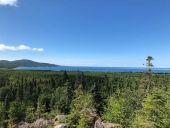
In northern Appalachia over-stocked degraded mixed forest lacking natural hardwoods regeneration for 40-60 years I drop most pine to get light to forest floor & keep deer off long enough for any of what was once a carpet of maple & oak seedlings to get to above browse.  There's only a couple of black cherry & shagbark hickory left out there on 120ac, no young-uns, but I've seen the occasional hickory nut lying around.  As I finish heavy thinning over the next few years, I'll plant back black walnut, more cherry & hickory, diverse other quality hardwoods/ ecological keystone/ fruit-nut-berry, into the strategic fuelbreaks & especially propagation repositories & regeneration sources at their intersections.  I hope to have the question you're posing but never have to do anything about it.  

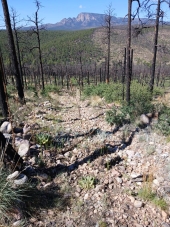
In inner-urban high desert I have, in order, windblown elm (I save lacebark only), bird-dropped hackberries (leave best-/ move worst-placed), gravity-dropped honeylocust (ditto), rarely a mulberry (ditto but white coveted over black).  None of the many high- & dry-land adapted fruit/ nut/ berry are volunteering yet, except apricots which are wide crosses & I move to test/ use for rootstock, but we're aiming for more of that as we propagate up & integrate in to a high-country river valley/ mesa forest location burned over with full range of impacts in our state's biggest ever wildfire.    

In coastal sub-tropics, food production let alone reseeding is heavily impacted by birds & rodents, so I only see loquat (nispero, move for rootstock), pitanga (surinam cherry, give to friends), rootstock plum (cull), + many fly-ins mostly Brasilian pepper & what looks to me like Guaje (namesake of Oaxaca) both highly desirable for different reasons but invasive so culled.
3 days ago
I only managed to get off the conveyor belt right after my undergraduate degree, which I chose to be both the most intellectually challenging + financially promising but knew I didn't want to pursue as a career.  I then made a 'vow of poverty', which has been my rock bottom solid foundation subsistence strategy, & pursued "designing Man's interaction with Nature".  

There wasn't any discernable profession or pathway, so I started researching from great books in libraries + contacting interesting people even running down projects & places as I could.  Eventually I found a direction & apprenticeship, then an overseas development consultancy, then graduate school/ research/ teaching, then bailed out back to the high desert.  

At various forks I had to remake the choice between my principles, values, objectives & earning good money or doing what others wanted for me.  The best seed I planted was the first, guerilla style, for growing & cultivating plants, gardens, orchards, forests, which I've stubbornly progressed through by any means at hand, as mostly those have not been of real or sustained interest to others, especially to point of spending & investing.  

I have been very fortunate & lucky to have reached the cusp of making good & whole an ecological life, despite harrowing unknowns & bitter compromises.  I have no regrets.  Hang tough & stay your course.
1 month ago
The one thing we haven't been able to effect at our now decade-new inner-urban homestead is seed saving.  

It's been quite a challenge getting to know a new drylands regime with dry & wet seasons flipped, no frost so 365-day growing season, medium term drought with handful of rain events sometimes most of year's rain (9": 3"-17" range) in one storm, saltiest conveyed-water in Southwest, more bugs/ birds/ rodents onto our crops than anywhere else, & re-breeding/ selection with very little local seed around.

I'd spend $200 on the most important backup seed & $1000 on more of that for our other seasonal homesteads, one where our housemate/ caretakers haven't cultivated the seed bank in a dozen years, & the other where the forest hasn't quite opened to our scion plantings yet.  
2 months ago
In San Diego, our perimeter Subsistence Hedge is feijoa, pitanga, araça-uçu, guava, jaboticaba, loquat, apricot, fig, grape, peach, mulberry, apple, coffee, raspberry, Catalina cherry, passionfruit, pomegranate, etc.  Once established they get by on ambient precipitation during wet season & once a week watering through dry season, though I give a little extra to jaboticaba, mulberry, apple, coffee, passionfruit when they ask for it.  We have more diversity in interior hedges which we use to demarcate outdoor spaces.  

In Albuquerque, quince, hackberries, jujube, pomegranate, honey locust, mesquite, apricot, oregon grape, peach, apple, sour cherry, grape, sumacs, piñon, Gambel oak, NM olive, mountain mahogany, indigobush, hawthorn, etc.  More diversity across interior also.  They get twice a month deep-watering year-round, as the drought has been long, consistent, deep.  

Both sets of hedges bring in pollinators, lizards, birds, rodents, predators, & produce something through much of the growing season.  They're integrated with walls, fences, trellises, gates as part of our boundary, privacy, security.  Due to the more consistent supplemental irrigation, we maintain an understorey of perennials, biennials, volunteers, annuals beneath as genetics repository & seed bank.  

I generally offer them to every client on smaller & urban sites, often as a second thinner layer within an edible natives wildlife habitat thicket perimeter much more like a English field hedge.  
3 months ago
Great to follow this.  Regarding lemons, we've found quartering, lightly salting, preserving in brine lasts a long time & makes a great ingredient for Mediterranean dishes whether tagine, chickpea salad, pasta sauce.  
3 months ago
Lately the motivations have been more mixed.  I'd long ago discovered & am continually challenged by the behavioural & cultural adaptations of the natives.  The gophers had already been pulling traps away underground & root pruning all round the planting cages - now they're coming up to eat the whole pea plants.  The squirrels already picked the guavas a few days before we would - now they get the exact one left hidden the night before I'd planned to.  The birds wait not only until I've seeded but also those have swelled from rain before swooping down to pick & grub them all up.  The coyotes already ate all the roaming cats & dogs in our hood, now they're cutting trail through our place & leaving piles right at intersections with our own routes.  
3 months ago
If I could never plant in straight lines I wouldn't be able to optimise: in 4-D on straight-line parcels, zone differences between sides of wall or fence, my boundary plantings like Subsistence Hedges & raised cable-trellis espalier, access into thickets needing pruning & offering harvests.  Overlaying straight lines conveniently offers the small spaces, large tree, small tree, shrub hexagon layout.
3 months ago