Derek Thille

gardener
+ Follow
since Apr 05, 2022
Merit badge: bb list bbv list
Biography
I trained in electrical engineering and computer science and made a pivot to financial services.  When I had scads of time during the 2020 lockdown, I started digging into food and nutrition, which led me to permaculture.  I took a PDC in 2022/2023 and have been working on implementing what I learned on our acreage in southern Manitoba.  Happily I married well and she supports these efforts financially and with labour.  We do hope to retire to the property, so getting it set up well will be nice. 

We had the privilege of spending nearly a week at Wheaton Labs as SEPPers in September 2024 and met the Duke (Paul the large hobbit), High Commander Stephen, as well as Ben and Chris (Boots at the time) and Ringer Jennifer.  It was a great week of learning and sharing.  I would highly recommend taking it in if you can.
For More
Southern Manitoba...bald(ish) prairie, zone 3ish
Apples and Likes
Apples
Total received
In last 30 days
16
Forums and Threads

Recent posts by Derek Thille

Victor Johanson wrote:Good points. I don't harvest the ones growing under trees; they're strictly companion plants. Valerian will grow tall and poke up into the tree; mind can top 8' here in Fairbanks. They bloom a little late here, during a time when most nectar/pollen sources are spent, so it's nice to have something to fill that niche. Be advised they will aggressively spread.



Agreed...we planted one here years ago and now it's popped up in various spots around the neighbourhood...the main section is competing with day lilies and an aggressive rose.
3 days ago

Jenny Wright wrote:Also we had another seeding surprise us! It's as old as it oldest seedlings and I didn't even notice it flower this spring but it has bright red tiny apples, singly, through the tree that I can see from across my yard. Unfortunately the peel is very, very bitter. Completely unpalatable. Like I'm spitting and gagging it's so bitter! The inside is sweet but it's so tiny, there isn't anything really to salvage. I'll keep trying them too but it isn't a pleasant experiment.


I wonder if those might be better pressed, which would leave the peel behind.  That would also make them potentially more useful based on size.
3 days ago
The only comment I would make to Victor's post is that you may not want to put in plants that you may want to dig up for the roots (horseradish and valerian from his list).  Now, if you don't want to harvest those roots, those two are good selections.

Valerian flowers seem to be very good pollinator attractors.  Hollow stems should be valuable for overwintering insects.  They are not that tough though if you have windy conditions and grow quite tall (easily 6' / 2m in our part of the world) and they spread easily by seed.

Horseradish is tough as nails and will form a clump slowly spreading over time.  The leaves are edible as well and should make good mulch.  This is one plant that I wouldn't be concerned about if I wanted to walk over it to harvest apples.
3 days ago
Yes, Manitoba maples can be tapped - St. Pierre Jolys Museum holds a sugaring off festival each spring.  The community taps over 200 maples and is planting more around the town.  They sell out of syrup each year...I've never managed to get any.

That said, to get enough sap, you need to have enough mature trees to be able to tap to boil down for syrup.  Planting trees for this purpose may very well prove to be an intergenerational plan.
2 weeks ago

Thekla McDaniels wrote:Box elder trees aka Manitoba maple (I think) are ice nucleating bacteria habitat.  Lots of species of plants have been tested, and so far box elders - Acer negundo are the best.


You got the naming right.  In an appropriate environment for it, the tree is almost weedy.  While the wood is not highly valuable for most things (burning, carving, building, etc), it does coppice well.  I understand seeds are edible and, around here at least, if you don't eat them, you may wind up with a forest.
2 weeks ago
So, the best states to live in all border on Canada...coincidence?  I think not
4 weeks ago

M Ljin wrote:I had some peach pits sitting in a jar of soil and they haven’t germinated. I am trying cracking the pits, taking out the kernel, and soaking in cold refrigerated water for maybe a week. This technique worked very well for some out-of-season medicinal herb seeds so why not try fruit trees? Supposed to get the germination inhibitors out more easily.


I know a local arborist who has cracked and sprouted apricots, so it ought to work for peaches.
1 month ago

Inge Leonora-den Ouden wrote:

Derek Thille wrote:...

Another example may be urban municipalities shifting roads to more cycling paths / lanes and in some cases reducing or restricting lanes for automobiles.  It can certainly be a positive more if it results in people making a switch from an automobile to using a bicycle from a fuel use perspective.  One consideration is where the money comes from for municipalities to make these changes.  Fuel and road taxes and related charges were ostensibly put in place to pay for roads.  How do municipalities pay for the roads if those revenues are decreased?  There is a sustainability to that question.  However, if few to no automobilists make the shift, have we made changes that will actually increase their fuel use and perhaps created resentment toward cyclists, which could have a negative impact on safety.  

....


I searched Permies for 'bicycles' and this was the first (most recent) post I found.
This is exactly the subject I wanted to tell something about.

I live in the Netherlands and have never been in North America. The Netherlands is famous for being a very bicycle-friendly country (maybe the most bicycle-friendly, but some other European countries are very bicycle-friendly too). It's so very bicycle-friendly that some people from North America moved so they could live here, and they have Youtube channels about the way traffic works here in the Netherlands.  


There are a wide variety of climatic conditions across North America.  Here in the middle of the continent, we spend some time every winter near -30C (sometimes colder but we can always count on hitting that each winter...actual temperature, not wind chill).  There are a few brave souls who do bundle up and venture out on bicycles in those conditions, but they are few and far between.  For those few, we have spent millions in this city on permanent bicycle infrastructure.  This adds wrinkles into winter snow removal, sometimes they ride in automobile lanes, and sometimes they ride on sidewalks.  I'm not sure enough people switched from autos to bicycles to justify the millions of dollars spent.  Additionally, when a lane of auto traffic is removed, the remaining automobiles move less efficiently, so I really have to question whether this is actually reducing emissions or just appeasing activist cyclists.

I would love to have a more "active transportation" friendly environment.  There are neighbourhoods here that don't even have sidewalks so pedestrians are forced onto the streets.  

At one point, I worked downtown, about a mile / 1.6 km from home.  It took me 17 minutes to walk door to door.  It made no sense to me to get in a vehicle, drive, pay for parking, then walk to the office, and turn around and do the reverse.  Driving wouldn't have saved me time and certainly would have cost me more money and I'd have burned fewer calories.
My frustration in this space is that, based in part on training as an engineer, is that I question the entire economy of a "thing".  So, for example, being told to rinse food or beverage containers before recycling.  How much extra water does that use?  Does that make sense in a dry region that may be dealing with water scarcity?  In a municipal water system, what about the chemicals added to the water supply (e.g. chlorine/chloramine, fluoride) and their sources / economies.  That says nothing about whether or not the items are effectively recycled (there have certainly been articles about recyclers rejecting shipments over contamination and where these things are sent for recycling and the energy required for shipping).

Another point of angst is that, in many situations, simply asking questions or attempting to have a rational or reasoned debate can get you shouted down and called names.  

I do strive to live in a news-free zone, so I don't hear a lot of these arguments.

I advocate for native plants from the perspective of the fact that they grow well in the area of note.  On our properties, I will preferentially plant native plants in an attempt to provide a small island of environmental benefit and provide habitat for native animals and birds.  I don't use 'cides on our properties...I'll have to read that dark side thread.

My first real encounter with veganism from a health perspective was a little over five years ago.  Some of what I heard made sense to me and some did not.  It did prompt us to shift our diet to being a bit more plant heavy and pay attention to serving size.  Doing so led to some significant weight loss...slacking more recently meant some of that came back, but I'm still about 20 lbs lighter than when I got married over 30 years ago.  Since that first encounter and diving a bit deeper, it amused / amazed me that most dietary concepts from all plants to no plants have medical professionals backing them saying it's the best human diet.  That certainly comes across as contradictory, which simply confuses as to which path to follow.  It may be that all the diets that work lean into whole or real food rather than highly processed food-like substances.  It could also imply that both ends of the spectrum may be missing the concept of bioindividuality in that a carnivore diet may work for one person while a vegan diet may be best for another.  So, I've focused on eating cleaner (more wholesome, less chemicals, more local).  

Defending Beef is an interesting book that goes through some of the arguments surrounding beef as being "bad".  Being a lawyer, the author is trained in making arguments, so I found it rather convincing.  Some estimates claim there were far more bison in North America prior to the arrival of Europeans than there are cattle now.  Of course, at that time, nobody was putting bison into feedlots and finishing them on grain.  For a number of years, we've made a large beef purchase (1/2 when there were teenage boys here, 1/4 the last number of years) from a neighbouring farmer which is custom cut and wrapped at a local small butcher.  It's local supporting local business and farmer and has a lot less transport miles.  The extra beauty of it is that it is nicer meat than we can typically find in a supermarket and, while it isn't inexpensive, after increases in the price of beef in Canada, it isn't a significantly different cost for us.

I certainly agree that growing as much as we can in our own garden is extremely valuable.  One positive is that over the years of walking the dog in our local urban environment is that I'm seeing more food being grown in front yards than I did decades ago.  It may be a small shift, but a positive one.  Where it makes sense, I think growing food makes a lot of sense.  If you want to plant a hedge for privacy, is there a berry shrub / tree that can do the trick?  Alternatively, nitrogen-fixing shrubs could support the rest of your garden in growing better and reduce or eliminate fertilizer use.

Buying airline tickets these days often comes with the option to pay more to offset the carbon associated with your seat.  I'm not sure how I feel about that.  The cynic in me wonders where that money winds up and how it is used.  If it is planting trees, are they being planted in a biodiverse forest and being supported and monitored?  Planting a tree is different than bringing a tree to maturity.  I'd love to know where you find those $400 airline tickets though  I can say that $400 worth of fuel in our primary vehicles goes far enough that it also involves a night away from home...I'm not sure how one would want to factor that into the scheme of things.  If staying in a hotel, there is potential for heating / cooling / lighting a lot of dead space.  

A friend purchased an EV early this year.  He recently told me that his electric bill is being discounted for the charging.  By signing up for a program, he was provided with a charger and the electricity he uses charging his EV (also has a PHEV) results in a discount.  Over time, the rebate he gets rises on a cents/kW-hr use to a point that is actually higher than current charges in our jurisdiction.  This is possible because of corporations purchasing carbon credits.  I'm not sure how I feel about that, other than it is interesting that the price of EVs for the most part implies they are used primarily by demographics with higher incomes.  Going back to the idea of the entire life cycle of the things we use, one should consider how the electricity to charge EVs is generated, how the materials for EVs (particularly elements used in batteries) are mined and processed, and how these materials will be disposed of.

We had a dryer fail relatively recently.  We purchased a clothes horse and have used it extensively since.  We replaced the dryer with a heat pump ventless dryer.  This allowed me to close off and insulate the vent hole.  This should reduce energy use for the home in heating and cooling.  The dryer is rated to use about 1/3 the amount of electricity of a conventional vented dryer of a similar capacity.  Of course, the purchase price was considerably higher and our electricity costs are quite low, so I don't expect a financial payback for this change.  It does give a warning about cool ambient temperatures in our basement in winter, so may be less efficient than touted.

Another example may be urban municipalities shifting roads to more cycling paths / lanes and in some cases reducing or restricting lanes for automobiles.  It can certainly be a positive more if it results in people making a switch from an automobile to using a bicycle from a fuel use perspective.  One consideration is where the money comes from for municipalities to make these changes.  Fuel and road taxes and related charges were ostensibly put in place to pay for roads.  How do municipalities pay for the roads if those revenues are decreased?  There is a sustainability to that question.  However, if few to no automobilists make the shift, have we made changes that will actually increase their fuel use and perhaps created resentment toward cyclists, which could have a negative impact on safety.  

I would love to be able to have actual discussions rather than arguments over what is "right" or "wrong".  For many things, there is a spectrum and it would be nice to debate and learn from each other rather than being entrenched in a position and being unwilling to consider anything that differs from that position.

Most choices are about making a tradeoff.  It becomes a tougher thing to do when we make these choices with our own comfort / convenience / cost in mind and are trying to balance that with what we are told is a global issue that we may not be able to understand or conceive.  Add in the challenge of determining what is actually true or factual or understood well enough (e.g. blaming beef rather than the way beef cattle are grown and finished) to be able to make a reasoned decision.

Time to get off the verbose soapbox....

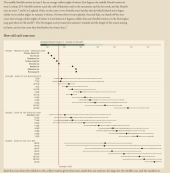
After starting to read this thread, I queried about walnut oil smoke point and came across this blog chart.  I have walnut oil on hand for oiling woods, so was curious.

From a European / North American perspective, cast iron was in use 150 years ago.  Many of the fats mentioned didn't exist or weren't in widespread use.  Something to consider is how they were used by our ancestors.  I'd expect animal fats were the primary go-to.

For some of us who weren't raised with cast iron, discussions like this can add to the trepidation, especially when sources one expects to be reputable offer conflicting advice.

Another thing that may (or may not) be relevant is a modern electric glass cooktop doesn't heat the same way as the old resistance elements.  In the old days, the switch was a rheostat that varied the resistance of the circuit, so the amount of current flowing through the heating element varied.  This created a stable heating element.  We have a glass cooktop whereby the element beneath turns on and off, depending on where we have the temperature control set.  Thus, I would expect the temperature involved rises and falls as the element is on and off.  I'm not sure whether that would have an impact with respect to seasoning cast iron.
1 month ago