Mark Wyborny

+ Follow
since Sep 08, 2024
Merit badge: bb list bbv list
For More
Apples and Likes
Apples
Total received
In last 30 days
2
Forums and Threads

Recent posts by Mark Wyborny

The only worm I've ever seen in mid winter at the surface and active are redworms. They are also called manure worms and red wigglers, but they really dont wiggle once you've held an Alabama Jumper. During the summer they are deep under ground doing hibernation.  Once it gets cold and we've  had a first frost the redworm has its action time. I kick any pile of horse manure in the pasture and there are redworms swarming inside, even when snow surrounds the horse manure. But once it gets 85° Fahrenheit they are gone. I am with the others, the red worm ( manure worm, red wiggler) is the only really cold hardy one. During late spring nightcrawlers come up to breed right on the surface.  You can see them stuck together by the head rings with their tales still in their tunnel in the ground. This happens on the rare nights when things are just right. Old timers used to know when the nightcrawlers mated by the signs. During the cool wet mating nights you can snatch up bucket fulls of them.  I saw it happening last May 15 2026. Nightcrawlers never go into horse manure. No earthworms do except the red worms. During summer since at least the 1800s the Alabama Jumpers are the hot weather summer earthworms.  They are the best fish bait because they are firm bodied to hold on a hook and wiggle better to entice fish to bite. They can be found at the surface under piles of tree leaves in the woods all over the southest usa. I used to sell them for bait in 1970 in Pensacola, and my grandpa in 1920s in Galveston. They wont survive cold so dont even think about them, theyve had 200 years to prove that. Now the news changed their name to Asian for sensationalism and fearmongering. You  wont find an all around ,all season earthworm. They each have their own seasons.  There is two species of NATIVE Alaskan earthworms you might look into but I have zero experience with these two. I bet they are hardy as they obviously survived ice ages up there on the arctic circle. Everyone seems to agree Red Worms for the win! The redworms are small but they are your cold hardy earthworms. I am in usda zone 7b and we get around 0° Fahrenheit but the winter red worms dont even notice.

2 days ago
I've grown alot of corn varieties and never was there a corn with as large of cobs and more productive than Bloody Butcher. I grew an acre of it for my animals for 15 years. A few rare cobs out of a few hundred stalks will come out rainbow colored. Some people save those cobs and just replant them the next year. I saw one sold from those from someone from Kentucky in a seed catalog once. I always tried to save only the largest bloody red ones for true to type. I wish I had of saved those giant rainbow cobs now. One year I decided to store my harvest shucked and off the cob.Huge mistake.  I painstakingly spent many nights under a porch light putting the kernals in dozens of saved plastic feed sacks in the barn.A few weeks later it was all molded. I have never grown corn since that except a little popcorn occasionally. Bloody Butcher is the best corn you can grow because it provides massive ears, large leafy stalks and good healthy color. If you pick it young it is still white and makes perfect sweet corn too but only for a couple of days at the right time. Some of Bloody butcher's ears were a foot and a half long as thick as your arm and the stalks exceed 12 feet.  Saving seed you could REALLY work on that corn to fit your needs.
You probably did everything right but the WEATHER didnt.  
I peel them still firm but ripe and slice discs in zip lock bags of coconut flakes shake and freeze them. Keeping them frozen i take out what I want for a bowl of cereal. My dehydrator doesn't make the good kind of banana chips at the stores so I have the same question. How besides freezing can bananas be stored? I put in fridge whole and the peelings became dark, that doesn't help.
3 weeks ago
What usda cold hardness zone are you in? When do you start your seeds? When do you transplant your seedlings outdoors? Are you organic? What kind of tomato variety? What kind of fertilizer have you been using? Maybe your solution is simple. For one thing you are doing excellent keeping them big and healthy, now let's make them mature earlier. You've already got them flowering and fruiting too. They are just late to the party. Why is the question.
I plant tobacco direct sown on wild hog rooted spots just by breaking open last years seed capsules stored in the jars in the freezer. I just scatter the microscopic seed dust on the surface after the last frost in spring. The only thing they need is picking off the green camouflage hornworms that will devour the leaves overnight. The hard part i STILL haven't figured out is how to cure the leaves so they are as desired by tobacco users as store-bought.  Mine just taste like dried leaves no matter what I try. My neighbors dont ask for anymore free tobacco once they try it because the youtube videos arent helping me perfect the craft at all. What's the secret?
3 weeks ago
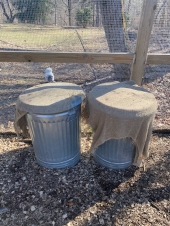
I bought the galvanized metal garbage cans based on someones advice nearly 30 years ago. The lids leak and they must be kept under shelter or they'll rust away fast. Ellen up there suggested an old freezer. YES! My old freezer stopped being affordablly fixable so I put my feed sacks in there. Perfect even outdoors and animal proof unless you have a smart mammal or something like that. Mine holds a huge amount of feed bags and its easy to rotate bags and scoop out daily needs from each kind of feed sack. I vote for recycling an old freezer. People want them hauled off, they look ok and they weigh very little. Get one for FREE!
3 weeks ago
In my experience trust the natural flora of your region if you dont need that part of your garden. Organically fertilize it well and harvest the weeds that volunteer there. If you're wanting suggestions on food crops that add biomass you need to research what grows best in your garden there and accept a lot less biomass. Nothing beats the natural weeds in a temporary garden location. They are the best cover crops but they will be more labor to harvest and keep from volunteering again.  Weeds are adapted to thrive in your location on total neglect.  How can anything beat that?
3 weeks ago