Benjamin Angel

+ Follow
since Mar 11, 2025
Merit badge: bb list bbv list
For More
Apples and Likes
Apples
Total received
In last 30 days
0
Forums and Threads

Recent posts by Benjamin Angel

It sounds like you're drowning the mound itself. Also, with how young the mound it, it's likely not established the mycorrhizal network needed to bring water from the base of the mound up to the plants root.

A constant water logged environments would have me  concerned about creating anaerobic conditions and damaging the soil health. I would run the irrigation over the top of the mound so it can slowly be absorbed into the mound. If you want to water deeper into the mound, also consider adding in clay pots buried in the soil or hollow logs added vertically.

The water wicks up the mound, because the wood forms a mycorrhizal network more than the wood just wicking stuff up. The mycorrhizal network will bring water from outside the plants' root area and exchange the water and nutrients for the exudates the plant releases from its roots.

Other considerations -- water kind of cover do you have on the mound? Do you have enough mulch? Is it bare dirt and plants?

Are you growing plants that shade the mound? That'll help it retain moisture in hot, dry weather.

3 months ago
Some updates:

Ash trees I talked with a local arborist and the property owner. The park that is apart of the forest recently removed all of their ash trees and gave the wood away to anyone that wanted it. He's got an unaffected ash on the property that we'll keep an eye on. The arborist informed me that my state gave up on quarantine and removed all restrictions. So I'll likely continue to use ash in the future. I imagine it would be worthwhile to create an ash tree drop off for infected trees with the plans of turning them into biochar...

Design successes and changes

1) Steps were so useful and added safety in the rain

I added about 2' diameter fresh cut pine logs as steps around the mound. These made it so much easier to access the upper area. Also it was rainy and muddy. I lost balance and having the large, flat surface to step down onto was much safer than going up and down the logs.

2) longer mounds
I increase the length of the mound from 10' to ~20'. It just felt so small, but this is using up a good chunk of the wood I collected.

3) Ecosystem design

Creating space for lizards, snails, slugs, and bugs

When collecting the wood, I piled it up in the pictures and put wood chips and mulch onto the logs. The logs I collected had a lot of life in them, so I wanted to try and keep that life alive / grow so I'll have healthy soil in the mound. I found tons of the beetles of all sizes and varieties. Two lizards and a frog. My neighbor also caught an opossum that I released into the woods.

I also wanted to bring in slugs and snails. Slugs to feed the beetles and lizards.

perches for predators

You may be able to make out the branches I have sticking out of the mound. I'm planning to use some of those as perches for dragonflies and birds to help hunt bugs. Some will also be used for trellis, etc.

intentional cavities

The most recent addition I made is incorporating gaps in the mound. I want this to be more of a living, natural ecosystem and I want to provide safe space for smaller life. I've also added in hollow logs and space along the bottom. I'm hoping this will attract a lot of lizards and things that will eat snails.

infinite snail energy

My plan was to bring in snails and provide them ideal environments so they could be prey for beetles and lizards. I'm hoping that having chop & drop plants to eat and pressure from predators will keep them in check. So having lizards poop out snails will contribute to healthier soil over time. Snails are prey for beetles that contribute to soil health. So I'm hoping that the mound will nurture the surrounding soil health as well.
8 months ago

William Bronson wrote:Welcome to Permies!

Your design seems very welcoming to tiny life, which is excellent.
Can you elaborate on the log paths?
Will they be made of 1' rounds sitting on their flat sides, or will they be longer logs?


It depends a bit on what I manage to collect. The main goal is to provide easier path to walk and some height for shorter people. My belief is that it’ll be easier to step and balance on the flat cut side of the log. So 1’ cut logs, so the path is about 1’ tall. The logs themselves being ~1-2’ in diameter fresh cut wood.

I’m going to stagger them to close gaps. It’ll depend on whether I’m able to collect the right/enough wood that’ll work.

I’m starting to reach out to tree service companies. One has to pay to dump wood and the have to chip the wood they dump. So I’m hoping to set up tree dumps like the one I’m currently using. But given the other warning about ash bore, it could be a good idea to also plan to make biochar or something with infested logs.
9 months ago

M.K. Dorje Sr. wrote:I hate to be a party pooper cause I really like your hugelkultur design, but be sure to check out this article about the Emerald Ash Borer before you proceed. (This is the beetle you don't want in your hugelkultur!):

https://en.wikipedia.org/wiki/Emerald_ash_borer

These beetles are really nasty and cause all kinds of problems. And they are definitely a problem in your area.


I haven’t seen any of them so far! But thank you for the warning. I’ve saved some pictures of them to reference while I’m inspecting logs I’m collecting.

But I’m guessing it’ll be hard for me to catch any eggs planted on the Ash?

I have noticed insect holes on some of the logs I’ve collected. I should make sure they’re ash. I’m guessing the mound would be crawling with hatched emerald ash bore if I accidentally gathered Ash with eggs?

Did you notice any in the pics? I might just have a bonfire with them and use the ash of the Ash borers / bonfire in compost or something.
9 months ago
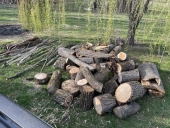
So I'm currently collecting the wood for the project. I've been pretty lucky to be able to collect wood from a local tree dump on a farmer's nearby land. However, I know I'm not skilled at identifying trees by their bark. Located in southern Indiana if that means anything to you. If you seen any wood in the pics below that you know will be bad to use in the mound? I've collected some branches to use as barriers.

I've attached images of the rough sketches of the design.

The two main features are 10' long mounds. I'm planning to remove 6-8" of soil to put back over the mound. I'm going to stack the wood until the mound is 6' above the ground and 6' - 7' tall. The sun arcs from the left to the right of the paper, so the sun will crest roughly in the middle of the two big mounds.

Along the sides of the big mounds I'm planning to add a cut log path. Roughly 1' in height abd all be fresh wood. I'm hoping to make a path that'll help retain the mound shape, and give people a path and height to make picking / working on the mound easier.

I have added pics of the wood piles. I suspect I've collected some local firs, especially the newr wood. But I'm really excited about all the logs I've gathered that are entirely fruited with mushrooms. I'm hoping these will accelerate the inoculation of the fresh wood in the mound. My goal is to try and get the mycorrhizal network fully throughout the wood in the mound as quickly as possible. I haven't seen anyone talk about this aspect, but I believe that's the a big reason the wood is able to act as a sponge. The mycorrhizal network would help bring nutrients and water into the growing zone of the plants on the mound.

I'm going to connect the mounds with wood paths and plant something between the wood.   I'm planning on digging the dirt between the paths a few inches deeper. My primary goal is to create a habitat for beetles to survive. I think it'll get wetter and danker and more stable temperature wise. Generally colder when it's hotter and warmer when it's colder. Especially because it will become the chop and drop and leaf mulch dump. After about 3-4 years I think it'll be time to use the soil from there as really health soil. Fill the gaps with fresh logs, and then pull the old path to use for new beds. Then the old path becomes the new gap. Soil gets removed from there.

The path is entirely there to provide habitat the beetles will love. beetles hunt snails and help create really healthy soil. It'll also likely provide good places for critters to hide

A lot of the wood I've collected was partially buried so I've brought in a lot of pill bugs, centipedes, and other bugs. I found 3 large ground beetles that I made sure survived the trip. I was excited about them. I've brought in a few snails and baby snails. I know a decent sized slug made it. Since i'm planning to chop and drop, I'm hoping they eat a lot of the chopped and dopped leaves. And if I have a healthy beetle population, they'll predate the slugs. So slugs are helping accelerate and diversify how nutrients from the plants are cycled back into the soil. And the beetles also play a role in healthy soil, so we want a diversity of beetles and keeping a balanced population of their prey is beneficial if there are enough predators to keep them in check.

I've dodged ants and termites twice. I've generally followed this process. Twice I've found ant nests set up in between loose bark. 1) If there are any holes, check the bark. If the bark is loose, hit or aggravate the wood. Remove the bark to reveal underneath. If you experience no ants or termites at all while peeling back bark, it's pretty unlikely its infested. I always remove bark from the tree if I find any ant or termite on the log. If it's infested, I leave the log where I found it. I've been able to collect snails, centipedes, pill bugs, etc by being pretty gentle as I life the logs out and into my truck. I've set up a compost / wood chip pil ontop of the logs to create a temporary habitat in hopes of keeping a small insect habitat alive. There's nearby woods and unmowed field next to the mounds. I'm expecting a lot of volunteers from the grasses and flowers. Passion fruit vines are also growing in the woods / field from what I've been told.


The right large mound will get shade from the forest starting around 2pm. In the evening it's possible everything will get shade depending on the time of the year.

I'm planning to direct sew almost everything into the mounds. I've gotten a lot of micro clover and crimson clover.  I've ordered a lot of landraces and want to let the plants get a season in and harvest seeds to plant for next year. This year I'm going to mostly let things go to seed to replant next year. I'll harvest what doesn't seem to be well adapted this year and let what seems to thrive go to seed.

The primary plants I want to grow:

1) Sorghum (broom corn for brooms & Coral and Allu Jola for popping)
2) Fennel
3) Brassicas
4) Okra
5) Tomatoes
6) medicinals and herbs (Mullein, Comfrey, Dill, Basil)

I've got some Sepp Holzer Siberian Rye(https://store.experimentalfarmnetwork.org/products/sepp-holzers-siberian-rye?srsltid=AfmBOoopGsjnmqZU9vTuQQO3qUDEY6ai30u5zn7Pifihyob8f7TJQTZ3) , but I'm afraid it might be invasive for southern indiana.  

Current seed list:

https://docs.google.com/spreadsheets/d/120WT5aDKPKjY8P0FhmUvZVDifxY3EbSJGYaGj5hAGUY/edit?gid=1155557484#gid=1155557484

9 months ago