Sophie Sacca

+ Follow
since Nov 20, 2025
Merit badge: bb list bbv list
For More
Western NC
Apples and Likes
Apples
Total received
In last 30 days
1
Forums and Threads

Recent posts by Sophie Sacca

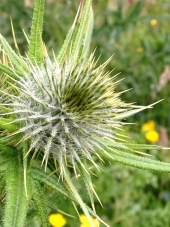
For an opposite view, we LOVE our native field thistle (cirsium discolor). We had five volunteer plants flower this year and it’s been hours of entertainment: Constant stream of butterflies, bees, moths, hummingbirds, and goldfinches. I have never seen so many pollinators and birds attracted to one plant before.

We are so hoping more come up next year. I’ve read that this species of thistle is biennial — first year a floret of leaves, second year flowering, and then they’re done.

I vote yes, definitely plant thistles. Just make sure they’re native to your area (I don’t think milk thistle is). Field thistle does grow tall, though. Ours are about ten feet tall.

Ulla Bisgaard wrote:
Here is what I do.


That is beautiful. Thank you!
How does one balance growing food and keeping wild areas safe from unhelpful nonnative plants?

Some plants mentioned in this thread can act invasively and crowd out much-needed native plants. It might not be a problem in our vegetable patches but if birds and wildlife spread seeds to other areas it can contribute to loss of habitat elsewhere.

So how do we balance our human needs with the needs of other organisms and ecosystems?

And if we limit ourselves to only food that is native to our locale, could we still survive?

Tereza Okava wrote:it took me forever to get rid of.


Yep. I'll be picking this stuff out for years. *sigh*

I'm so sorry you had to deal with similar.
9 months ago
In case anyone in the future finds this thread:

One part of the roof was done later, so I managed to tarp underneath that area. A tarp is crucial and extremely effective for protecting planting areas. But, it still takes quite a bit of care to remove the tarp without spilling the little bits of insulation onto the soil. On top of that, because the insulation is so light, the tarp will then need to be vacuumed with a shop vac, which is time-consuming.

As for the areas that weren't tarped, I did find that using a shop vac on a low setting, or with it slightly clogged, helped. The lower suction meant that it wasn't powerful enough to pull in the leaves or soil, but could pull in the lighter insulation. It wasn't perfect -- it still sucked up some leaves and soil, and where the little bits of foam had mixed in with the soil, it couldn't do much. But it did reduce the risk of pushing the bits of foam further into the soil.

Overall, the task of containing the pieces of foam insulation was hugely tedious and time-consuming. I really hope no one ends up in this situation.

FWIW.
9 months ago

Christopher Weeks wrote:

Sophie Sacca wrote: I'd either ask them to fix it or contact a local attorney to see what they think about the situation. This shouldn't be your problem alone.


Thank you! The sales rep offered to help me pick the stuff out and the crew was more than willing to rake everything away. Quite honestly, though, after seeing how the crew trampled all my native plants (which to anyone else look like dead stalks/weeds at this time of year 😢), I really don’t want them anywhere near the planting beds. Thank you so much for validating my frustration, though.

10 months ago

Nancy Reading wrote:I suggest you treat it as a learning experience, and thank you Sophie for putting it here as a warning for other people. Putting sheets down on the ground before they cut the insulation would have saved you so much trouble. It is easy to be wise in hindsight of course!


Absolutely!

The company said they'd tarp around the house, but then they didn't. I (stupidly?) figured I'd simply pick everything up after they were gone. I had no idea how awful this stuff was. So for anyone in the future who's reading this, tarping is the ONLY way. This stuff is horrible to try to pick out. Unless you're willing to say goodbye to all your leaf litter and probably a top layer of soil (and any seeds you've planted), it's a huge job.

Actually, after this experience, I don't think I'd ever install polyiso foam board insulation anywhere again. It's like styrofoam and the little bits get everywhere. I'd rather be cold.

Thank you again for everyone's responses.
10 months ago
Oh my gosh. What great suggestions. Thank you!
10 months ago
I have a native plant bed near a forest. All the leaves that fall I leave on the bed for critters and bees and such.

Well, we just had our roof replaced and decided to add polyiso foam insulation board underneath the shingles. What I didn't realize was that because the insulation has to be cut to fit at the edge of the roof, all these little bits of insulation (think styrofoam-like) floated down onto the leaves. I can remove the larger pieces, but the smaller pieces are too difficult to pick out by hand.

I know this is a long shot, but has anyone found a way to remove tiny bits of debris from leaf litter without having to remove all the leaves?

I saw on the soil forum that putting the soil in a bucket of water can separate out foam-like debris because the soil sinks and the foam floats, but in this case the leaves will float as well. Plus, I don't like the idea of disturbing the leaves as that could potentially destroy any nests or other critter habitat.

Part of me thinks I should suck it up and simply remove everything down to bare soil so all the horrid stuff is gone, but then I can't bring myself to potentially interfere with and/or destroy the nests and eggs of anyone who's found a home in the leaves.

Any advice?
10 months ago