

|

|
|
|
|
Amber Perry wrote:Hi all,
I put up a 30ft yurt 4 years ago. It is situated on a rock wall I put together. Just rocks and mortar. I don't know why I thought to do this, but when I built the rock foundation I put in a french drain...directly under the rock wall.
The drain is a 6 inch perforated pipe that is surrounded by a 4 inch radius of clean crushed stone, wrapped in fabric to prevent sediment from clogging the drain.
My problem is that I obviously should have put this drain AROUND the foundation, and not UNDER the foundation.
As of right now, there have been no problems. The drain does move water and runs out back behind the yurt.
My issue is, the yurt has needed constant work. And still isnt done. I am unsure about continuing to invest in it, because now that I have more building experience I am more and more concerned the drain is going to cause a big problem.
Is this a huge concern? Its been fine for 4 years but do you think the drain could somehow collapse in and lead to my foundation cracking/crumbling?
Thanks for any input
Daniel Andy wrote:I'd like to be able to grow some tropical trees in south-central canada. In a greenhouse. I've seen it done with styrafoam, but I want to do that in a natural building context.
I want to build a greenhouse to do that and use strawbale around timber structure for it straw's insulation properties.
I am concerned about high humidity (a result of warm temperatures and frequent top-watering on wet soil in sun) and its effects on a strawbale wall system.
As it's canada and cold/dry...a significant amount of condensation on the windows is to be expected, even if they are doubled.
I could do a lot of drip-sill installation under each window to ensure condensation coming off it doesn't go onto the walls below, but is that even approaching enough? There will be plenty of moisture in the air, and watering, wet leaves, and air flow is sure to throw additional liquid onto the walls as well.
I am concerned that a high humidity greenhouse with lots of condensation seems like it might be a poor fit for strawbale, and I should look for less water-sensitive wall compositions. Is that right?
I'd like to stick within natural building but I'm not sure i have the years required or the team of people I would need to build a cob wall of sufficient thickness for a greenhouse. I'm not sure what other natural building approaches I can take that combine insulation with water resistance.
Thorsten Bux wrote:Hi there,
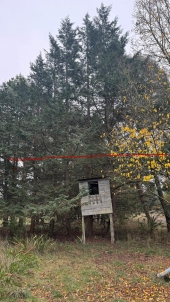
we have a tree line of about 6-8 quite mature and high cypress trees. During the wintertime, they shade the lawn and house area quite noticeably.
We are wondering if we could cut them down to about 2/3m height and use the remaining trunk as posts for building. We came across something called a snag to start planting and using the area again.
Does anyone have any experience and suggestions on what to do and how to best approach the project?
Many thanks in advance.
C. Letellier wrote:Combining a recent you tube video discussing vibration compaction talk about it staying compacted long term with how our first cistern growing up was built.
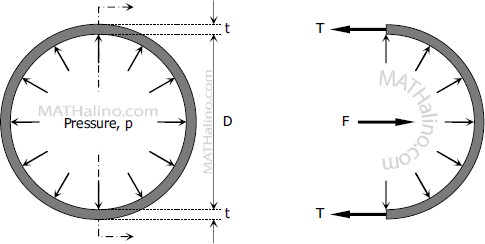
The compaction video basically said ground compacted properly under buildings was basically the same as piles. It didn't become uncompacted over time even with ground moisture. Now I am sure freeze thaw would break it up but what about just water?
Top half of the first cistern in my life was a monolithic pour of the lid and about 4 feet of walls as the top half. The lower half was a thin layer of concrete plastered over the dirt. Bottom half water held fine and worked but it was forever cracking at the joint between the 2 layers. My parents never did get it sealed for any length of time so we only used the bottom half for the most part.
But what if the thin concrete went clear to the lid so it was a consistent material and the dirt behind it was vibrated or rammed earth thus heavily compacted? Maybe cob with fiber glass or basalt fibers instead of straw?
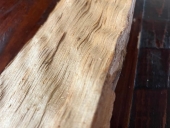
M Ljin wrote:The last load of firewood came, astonishingly, with quite a large amount of flame birch, a kind of curly grained, shimmery yellow birch wood. I’ve been saving whatever pieces I see, either big ones for a woodturner friend or smaller ones for my own purposes. Something tricky about figured woods seems to be that they can’t be carved with ordinary knives, planes, and so on, as far as I can tell—do this and the grain starts to split. I have had success with files and saws so far, but maybe there’s something I don’t know.
How do you work with these difficult but beautiful woods?