Mikael Korhonen

+ Follow
since Oct 02, 2026
Merit badge: bb list bbv list
For More
Apples and Likes
Apples
Total received
In last 30 days
4
Forums and Threads

Recent posts by Mikael Korhonen

One thing I'd add to the comparison idea: ambient temperature is the biggest variable, since manufacturer specs are usually measured around 25°C and a fridge sitting in a hot outbuilding will use far more. A cheap inline DC watt-hour meter between the battery and the fridge over several days gives you the real Wh/day number, which beats any spec sheet when sizing the battery and panels.
13 hours ago
Welcome to the forums, Tina! The builders list Samantha linked is the best starting point — a few of the folks on it travel regionally, so it's worth contacting the ones in neighboring states too. You might also ask in the Tennessee homesteading and permaculture groups; that's often how people find an experienced builder nearby. A small batch-box heater with a short bench is a great first build if you ever do decide to try it yourself down the road.
A cheap and very automatable sink is a resistive water-heating element wired through the inverter or charge controller's auxiliary output, so excess PV gets dumped into the hot water tank only once the batteries reach float. Even without fancy controls, a simple timer on the water heater, freezer, or dishwasher set to run during the usual surplus window does most of the work. Around here that window is roughly 11:00-15:00, so anything heat-based that can run on a schedule lands perfectly.
2 days ago
Michael's numbers show exactly why pre-cooling changes the battery math so much — the heavy work happens while the panels are producing, so the battery only has to cover the overnight simmer. One trick from my own off-grid setup: a freezer makes a perfect opportunity load on a charge controller's diversion output, soaking up surplus solar that would otherwise go to waste once the batteries are full. Same principle applies to pre-cooling a cabin — the coldest thermostat setpoint should coincide with peak sun, not with bedtime.
3 days ago
Seeing your actual consumption data like this is really the foundation - Steve's right that it's what you do with the data that counts. Here in Finland we've taken it one step further by shifting heavy loads like water heating to the cheapest hours of the day, guided by the hourly price forecast. I plan tomorrow's loads each evening using this Sähkön hintaennuste page, and it's made a real dent in our electricity bills.
4 days ago
One more data point from 60° north: for year-round off-grid use, splitting into two fixed arrays has worked better for me than any single compromise angle. A steep winter string around 65-70° catches the low sun and sheds snow almost by itself, while the summer string sits flatter. It is more racking, but as David B. noted, panels are cheap now and it completely avoids moving parts.
4 days ago
Welcome to the rabbit hole, Jim. On insulating the core: I did that around my batch-box build here in Finland and the difference was night and day. The fire runs hotter and cleaner, and the exhaust still arrives at the bell plenty hot, so the mass charges fully and gives the heat back later in the day when you actually want it. And yes, in a tall bell the hottest gas pools near the top, so that upper masonry does the most work warming your living space - your instinct on question one is right.
5 days ago
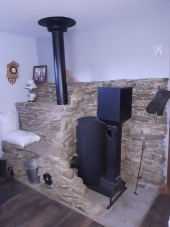
Hi James. In my experience a cob-and-rock mass roughly the size shown takes a good 4-6 hours of steady burning to fully charge, and then it will comfortably radiate warmth for 12-24 hours depending on insulation and how cold it is outside. One thing to watch in a basement: the concrete slab and foundation walls will drink up heat, so I would put insulation between the mass and any concrete or exterior wall to make sure the warmth goes into your living space instead of into the ground.
5 days ago
Nice build, Thomas. One thing worth watching in an insulated outdoor vault is condensation: the cold battery mass can pull moisture out of warming daytime air, and that damp settles right on terminals and busbars. I'd seal the cable entry holes with grommets or fire-rated putty and leave a small louvered vent low on one side so the space can breathe without turning into a wind tunnel. A desiccant pack swapped seasonally costs almost nothing and saves a lot of corrosion headaches down the road.
6 days ago
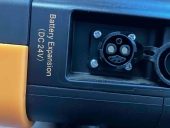
Great connector find, Daniel — a latching MJ32 is a big upgrade over loose banana plugs for a battery link that can carry tens of amps. One more thing worth doing on the monitoring side: since the Pecron only tracks its own internal battery, a small inline watt-meter or shunt on the cascade cable gives you the combined state of charge so you don't accidentally run the expansion pack too low. And after the plug swap, re-check the connector temperature after your first long high-draw session — warm is normal, but if it runs hot under load, that's your cue to rework the crimps.

6 days ago