Logically, the next step is to show the container I used to build it in. I ended up using a cheap plastic toolbox from Harbor Freight, that came as the outer box of a nested set of 4 toolboxes. It works so far, but it's less than ideal, because the latches & hinges are the weak points, and this will probably be over 60 lbs when done.
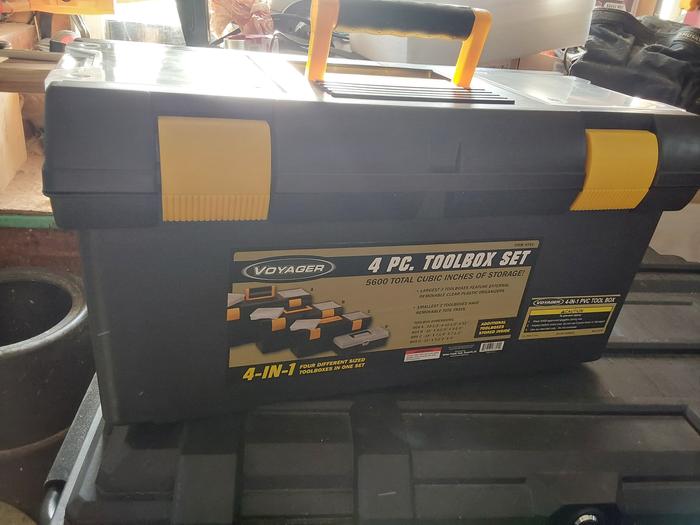
I initially tried putting the batteries at one end.
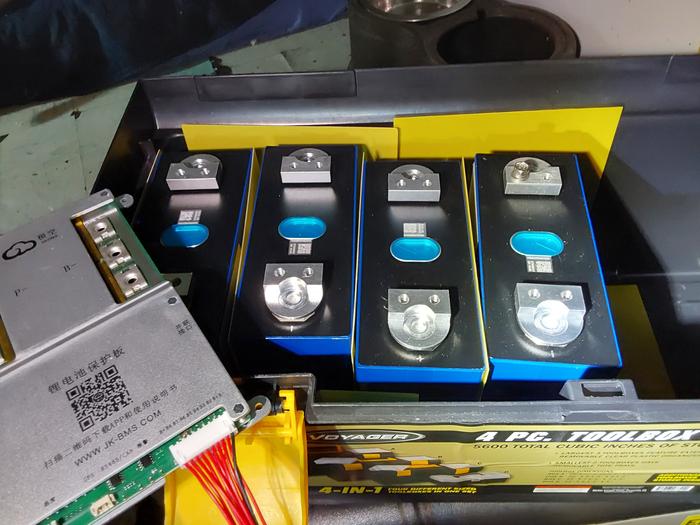
That proved to be too imbalanced to carry with the handle, so they were moved to the center and blocked with some of the close-cell foam packaging they arrived with...
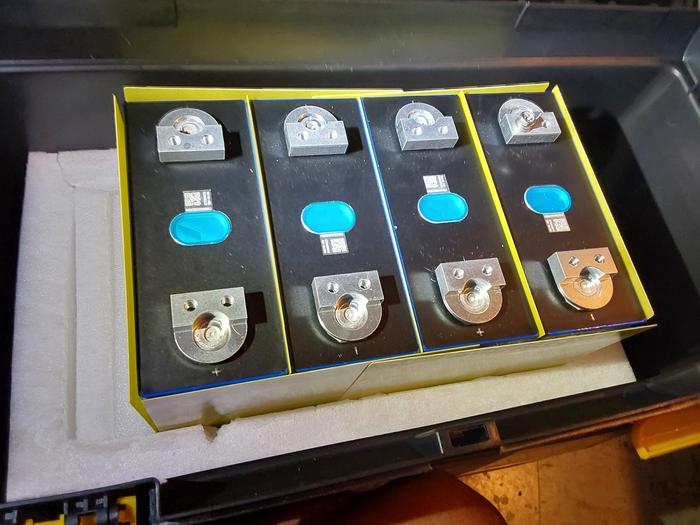
Moving into this box was also in conjunction with switching to a much higher capacity BMS, shown here:
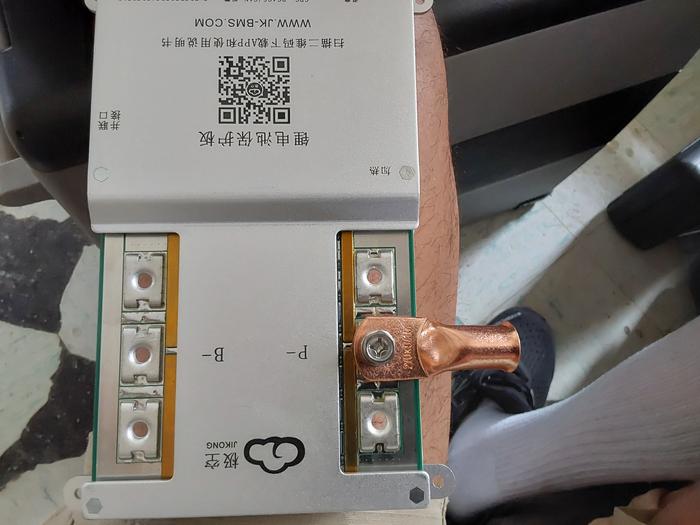
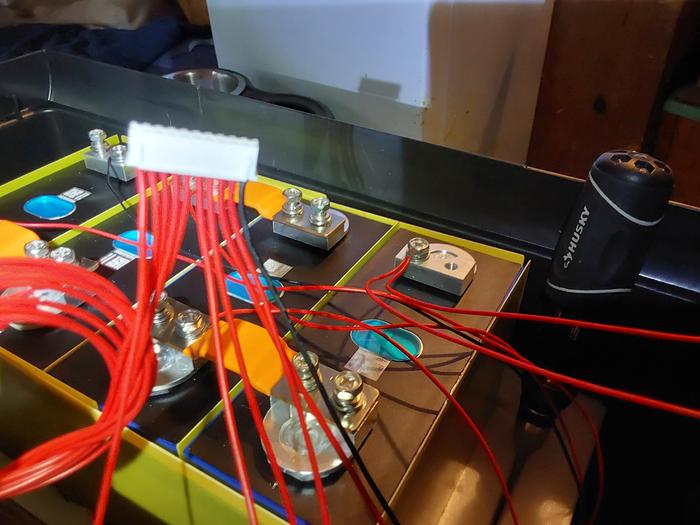
And connecting the balancing/cell sensing wires:
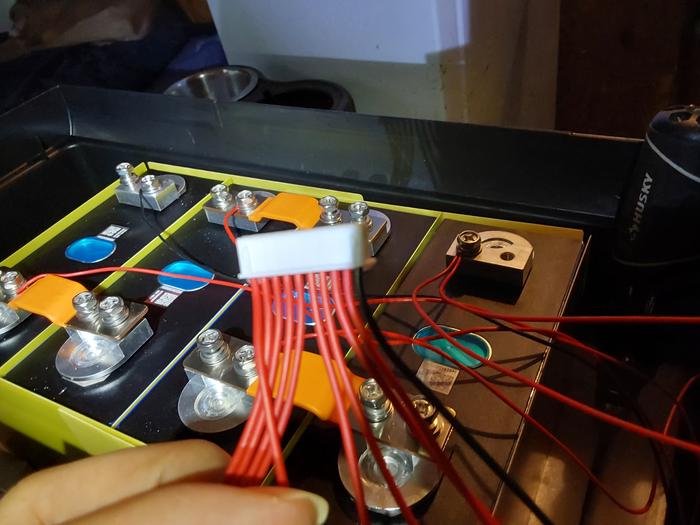
The unused wires can just be coiled up and taped out of the way.
A 300 Amp BMS should have a 300 amp-capable wiring harness and connections! As I'm really not intending to need or use that much raw current, I'll wire for 200 amps, & fuse for less than that. The recommended max normal charging rate is 157 amps for this battery pack, so I can do at least that...
This 2/0 welding cable is rated for over 200 amps, so it should be sufficient, and I have adequate crimps to put on the ends.
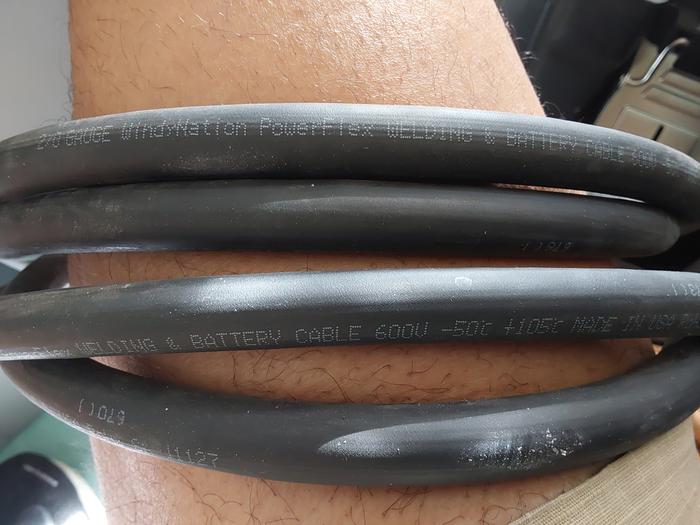
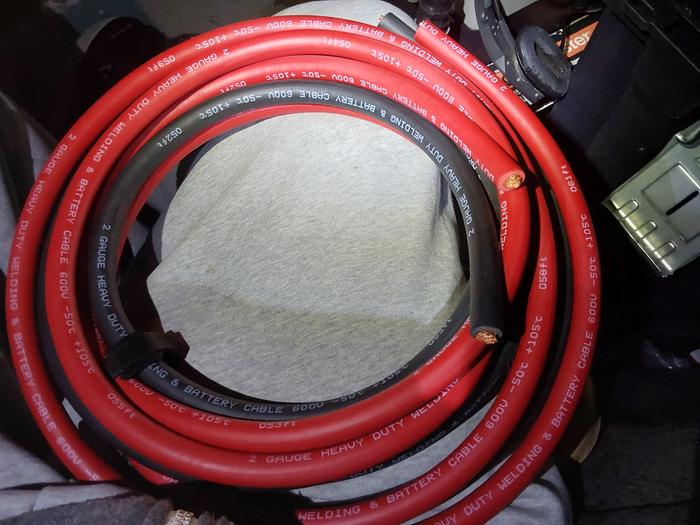
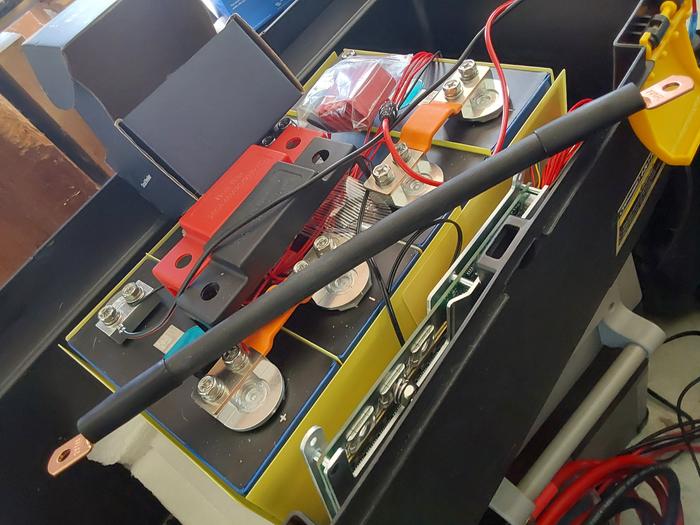
But since I really don't expect to have reason to push the 150 amp breaker, I'll use this 2 gage cable - it's much easier to bend, and this welding cable has pretty high temp insulation (105 C), so it should be good for up to 215 amps.
My initial mockup included 12 Vdc outlets with USB charging ports, to charge my tablet and mp3 player while working on wiring the BMS and the rest of the system, but I found out the really cheap fuse holders for the USB outlets started melting (
without blowing the fuse!, so I scrambled for a heavier duty fuse and wiring harness for them.
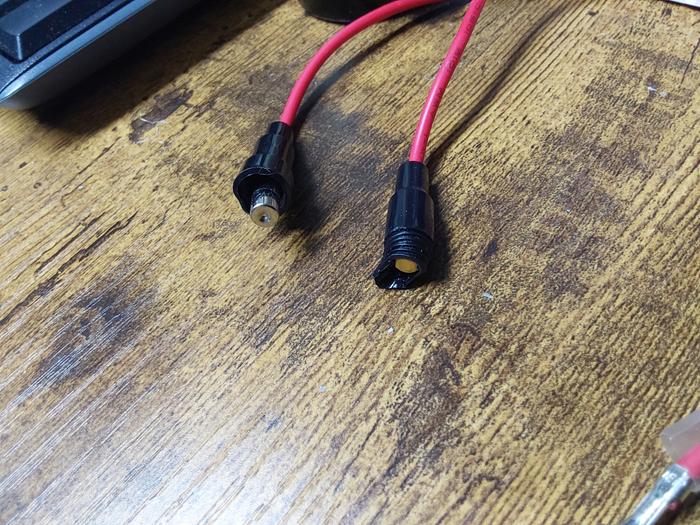
Very heavy-duty 12 Vdc socket, with a 20 amp fuse and 12 gage wire
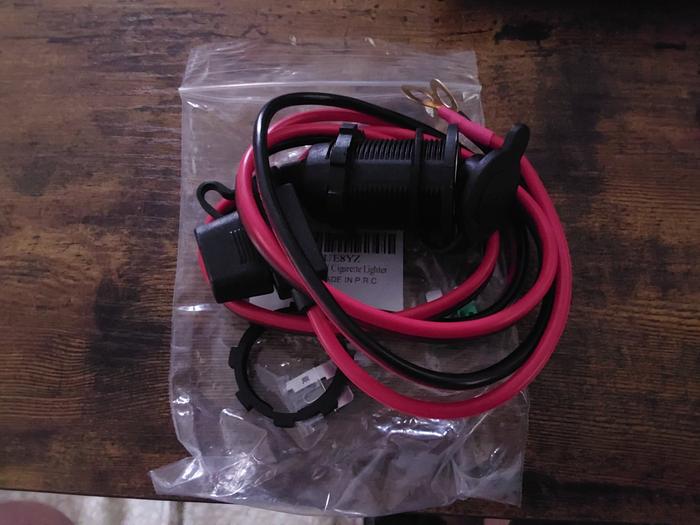
Public service announcement:
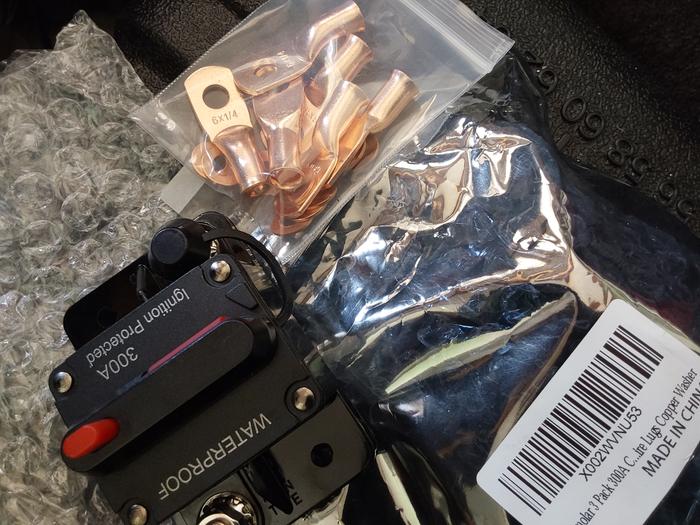
If you are ever tempted to buy & use these cheap breakers from Amazon, under NO circumstances, should you be using 6 AWG wire that these terminal lugs are sized for - if you do, your wire will burn up long before you EVER get to 300 amps.! Use large enough wire to carry 300 amps, or use a smaller breaker rated to protect the size wire you actually are using...
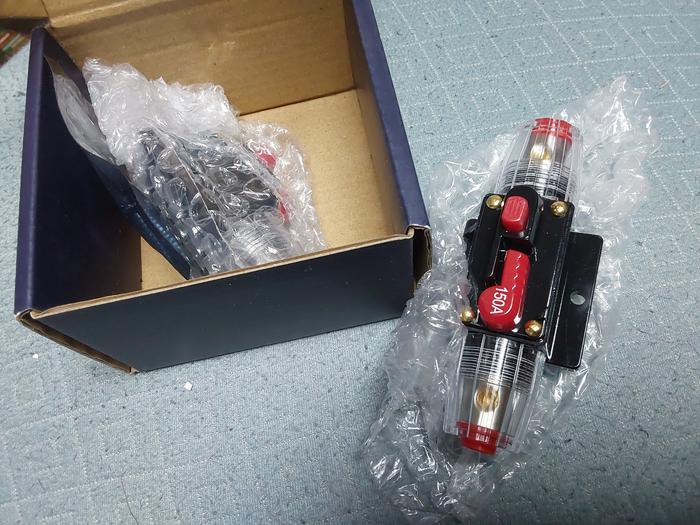
This is a much better design for a heavy duty breaker, but I didn't find it soon enough to replace the other one (yet)
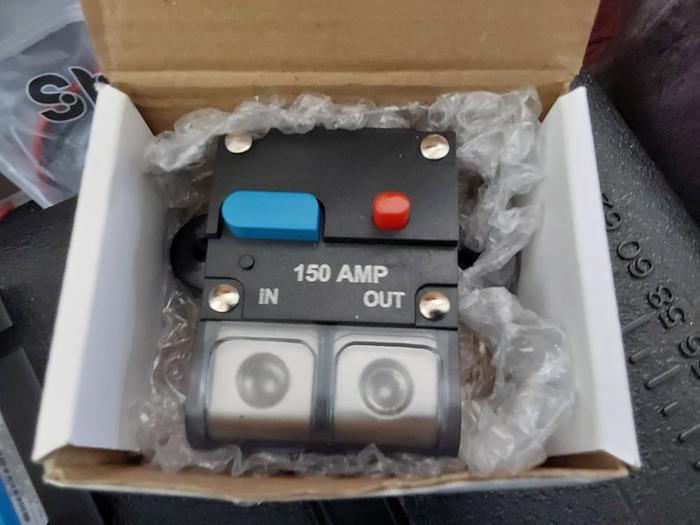
These are what I'm trying to use, but their ports aren't really large enough to support the large enough wire to match their rating without a lot of work & modification.
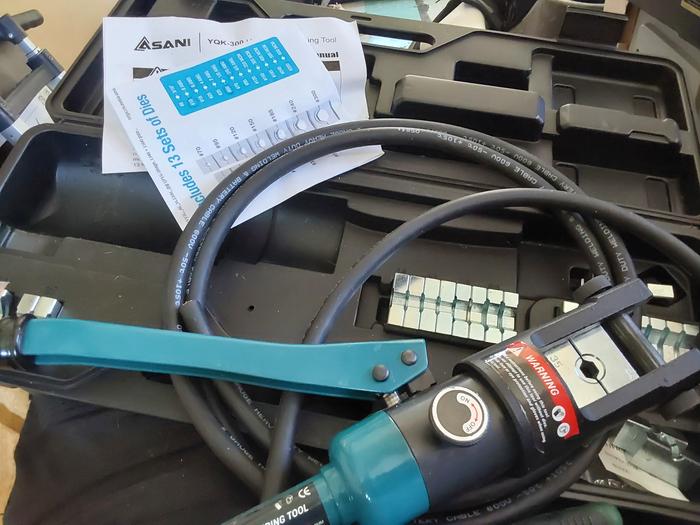
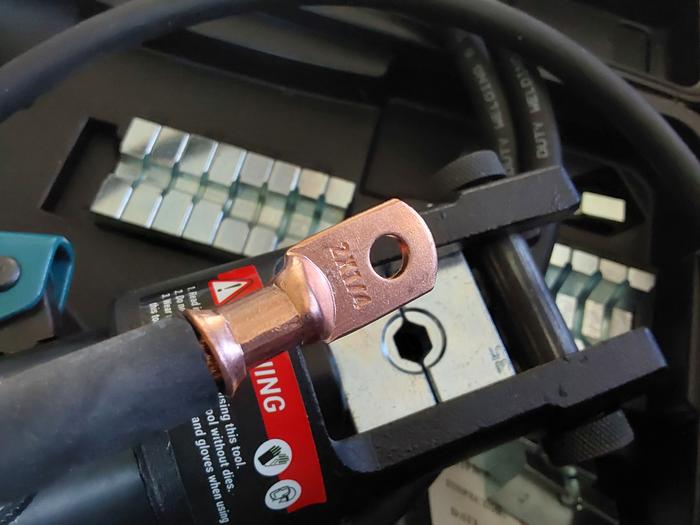
Working with larger crimps requires bigger tools:
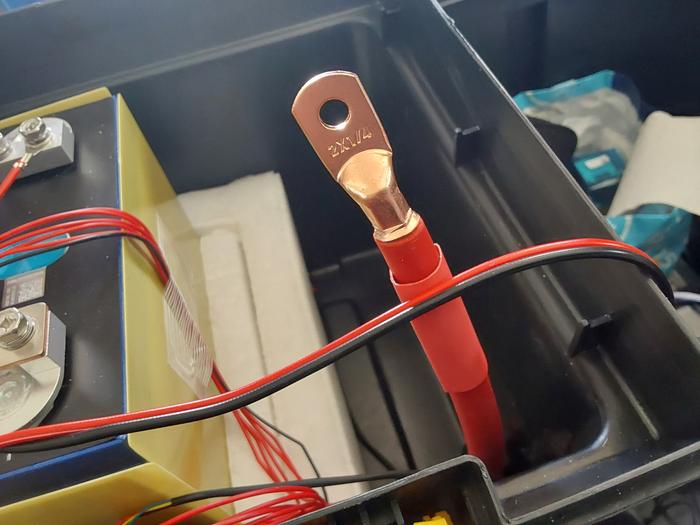
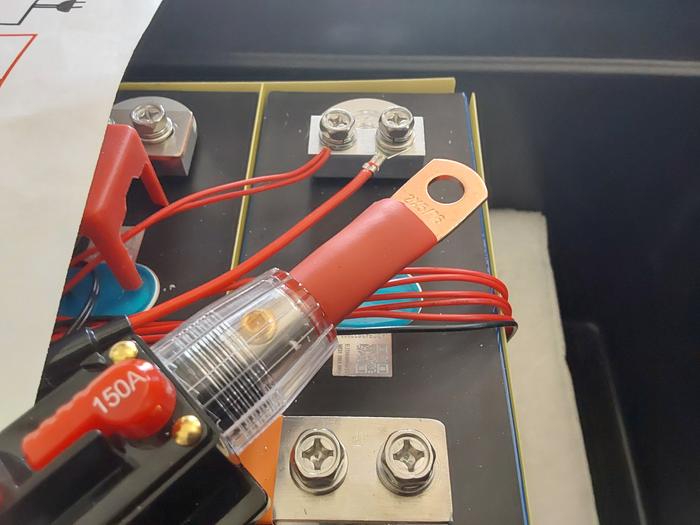
The struggle to fit it is in this post:
https://permies.com/t/120/274663#3772120
It's a good idea to put heatshrink tubing on the ends, but don't cover up the flats of the lugs, for best contact.
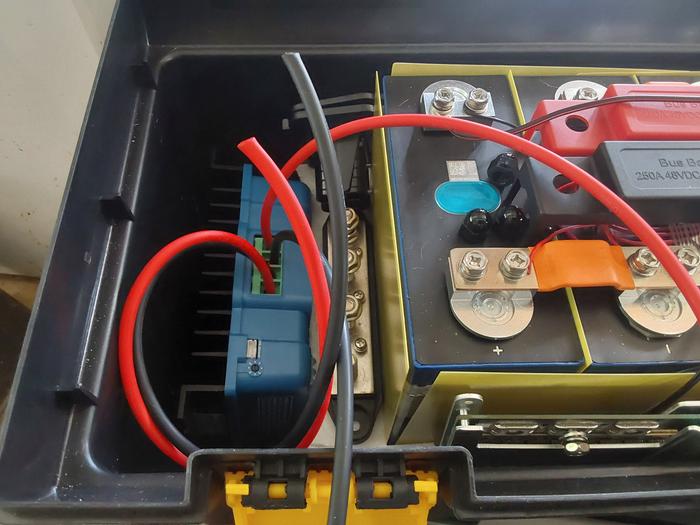
This is one of the solar charge controllers in the system (one of 3), and it's the one I started with:
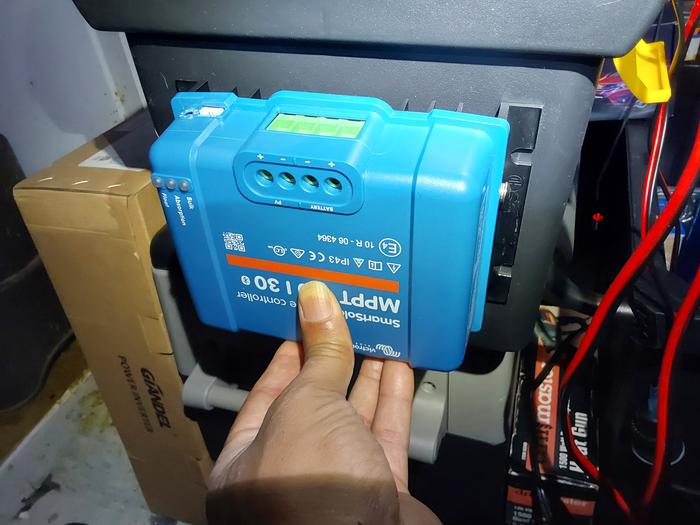
Testing a mockup in the back yard, showed that it didn't generate enough heat to worry about additional ventilation, so it's ended up inside the box now.
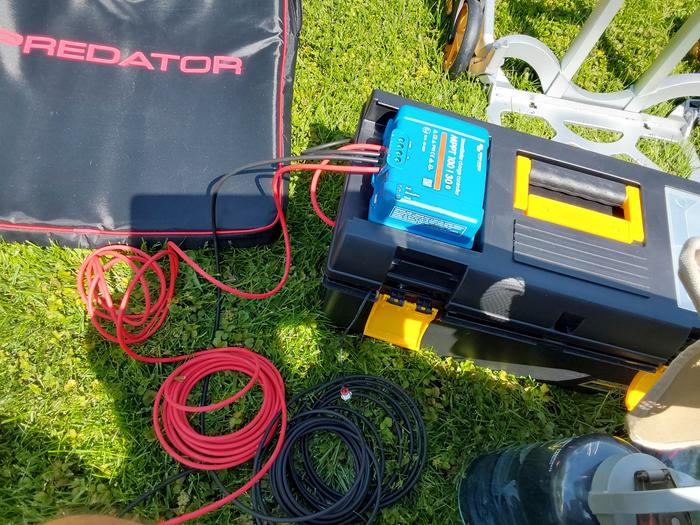
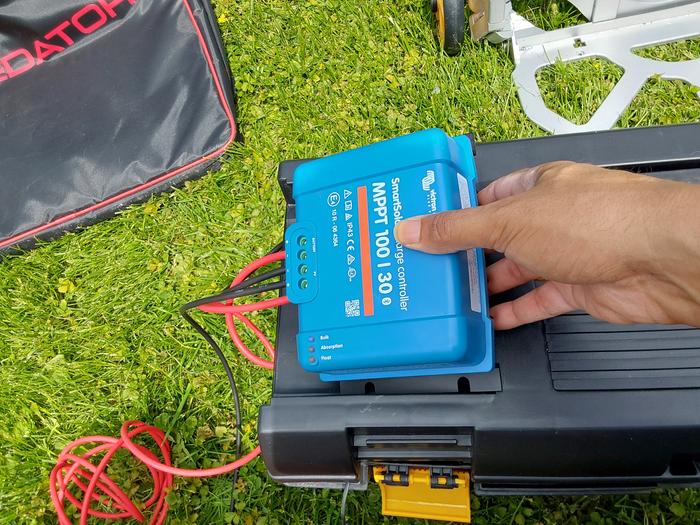
The negative bus bar is shown here too, prior to connecting anything to it. The left edge of the 300 amp BMS is toward the bottom right & mostly out of the frame here.
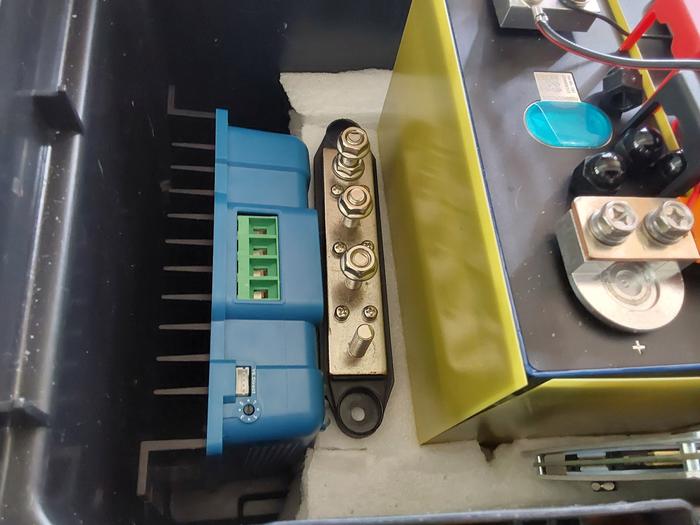
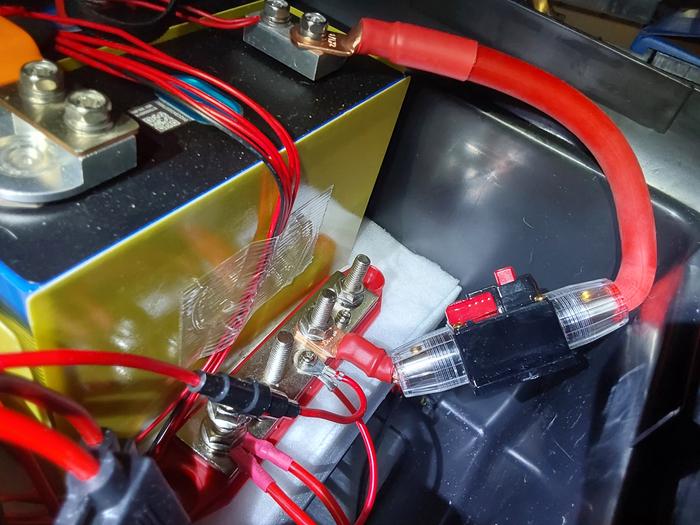
Here's a glimpse of the positive bus bar, with the 150 amp inline breaker and the 2 AWG copper cable connecting to the main battery positive post:
The 100|30 amp Victron in it's final home, working just fine:
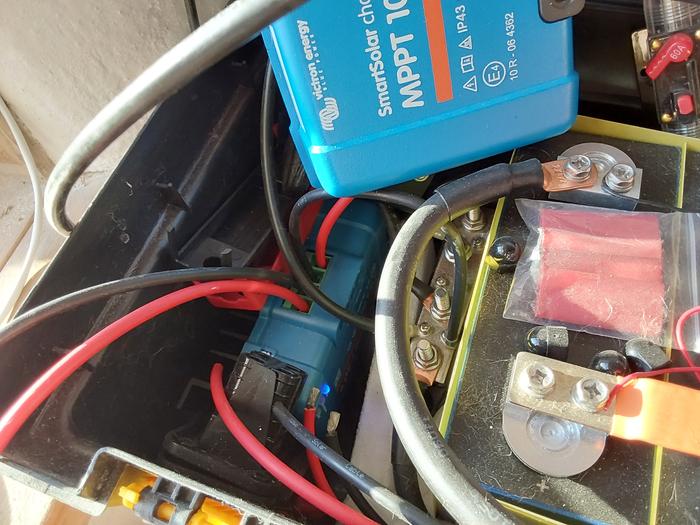
I used 10 gage PV wire for the battery and PV sides of the 30 amp controller because neither of them will ever see more than 30 amps, although the mfg still recommends putting a 40 amp breaker on the battery side and some kind of DC-rated disconnect on the PV terminals too... I skipped that for now, but I'll get there eventually?
This is where & what I used for the initial 10 gage PV wire - I just cut off sections of the raw ends as needed to make the shorter connections and saved the rest for connecting to the solar panels later:
10 gage PV wire from Amazon
The top right corner shows the original parts before chopping the cable up, and the bus bars are also in this collage too.
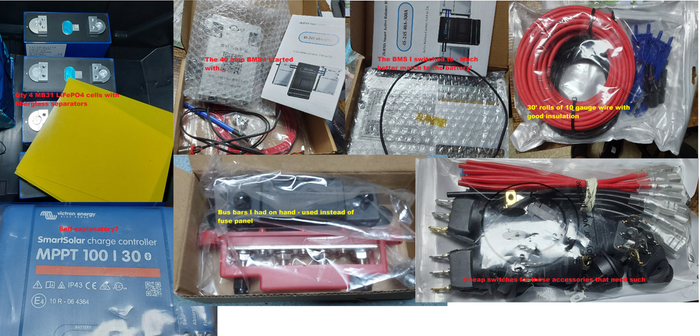
(what's left of the 2 rolls is laying on the toolbox below the pouch that holds a multimeter)
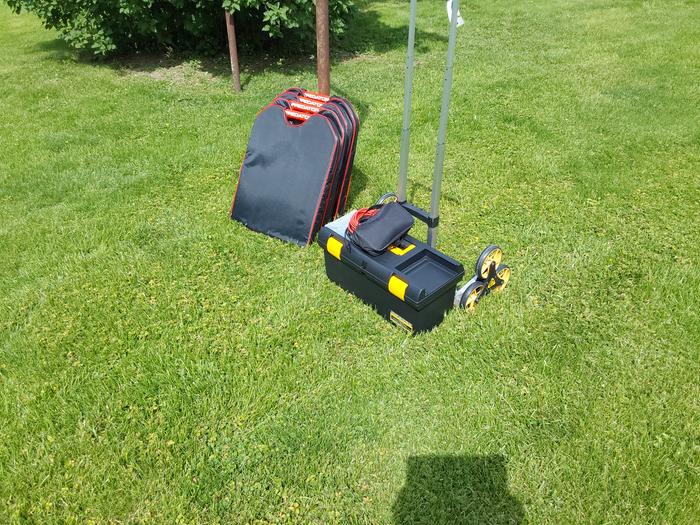
And temporarily connected here:
The 40 amp inline breaker is visible on the far right side of this collage, and the lower left corner shows the USB outlets (which are truly awesome, but don't use the stock wiring that they come with, it will melt...
Best to put spade lugs on your own 12 gage wire with a 20 amp inline fuse...
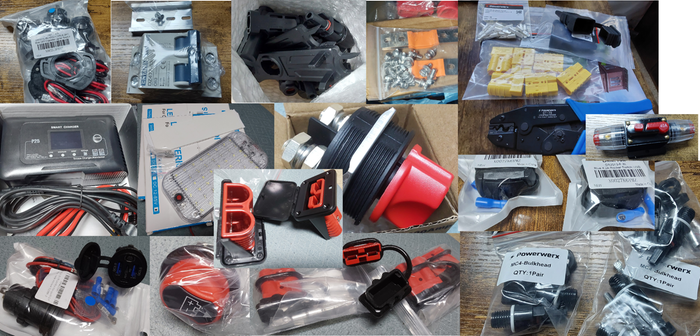
I also replaced the ring terminals on the ends, with smaller ones, because there's no way those wires needed to be connected to a 5/16" lug on the bus bar...
I've added a few more controllers, but they are the 100|50 amp variant
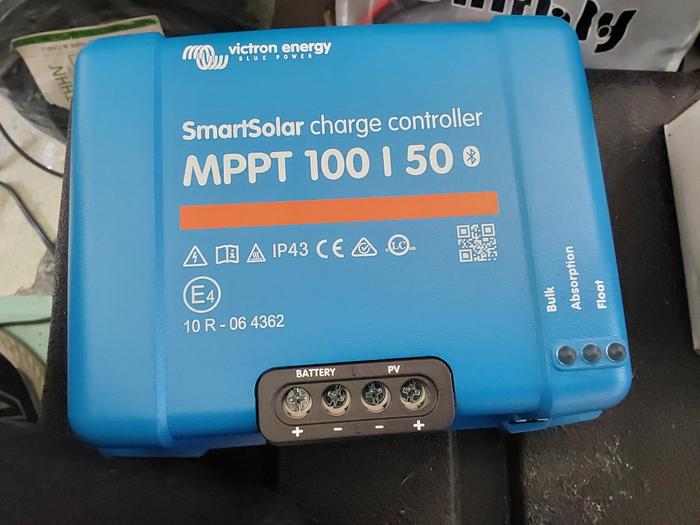
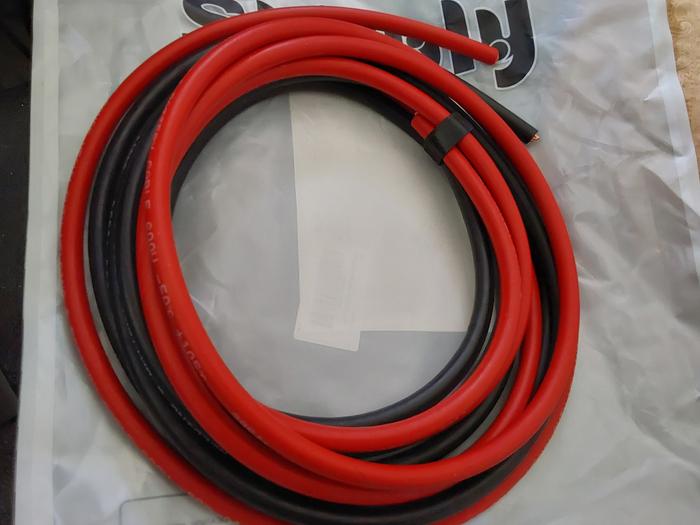
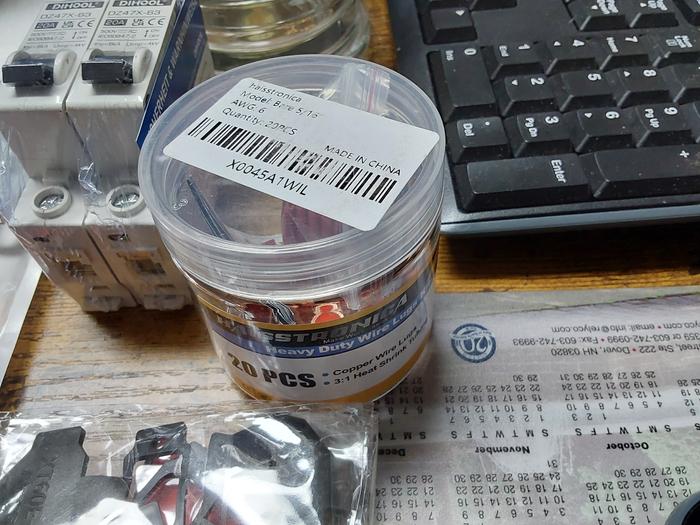
The 6 gage terminal lugs I ended up using on the 6 gage wire, when needed (for 50-amp connections to the bus bars from the 50-amp controllers):
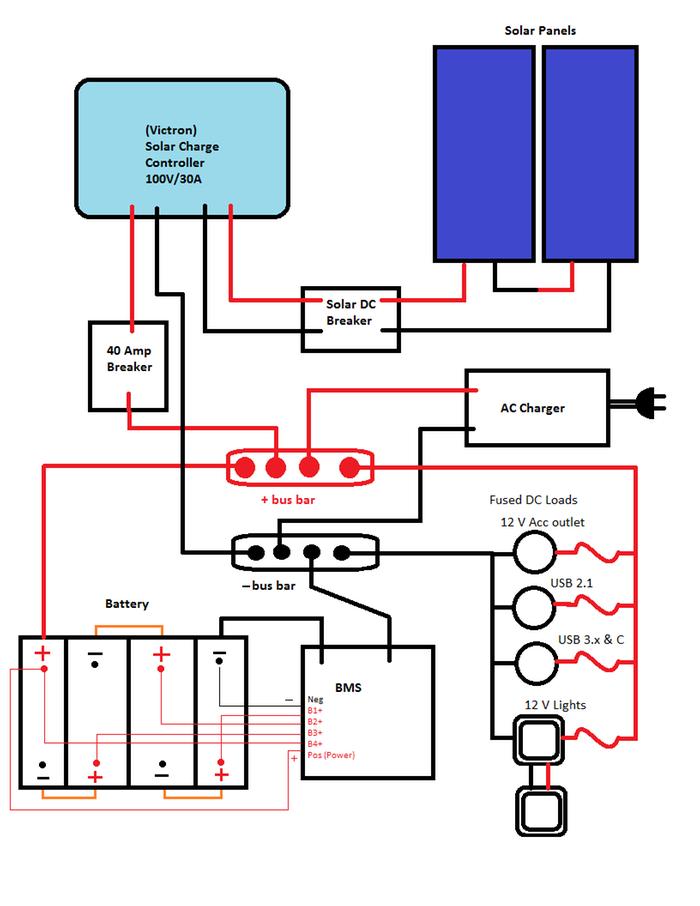
BTW, this is the basic schematic I'm following for this build - although I have more than one charge controller they always connect in parallel), and initially, I've skipped the circuit protection on solar side. I
DID include a main breaker on the battery positive connection (not shown in the schematic), though!
The AC charger has clamps, and I'm debating whether I want a permanent dedicated socket for it or not... Maybe a combo port for the AC charger OR a vehicle charger connection???
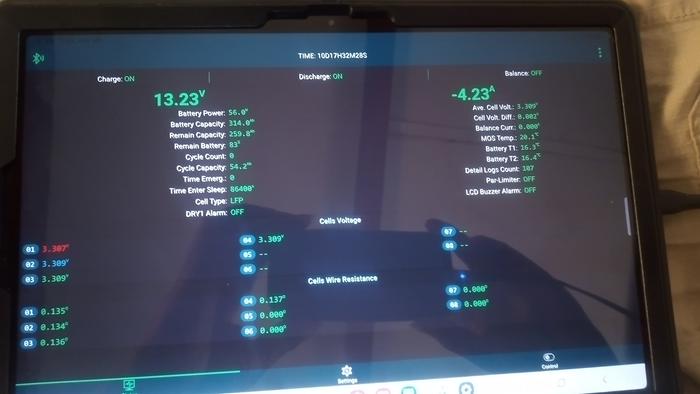
Here's a glimpse of the BMS screen, showing the function.
The 30 amp charge controller is way too small in capacity for my patience and my luck, as it can only charge a 12 Vdc system at a max rate of just over 410 watts in my real-world testing. For a 4 KWh battery, that would require about 10 hours of
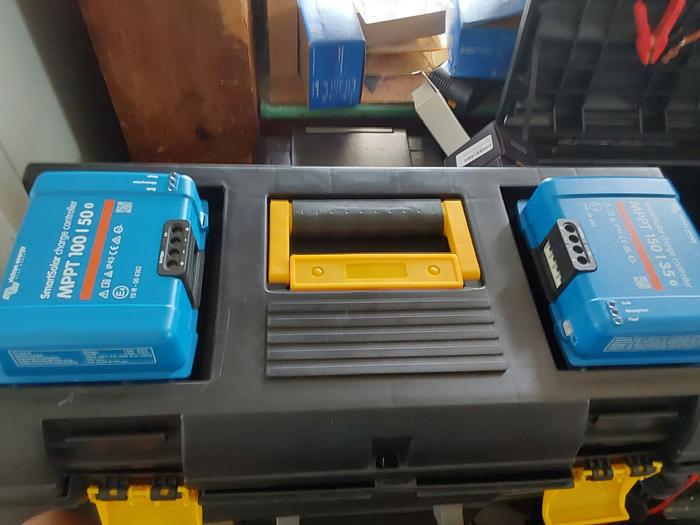
GOOD sunlight to recharge from empty, and the charge current of 30 amps or so, is far below the recommended max normal charge current of 0.5 C, which is 157 amps for this pack. I can and should strive to do better. I opted to switch to a pair of the 100|50 amp charge controllers that the top of the box, because they seemed to fit really well up there; I'll pull out the 150|35 amp controller and save it for a higher voltage project.
I've gone back and forth about the placement of the bus bars, but I realized that putting them on their sides at the bottom, would save space, but make them inaccessible, so that wouldn't work out well. I've split them up with positive and negative on opposite ends of the battery, which makes it a lot safer to work on too. After the bus bars are placed, the rest of the placement is easy and mostly falls into place, since the wiring for everything else is much more flexible than the main bus bar feeders are.
The positive cable was more of a challenge because of the need/desire to put a breaker on it.
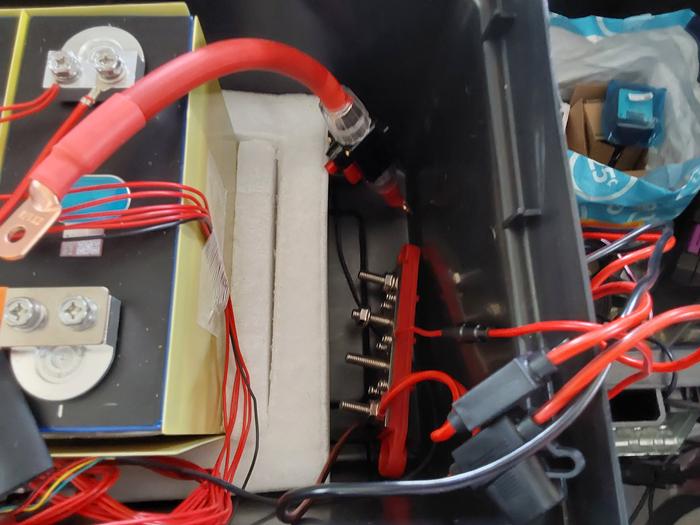 The most space-efficient place to put this is deep down here, but there's no tool access to connect anything else later!
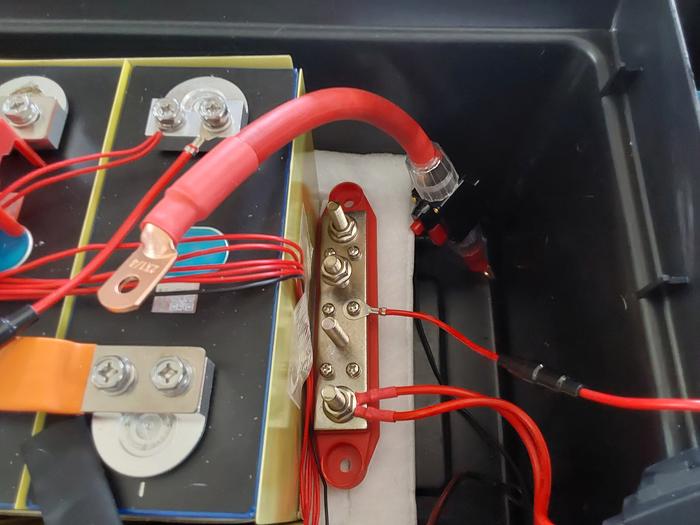 These look like better options for general access and use, but getting the positive cable attached?!?
The negative side has far less drama...
Where the positive cable has landed. I cut off the insulation and just used heatshrink to get more bend.
These look like better options for general access and use, but getting the positive cable attached?!?
The negative side has far less drama...
Where the positive cable has landed. I cut off the insulation and just used heatshrink to get more bend.
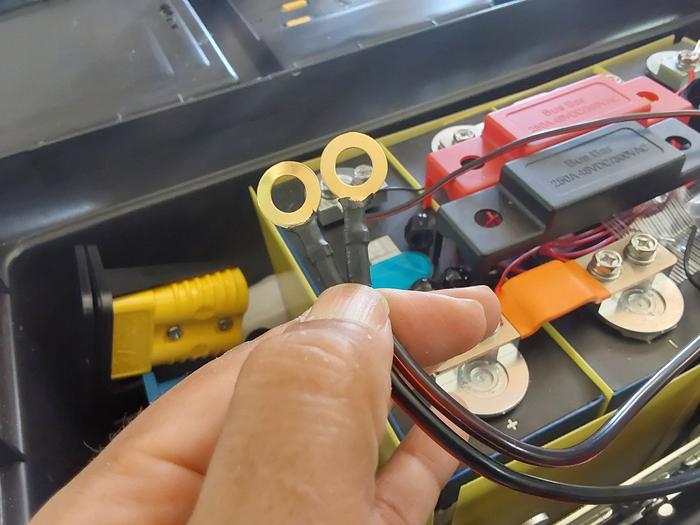 We can do better than this - we have additional M4 connection points!
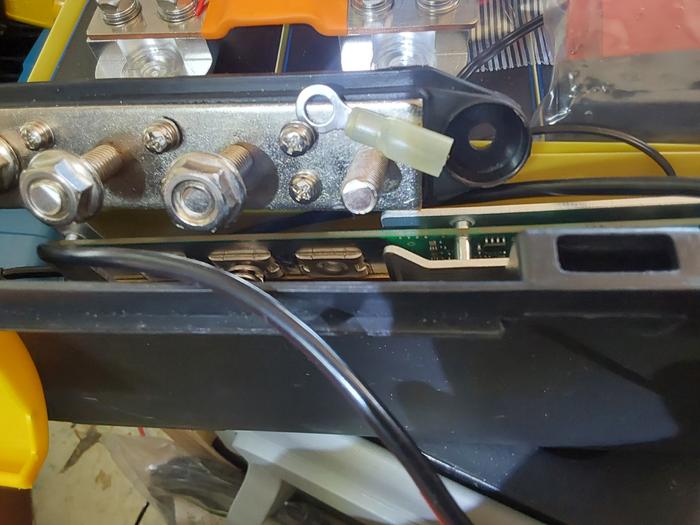 Have crimp, will travel?
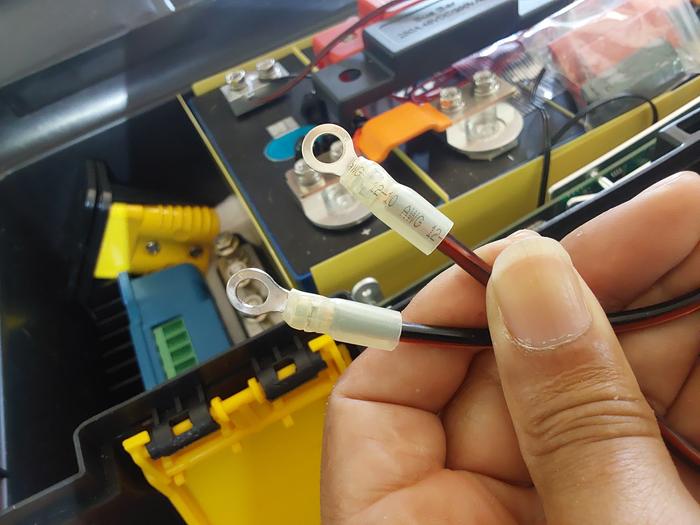 For the negative side
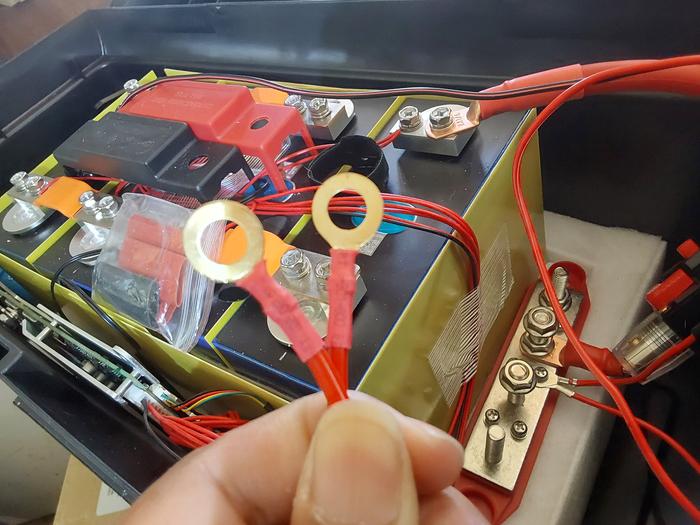 And for the positive side too
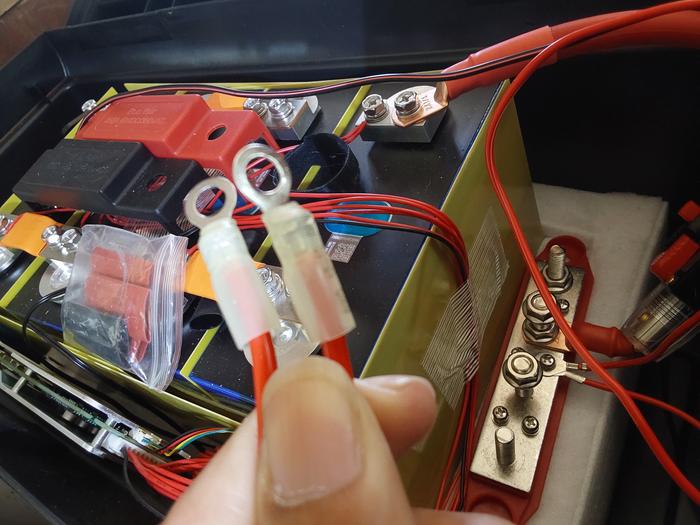 Now both can easily attach to the M4 screws on the bus bars
I have one more placement challenge - if I were to ever want to use this box with an inverter, where I put that connector?!? If I put it on the end where the 3rd charge controller is sitting, it will interfere with pulling it out and I'll need to wire it in place before covering it up (the block of wood with the DIN rail breakers is slated to go over the negative bus bar).
The positive end of the box will be cluttered up with the other load connections and switches, so that's still a challenge.
I currently only have 4 of the black SB50 connectors, and if I'm going to actually use them for the solar/high-voltage inputs, I'll need 3 on the box for the 3 charge controllers, and 3 more for the cable harnesses to connect each to its own solar array, so I'll order more...
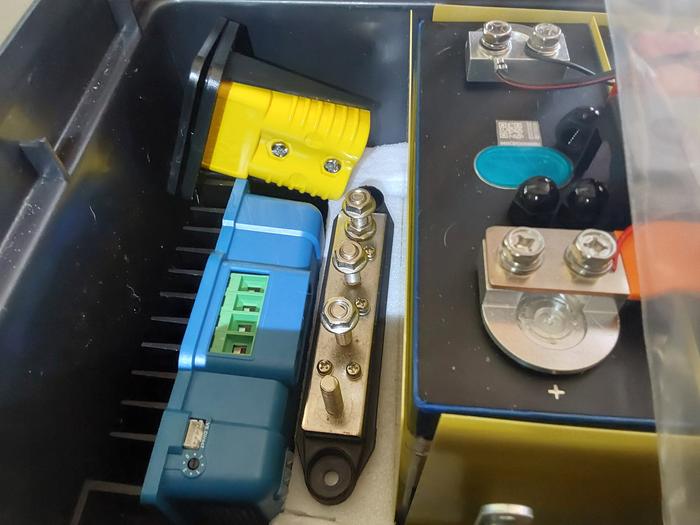 Anderson SB175 panel mount connector here - for either battery expansion or an inverter - will block removal of the controller
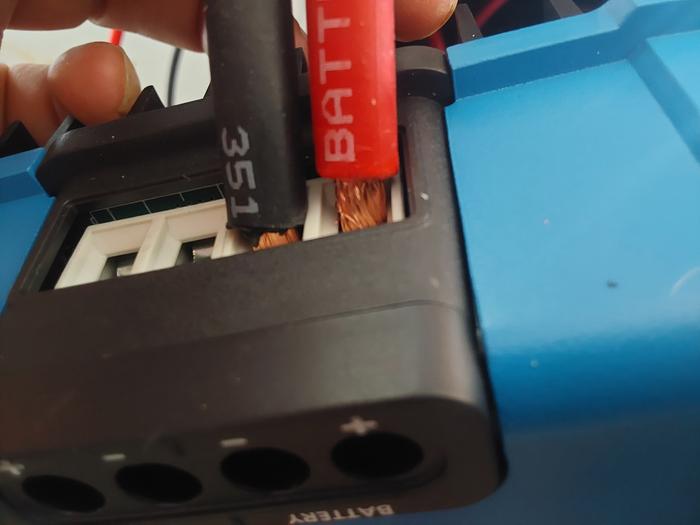 Wiring up the 50 amp controller - THIS IS A HORRIBLE PLACE TO GET STRAY WHISKERS! DON'T!
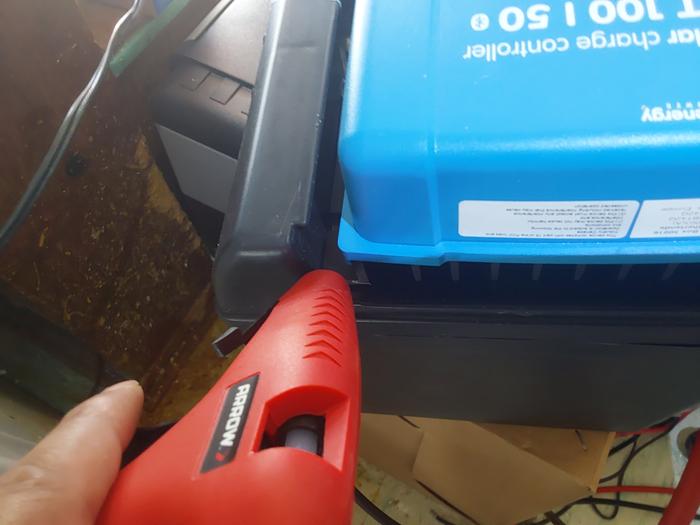 I found a hot glue gun!
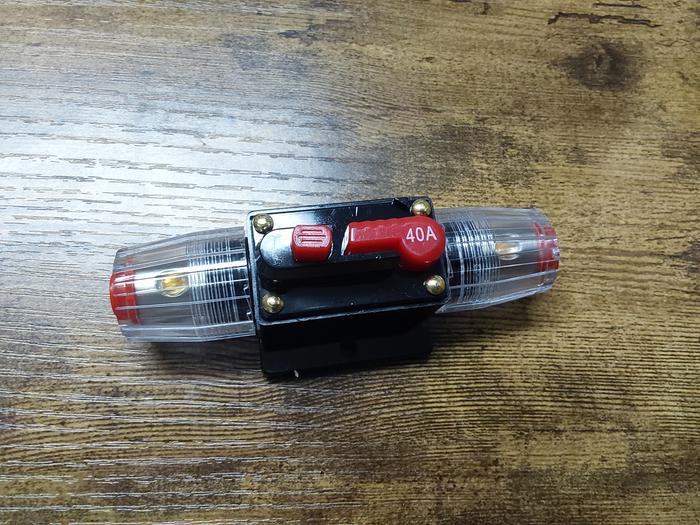 I bought several variants of this breaker, from 40 amps up to 150 amps
The 60 amp version is a reasonable fit for the top-mounted controllers, and these terminals actually will fit 6 gage wire just fine.
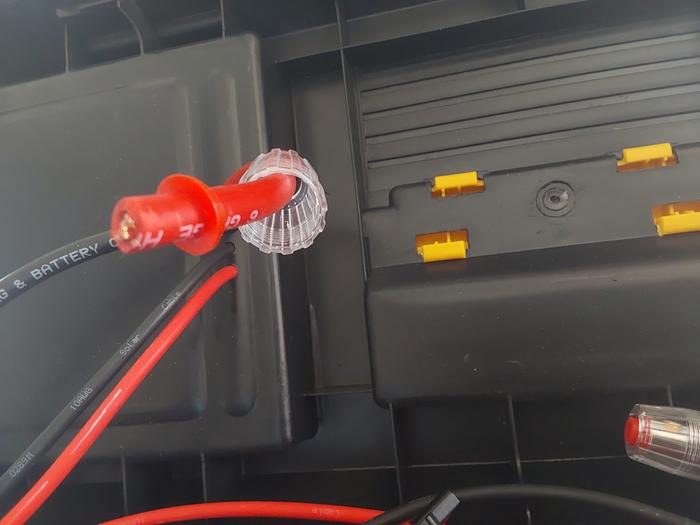
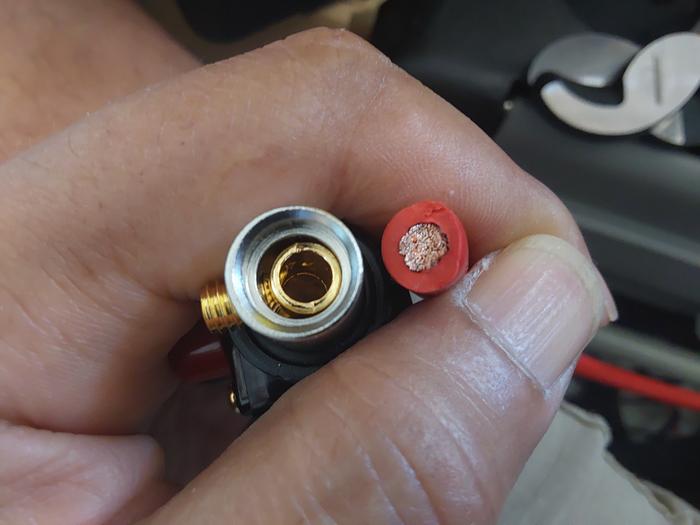 it looks like a tight fit, but it worked, including the ferrule and the weather seal
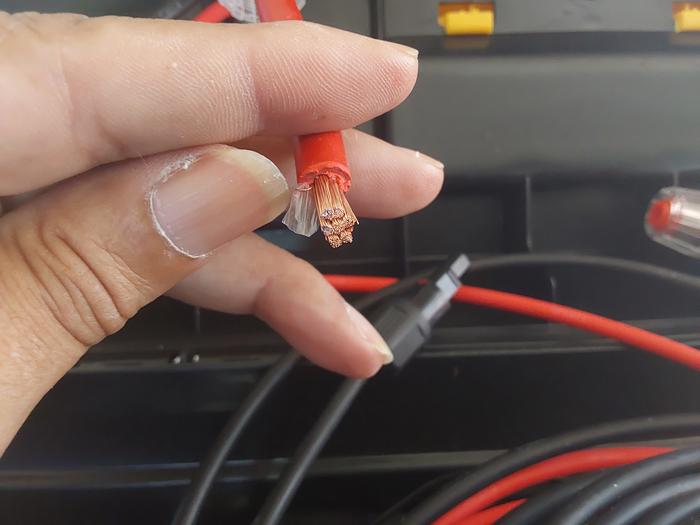 When stripping wire, make sure there's no extra plastic left
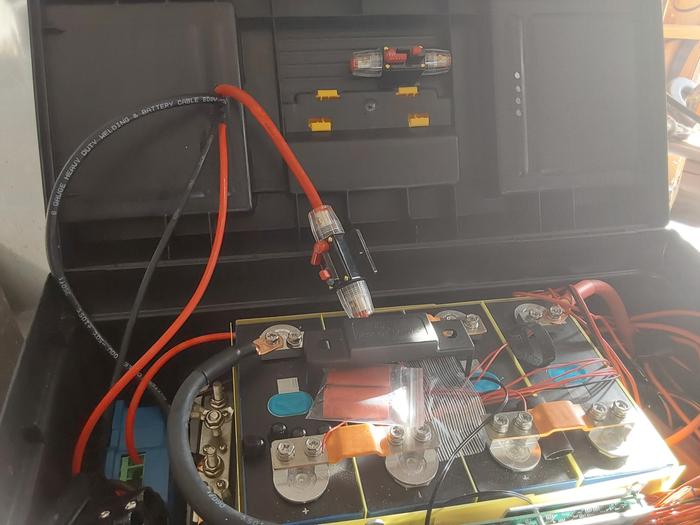 It will fit, and there's enough play to open/close the lid too, with both 60-amp breakers under the lid.
I plan to hot glue the breakers in place, but I want to get both of them wired and make sure I can close the lid first.
This is also about as far as I had gotten with the mounting of everything, although I still should put holes in the box, to allow all the panel mounted items to be, well, panel mounted... And then the trip to Wheaton Labs happened, and it got packed up and carried across the country, while running a refrigerator and freezer, and recharging our other devices too.
It wasn't real pretty with the lid propped open to access the cables, and I forgot to pack the Allen wrench to tighten the connector on the 60 amp breakers, plus the other PV cables too, but it worked well enough to get us through the week! (And it technically does meet the requirements for the badge bit, as is, but it's certainly not the best version of itself yet).
I ended up finding a local solar dealer who would sell me some PV cable, so I was able to hook up 2 of the 3 controllers and 800 watts of panels. They seemed to max out at just over 600 watts total in the best of sun, but I don't promise that the panels were perfectly aimed, either. It was certainly good enough for this trip.