Bumping up this old thread because I am a nopal evangelist!
So we might, or might not, who knows these days, be facing a food crisis.
I totally agree with Paul that everyone has got to grow all the food they can, and eat the food they grow and that feeding yourself does not have to be expensive.
Paul loves sunchokes because, apparently, you can just dig them up and eat them whenever, even after a freeze. Apparently it's even better, after a freeze?
I wouldn't know as I live in a place with only an occasional frost and certainly no ground freezes.
If you are like me, and live in an area free from freezes, join me in saying No, Paul, the best plant to plant is nopal.
Even if you do get a freeze, there are varieties that peole say can come back after going dormant, or you could try what my grandma used to do with her roses in northern Iowa, cut back to 10 inches above the ground, cover with an old styrofoam cooler, put a bick on top, then pile hay all around.
Because nopales, with a bit of watering, can produce tasty food continuously, or can live through dry spells and only produce their tasty food when it rains.
People growing nopales for food do not let them get tall, so 30 to 40 days after planting a mature pad there you can start cutting young tender pads if you so desire.
The key to cooking them it so give them a salt/baking soda rub to help pull out the slime. Use a coase mineral salt or a salt/baking soda mix. You can later rinse them if you are limiting the sodium in your diet.
Cut them up, or if roasting whole (a campasino steak!) score the surface so the salt can pull the slime out. Rub all over then let stand until they seem really slimy (10 minutes) If boiling, boil in the slime--no water needed. or you can char them on a griddle/grill
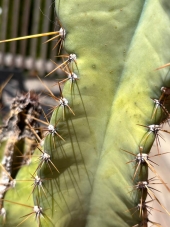
The photo shows growth two weeks after planting.