Dorothy Pohorelow

pollinator
+ Follow
since Feb 03, 2021
Merit badge: bb list bbv list
For More
Southeast corner of Wyoming
Apples and Likes
Apples
Total received
In last 30 days
0
Forums and Threads

Recent posts by Dorothy Pohorelow

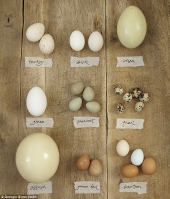
You can swap quail eggs for chicken eggs at a 3 to 1 up to a 5 to 1 ratio depending on size.  They have a slightly different taste and different proteins and nutritional values then chicken eggs. That difference is well worth investigating.   A dozen quail eggs makes a lovely omelet.  Or fluffy scrambled eggs.  AND our dogs love the extras or frozen/cracked eggs.   Also be aware that as with any novel food try small amounts first...

Duck eggs have a tougher egg white.  Good for fried egg sandwiches but not so good for plain fried eggs as they tend to be a bit "tough".  They are wonderful for baking as they hold even the lightest cake together better then chicken eggs.  And yes you swap 1 for 1.

Haven't tried the others in you photo.
6 days ago

For this BB, you will breed a broody quail and raise at least six chicks!


Unlike Chickens,  Coturnix Quail only rarely go broody and are successful at hatching eggs and raising chicks even less often.  Standard practice for those of us with quail in hutches is to collect their eggs and incubate them when wanting chicks to raise for the covey.    Is there anyway this could be altered to include that practice?
2 weeks ago
My trees from Starks never materialized as they kept pushing back the shipping date until it was too late so I requested and received a refund from them.  The Greenstalks did well and I am looking towards growing more food in them this year.

There was a HUGE change in the "tree yard"  We got quail and the two cages are in that area with the Greenstalks around the edges.  So spring, summer, and fall have been busy with learning, building cages and learning how to get good hatch rates with my little inexpensive incubators.  I am really enjoying my little birds.  Yesterday we had egg drop soup made from quail broth (a friend culled some bad tempered older birds that i made broth from) and the egg drops were made with the second dozen eggs laid by birds I had hatched in my incubator and raised until they were old enough to start laying...
Secondary to the little bird and their eggs is the used bedding from the brooder bin and from the 6 adult quail that are living under plant lights for the winter. The bedding is going over beds as mulch and will be good inputs to our compost pile.
2 weeks ago

Jay Angler wrote:Has anyone else got good ideas on this one?

My friend has a bunch of carnivorous plants and I'm wondering if fungus gnats would be attracted to them?

I've got some seedlings, so trying to get the dry, but not dead, is going to be a very fine line!


I have seen some folks that will put carnivorous plants among their succulents and other house plants as part of their pest control methods.  Other things to do is get mosquito dunks or bits.  Soak them in water  for a few hours or over night then use the soaking water to water your plants.  The Bacillus thuringiensis israelensis (BTI) in the water will attack the larvae while the carnivorous plants or yellow sticky traps can tackle the adults.  
5 months ago
First off be aware that raising chicks is smelly, dusty, and can be very heartbreaking.
You will need a brooder, an incubator and possibly an egg candler or strong flashlight to check eggs for development.

You can make or buy the incubator,  a small 12 egg incubator is probably as big as you would need.   You do need to set up and run the incubator for a few days to make sure it will hold temperature and humidity levels before putting in your collected eggs. (some folks use bluetooth sensors to check how accurate the incubator is)  You want average size eggs for you birds, check for cracks or other signs of damage,  DO NOT WASH just set in a safe place on the counter like a bowl or in an egg carton with the tip down.   When you are sure the incubator is working right put the eggs in the incubator, make sure they are turned at least twice a day (rotate not flipping) and wait until they start to hatch.  Length of incubation, temperatures and humidity levels can all be found in books or online. YouTube is also a very good source of information from building and incubator to selecting eggs and what temperatures and humidity levels are needed at each stage of development.
When they start to hatch leave in the incubator over night.  This keeps the humidity and temps up until every one is hatched and dried off.  Then you move them to a brooder.
For a brooder you can use a large box with a heat plate or other heat source in one end and feed and water at the other.  Put puppy pads or similar on the bottom to make cleaning easier.  And watch your babies grow until they are feathered out and can go outside.  Then comes the challenge of introducing them to your flock.  

A lot of really good information is available on Backyard Chickens and on YouTube.  It helped me get through the hatching our first batch of quail babies.  Sadly we had issues with temperatures and humidity levels near the end and only got 13 chicks from 51 eggs.   But our babies are doing well in their box brooder.
6 months ago
Until you can get a plant or plants established you may want to look into shade cloth.   Yes you would need some sort of structure to hold it up but it could work well for this situation.  There are different levels of shading so so some research before buying.
6 months ago
No need to do them in any specific order.   In fact if you have a multi shaft loom learning the small looms first may make it  more difficult to wrap you head around weaving on the big loom.  
Ashford, Schacht, Kelly Casanova, and Jane Stafford all have free or less expensive classes online.  Many are on YouTube including some that will walk you through making a warp, warping your loom and getting ready to weave.  IF you have a rigid heddle loom add the Yarnworker aka Liz Gibson to that list.
7 months ago

L Gaudette wrote:
You can get low grade sheep fleeces for free or cheap if you can pick it up from a sheep farmer - sometimes they resort to burning them. Or if you know someone who spins (or felts) and starts with raw fleeces you could ask them to save the bits that they "skirt" out.


Unless we are already using them in our garden... not just the wool as mulch but soaking water also goes into the garden since there is no soap in it.   Wry grin living in Wyoming all local fleeces get soaked in cold water for 12 to 24 hours just to let the dirt settle out.  Some are so bad that I have repeated the soaking process up to 3 times before actually washing them.
7 months ago

Tereza Okava wrote:I am sorry to say i can never bring myself to pick them, because i am a ravenous glutton for the snow peas i so desperately wait for all year. I don't want to risk losing a single pea, and so i let the vines grow like nuts. I'm hoping someone can give some magical info here like "the more you pinch off the more flowers you get", which would really be the best case scenario....


Grin there are actually varieties of peas that have been selected for extra tendril growth such as Sweet Magnolia.  They are called hyper-tendrils.  You may want to look into them.
7 months ago