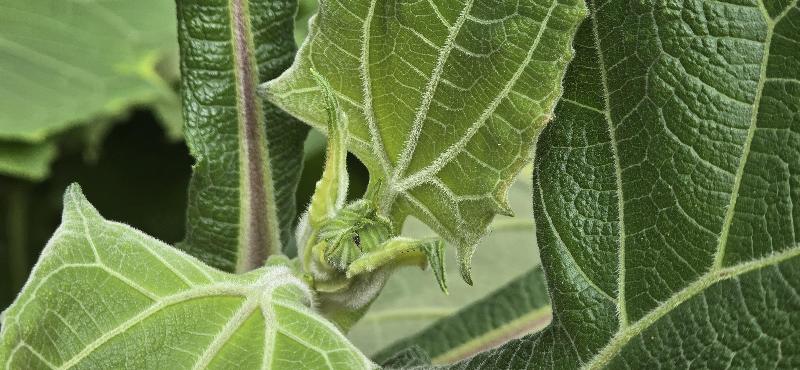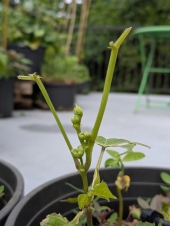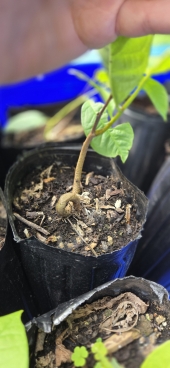
Joao Winckler wrote:The up-potting advice for small pawpaws is worth following honestly, especially for a 1L pot. The taproot on pawpaws is fragile and they really hate being disturbed twice in quick succession. I'd get it growing strongly in a larger pot first, then plant out in autumn or early next spring when it can establish without the heat stress on top.
Niko in Vancouver wrote:So I ended up on this thread looking to determine whether I can feed pine cones (not chips, just dried up cones from the ground) to my wine caps.
I think the general consensus is "probably"?
But I also found other interesting queries to which perhaps I can contribute my own observations & experience!
SLUGS: Yes, definitely a problem. But simple beer traps worked great to totally eliminate the problem. I got some cute green "pagoda" ones from Amazon too, so they look appropriately gnomish among the mushrooms :)
BEDS: I just form dedicated mushroom beds in the darkest corners of the ornamental garden, where nothing flowering and pretty really grows, simply by laying down logs (branches from trimming older trees, really) in a rectangle and filling it with leaves and debris. In most cases, the wine caps also seem to have spread beyond their beds, within a year or two.
SUBSTRATES: Pistachio shells worked really well. Walnut shells did not seem to bother them either. I have no straw, but I do end up with a lot of dried up scarlett runner bean husks every fall. The rest is leaves, twigs and sticks from pruning (after they've dried up) and, if I am lucky, mixed woodchips from landscapers working nearby (which I always end up "aging" /drying for a few months first, not sure why, it seems appropriate). It all goes in.
VIABILITY: With the above approach, the beds seem permanent to me. They come back year after year, two flushes, in May and October, since my original purchase (during Covid lockdowns). I just dump stuff on top, ad hoc. If it is too dry in the Spring, I may wet them a bit. That's all.
(*) I do get the distinct feeling that they do not like city water (chlorine?) but they, of course, love rain - even rain water from the rain barrel.
LATEST: I have an old bamboo planter, concrete, about 2'x8'. I killed the bamboo years ago (it was shooting runners over the planter, in to everywhere, even got into the house!) but now the planter is solid bamboo roots and cut stumps sticking up every square inch. I can't plant anything else in it and removing the bamboo tangle seems a herculean task, so I will lay chips and mycelium on top and hope that the winecaps will simply eat everything and in 4-5 years I will have a planter full of compost - and a dozen bonus wine cap harvests to boot!!
Cheers from Vancouver!
greg mosser wrote:my experience is that the needing shade when very young thing is somewhat overstated for pawpaws, and struggles when very young are more likely to be either from damage to the taproot at transplanting, or the abrupt moving from shaded to sunny after leaves are out. so if it were me, and they haven’t leafed out yet, i wouldn’t worry about sun exposure much. i wouldn’t be too worried about planting the younger tree in the ground, with, for that matter - though the overwintering protection thing they mention may be more of an issue for you than me down in appalachia.
source: 8+ years growing pawpaws, 30+ trees.
Joao Winckler wrote:Pawpaws blooming in year 8 is about right, they take their time. The USask cherries are a good call for zone 5b, they're tough as anything. Curious how the arguta kiwi does once it recovers from the rabbit damage, those things are surprisingly resilient once established.
Anne Miller wrote:Here is an article by permies member, Joseph Lofthouse:
https://www.motherearthnews.com/organic-gardening/egyptian-walking-onions
Highlights from the article:
They grow under the snow during the winter and are ready for harvest about 3 weeks after our winter snow cover melts. My father calls them forever onions because they continue to produce food for my family until covered with snow in the fall. ...
Walking onions are a hardy perennial. In my climate they can be planted or harvested any time of year except when the ground is frozen. If pulled, the roots and a small piece of bulb may be replanted. They'll grow a new plant. They may be propagated by planting the bulbils that form on top of the flower stalk, or by digging and dividing the mother clump. There are a few weeks after the flower stalk forms in which the stem becomes hard and undesirable. New bulbs form beside the flower stalk producing tender bulbs later in the season.
I typically keep a perennial mother clump to generate bulbils that I harvest and store in a dry area. I then replant the bulbils every few weeks as an annual to grow successive crops of green onions for market and to feed my family. ...
Conclusion
Egyptian walking onions are a wonderful plant in the home garden because they can provide great onion taste any time of year that the ground isn't frozen. Even though they are grown as clones, I suspect that the creation of new clones may be within the skill set of the average landrace gardener. This is part of the reason why I believe that landrace gardening is a path towards food security through common sense and traditional methods.
Timothy Norton wrote:Isn't it funny how we sometimes come to decisions? Your poor lab not being able to self-regulate eating mulberries made me smile! What a loveable sounding pup.
I live in New York Zone 5B and I have become a little obsessed with growing peaches. I'm currently in a 'war' with our local squirrels because they engorge themselves on the fruit before it can reach a havestable state. I'm planning on planting some late flowering varieties to supplement my more standard flowering types. I'm hoping to use them as a shorter-lived fruit tree that can have something else eventually succession grow into the space.
Have you considered growing some kind of bush cherry? I have two young nanking cherries that have yet to produce fruit but have grown steadily in the climate. Fingers crossed I may see something this upcoming spring.