

|

|

|

|

|

|
|
|
|
|
|
|
|




Tess Misch wrote:I have to be out in Nature. Not just a 'local park' but IN Nature. Surrounded by trees, sounds of birds & other critters, a river/creek/brook trickling near by. We have a few nice parks with that to varying sizes. But if I could actually get OUT in Nature everyday, just walk out my door and all is see are trees, mountains, and fields of flowers that is my joy.
Mother Earth is the only place I KNOW I heal. So being outside is my home, my space of safety. I take what I can now, the larger 'foresty' parks, until I can get my own bit of paradise to call home. --Tess
In the woods, we return to reason and faith. There I feel that nothing can befall me in life—no disgrace, no calamity (leaving me my eyes), which nature cannot repair. Standing on the bare ground—my head bathed by the blithe air and uplifted into infinite space—all mean egotism vanishes. I become a transparent eyeball; I am nothing; I see all; the currents of the Universal Being circulate through me; I am part or parcel of God. The name of the nearest friend sounds then foreign and accidental; to be brothers, to be acquaintances, master or servant, is then a trifle and a disturbance. I am the lover of uncontained and immortal beauty.
—Emerson (1836/2009, pp. 3-4)


Case presentation
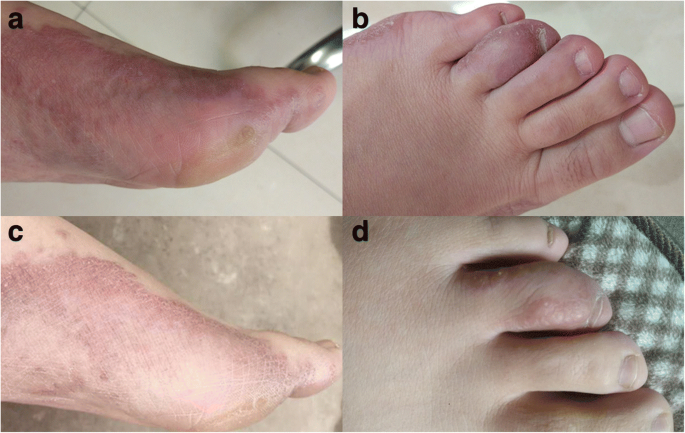
A 25-year-old female with a two-year history of erythema, papules, nodules, and scales on her sole of left foot was presented to our outpatient center. Samples were obtained by the scraping of lesion and for light microscopy. Hyphae were observed by microscopic examination. We carried out a skin tissue biopsy, which showed multiple granulomatous nodules. Biopsy specimens were also inoculated onto media. After being cultured on SDA at 27 °C for 7 days, spreading-woolly-white colonies grew on the inoculation sites of media containing chloramphenicol only and there,s no other colonies grew. S. commune was identified by morphology methods, biochemical tests, and PCR sequencing. Pathological findings also aided in diagnosing cutaneous fungal granuloma. Oral itraconazole was applied. After 1 month of therapy, rashes on her left foot and pain were improved.