E Nordlie

+ Follow
since Oct 10, 2024
Merit badge: bb list bbv list
For More
Southeastern Norway, half coastal - half inland climate
Apples and Likes
Apples
Total received
In last 30 days
2
Forums and Threads

Recent posts by E Nordlie

In my (very limited) experience sunchokes grow too densely to let much else grow in between them. If you grow peas that don't grow past a meter you can sow them with oats or barley. I'm no expert, but my impression is that few "soup pea" varieties grow very tall?

As far as I know, the two traditional ways to grow drying peas here in Norway is with grains (for support, and to harvest some grain from the same field) or by themselves - the pea plants will cling to each other and form a big mat, which *may* lodge. I guess this depends on variety, soil and weather. With hand tools they could still be harvested, although more peas might be lost to mice, rot or sprouting if conditions were not good.

I've only grown peas with oats on a very small scale, but it worked well. I don't remember the proportions, but I think there was roughly 30-40 cm between the pea plants and 5-10 cm between the oats. They can be sown at the same time, grow at more or less the same rate, and are ready for harvest about the same time - presumably some varieties will work together better than others, but if you sow a mix and harvest and resow them together, suitable varieties and crosses will likely dominate after just a few generations. Especially if your field or bed is small enough to cull completely unsuitable ones before harvest, for instance those that do not compete well, set very few seeds, are susceptible to fungus, grow too well and pull down other plants etc.
2 days ago

Coydon Wallham wrote:Would it be any help in moving large logs out of the woods after they were felled?


Possibly, but it does not seem a very efficient method - you would have to anchor it very well to the ground (in a somewhat flat and open place, to let the workers operate it), and then you would either have to move it or increase the length of the rope (and size of the drum) as the trees reasonably near the machine were removed.

I'm not sure this was used more than ca. 500 years ago actually. I have seen ship parts that seemed to belong to similar machines, which I *think* were from the 1500- or 1600s  (in archaeological excavations in Oslo), and I have seen mediaeval illustrations of treadwheels and pulley systems (back to the 1200s at least). This doesn't mean all that much, since I have only seen limited sources, but presumably the need to fix a capstan very firmly in place limited their usefulness to a few  niches. They could have been used on land in shipyards/docks, or for lifting bridges maybe? Or on the upper floors of storehouses? The mediaeval cranes I have seen illustrations or reconstructions of have all been treadwheels or simple counterweight/pivot systems, but as far as I can remember these were outdoors - a capstan might be easier to accommodate in a building.
2 days ago

Bob Hutton wrote: Would there be special considerations for the compost if the sh*t or other was in a paper coffee filter?


Most coffee filters are completely compostable, to be sure you may have to do some research on the specific brand you have. I've put *a lot* of coffee filters in my compost (although only filled with coffee grounds), and as long as they don't freeze or dry out they disappear in a week or two. I assume they add some fiber/carbon.
1 month ago
A traditional solution is to have the beams on top of the posts, with diagonal braces - either between the sides of the posts and the undersides of the beams (inside the frames), or from the outsides of the posts to the outsides of the beams. This both ties the beams securely to the posts, and stabilizes the frames - keeps them from moving sideways. "Knees" work the same way, but require curved or bent materials, and if the frames are going to be filled with insulation I assume knees would make it a bit more fiddly.

I don't have any serious building experience myself, but have seen a lot of different wooden structures. Sideways stability is important - knees or diagonal braces of some sort are necessary, unless sheets of stiff material like plywood are attached more or less directly to the posts.

1 month ago
We may be misunderstanding each other here - what do you mean by making clay, and how could clay be toxic? I am not a native english speaker, but isn't clay a very fine grained mostly mineral soil? I have never heard of anyone creating clay (what would they make it from?), or heard of toxic clay. I guess clay could be contaminated by different pollutants, or marine clay could contain more salt than most plants appreciate - but in this context the amount of potentially salty clay deposited in each place seems too small to be a problem.

Depending on your local geology and land use, it may be very easy to find clay, or impossible, or anything in between. How accessible a pottery supply store is will vary too, but surely both buying and finding clay must be easier than creating it yourself. Clay that is sold is also natural. I guess making clay would entail breaking down specific minerals in one or more ways that mimic natural chemical and mechanical weathering, and possibly sorting the result very finely somehow.
1 month ago
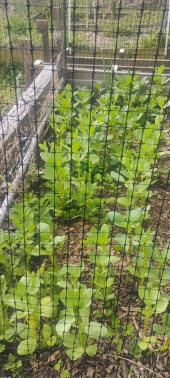
For what it's worth, I have had another season of beetle free beans May be partly or completely due to random variations in weather, temperature etc., but considering the bean plants seemed very similar to earlier years, conditions can't have been totally different.
1 month ago
I haven't got anything useful to add, but I thought it might be worth mentioning that pickled rutabagas are a major part of the plot of a great Donald Duck story by Carl Barks. The villain is called McBrine, and wants to sabotage cucumber production - to enable him to sell a lot of pickled rutabaga. It does not end well for him.
1 month ago

Tommy Bolin wrote:Finns clean the glass of their woodstoves with ash. According to my Finnish mother.


I think this is pretty common in Norway, the easiest way to do it is to dip newspaper (or paper towel) in water briefly, dip the damp paper in the ashes in the stove, and rub it on the glass. Most of the soot/tar carbon mix will come off immediately, but repeat if necessary with new damp ash paper. At the end wipe any residue off with just damp paper, no ash. I've seen this method recommended in other ash use discussions, but using a rag instead of paper. As far as I know everybody uses paper here - presumably rags would work just as well, but it seems more economical to use a couple of pages of newspaper. You can throw it in the compost afterwards, or leave it to dry out and burn it the next time you light the stove.
1 month ago

Fredy Perlman wrote:

echo minarosa wrote:I also spread a fair bit of crushed oyster shells for the birds.


Interesting, for the birds? What do oyster shells do for them?


Birds need the minerals to produce new egg shells - wild birds obviously need less than laying hens, since they do not lay as many eggs, but they still need the same minerals. I've seen at least tits, tree sparrows, magpies and crows picking bits of egg shell out of soil where I spread compost, and hens sometimes seem to scratch for old shell fragments as eagerly as for worms and bugs. I've also seen both hens and wild birds eating old snail shells, seems likely they would get at least some of the same minerals from those - which again might indicate that snails, and possibly other invertebrates, could acquire some of the minerals they need either directly or indirectly from egg shells that end up in the garden.

I doubt egg- or sea shell fragments really work as grit (to grind food), they are much more fragile than most stones. I've always heard that actual grit needs to be provided in addition to shell fragments for hens that have no access to natural soil with small stones.
2 months ago
I wouldn't worry about "breeding them" or them continuing to multiply indefinitely - in my experience wasp populations vary *a lot* from year to year, presumably naturally. I haven't noticed a real pattern to it, sometimes there is a boom every other year, sometimes there are several years of low populations. Which appear to result in more aphids.
3 months ago