Mark Land

+ Follow
since Apr 19, 2026
Merit badge: bb list bbv list
Biography
Hey Mark here from Bavaria / Northern Alps. I travelled and lived around the world for most of my life, U.S. , Canada, Southern Europe , Western Europe until I settled on a beautiful 2 acre lot in the mountains of southern bavaria. I learned the basics of growing and processing my own food and all the handywork that goes with it from my both grandfathers. It was the only way you could sustain a family after the great war. In the past 15 years I have focused on making my home into a homestead and about 8 years ago i started with permaculture. Happy to share and happy to learn here .
For More
Bavarian Alps / Northern Alps / Europe - equal to zone 7a
Apples and Likes
Apples
Total received
In last 30 days
6
Forums and Threads

Recent posts by Mark Land

William Bronson wrote: Do they hold their leaves overwinter?


No the leaves die with the first heavy frost. But the plant system stays active throughout the cold season until it is time agian in the spring. then they first build out the root system, from which then they  build new leaves - hence the spreading.
Ah mint, you gotta love it.
Especially mountain mint, or as it is known here in my parts as swiss mint. Then there is the alpine mint which is much smaller in growth but also tasty. Mojito mint and so many others.

But to answer your question. Even in a perma culture system setting, i find it sometimes usefull to put the dominant types in some containment. Well in between everything else, so that friend and foe of the plant and its surrounding are in a good balance (or at lesat have the chance for it) .
But I can avoid loosing entire patches of earth to one spreading plant type - like mint.

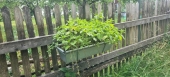
However with mint it really depends on the climate. We are, here in the european alps, in the situation that we get loads of rainfall and thunderstorms, with high temperatures - so that mint stuff is easily spreading like crazy. I guess this is not so much the case with hotter or more arid climates. To give you an idea how I do it :

2 days ago
Here is a simple hack for all the permies with smaller size properties.  A lot of people become new gardeners and new permies over here in Europe lately and often they have single standing houses in rural areas without a lot of acreage. And the garden is coming from mainly having a lawn, where kids can play soccer and we hold bbq etc.

So when you want to start gardening beds or you want to extend your gardening plots you are subsequently confronted with overturning the grass by digging it up and extending your gardening beds. But how to make this quickly usuable land for vegetables.

First consideration : Timing !
Of course the easiest time to do that is just before winter. You plan your extension for the next year. You dig it up - I suggest the dutch method - and you leave the overturned grass sods over the winter and it will already decompose properly.

BUT -- here is the hack.. this also works in early spring!

Step 1 : Over fall and winter, you collect all larger cardboard pieces you can get your hands on. From a box, christmas present delivery, from a neighbour. All works, as long as they are large pieces of cardboard which can cover some substantial ground.  
Preferably , without any , or at least limited print (color chemicals getting into the soil)
Step 2 : very early spiring, when the soil has no frost anymore, you dig your extension and overturn the sods.
Step 3 : Cover it with cardboard, and weigh it down with ,rocks or whatever you got that is heavy.
Step 4 : Let it sit like that in all weather for about 2 months. Nature will do its magic with heat, cold and rain. The grass and unwanted plants have decomposed, the dirt has nicely crumbled
Step 5 : Rework the dirt and start planting.

Variation for being even faster with planting:

Once you have the cardboard on the turned over grass sods of your extension, pile mother earth and good  compost on it about 10 inches high.
Plant directly into that soil.
The cardboard will protect the area from getting filled with all kinds of grass and weed from below, the new plants can grow, they get nutrition from the fiber in the cardboard. And over time, through rain and heat, the cardboard simply dissolves into the ground.

In the end..it is just wood

I used it every now and then and it is a really easy method. Your kids are all grown up, or left the house, you do not need that huge playing area anymore.. this is a quick way to turn it into another part of your overall permaculture ecosystem.


2 days ago

Sea Skinley wrote:Two questions for you experienced types:

1. How deep would a root barrier around a horseradish area need to be? More than 12"? More than 24"?

2. Does spreading kill other plants (what does it *not* kill?) or is it more of an annoyance, popping up where you don't want it (for whatever reason)?

For context, I have red clay and rock soil, so it sounds like aggressive spreading will be somewhat retarded by conditions. I planted some a few years ago in buried (large water bottle sized) containers and nothing came back the 2nd year. Now I have two in grow bags doing all right this year, and one in the ground that has kind-of died back in our driest weeks but seems to be surviving now.

We have several areas that we call "rock planters", where we build up on a slope for this or that. I'm thinking of creating something like that with root barrier, and using it for horseradish and whatever else. Can garlic grow with horseradish, for example?

More than 2 questions, really, but primarily interested in more specifics on requirements to contain it (to the extent feasible) and experience with plants it kills by proximity (if relevant).

Douglas already answered the root barrier question so let me share some experience on your second question.

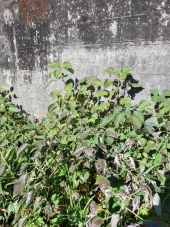
As Douglas said, it doesnt kill plants through being "the tocix neighbour" . As soon as it is in deep ground it tends to grow really fast with really big leaves. And its sheer growth pace outperforms most other plants. As to your example with garlic. It could work for a bit (again horseradish will grow faster than your garlic) and then you would possibly be disappointed with your garlic yield.
Also, the root system is quite dominant in the soil (thats why horseradishes when you buy them are these chunks of big roots) , meaning it takes water andnutrients away from deep in the soil and quite a diameter as well. Again leading to a below par yield for anything directly surrounding it.

On a positive note, if you plant squash in between horseradish, with the mother plant far enough away it will thrive. As squash gets big iteself and can mingle, and intertwine with the other "large plant".

Ahhh Horse radish .. a staple of the Bavarian kitchen, goes great with cheeses, sausages, meat, knödel ...all kinds of great dishes.
So naturally, most of us want to have it in the garden.

Let me share my experience with you.
On one hand it is really easy to grow (it does it all by itself, as long as you get some regular rainfalls) , it needs no maintenance and also not too much water. It simply thrives.

which means, yes , as stated in this thread - it spreads ! Fast and a lot !   Good for harvesting, bad if you planned on having it in the middle of a crop patch , as it will take over larger and larger areas.

Also as mentioned above, aggressive harvesting helps. But then again, who can eat so much horseradish.

Also, important to mention, it sucks up a lot of nutrients - which means it really is hard to grow other vegetables that are high in nutrition need as neighbours.

Hint :  Use it on a hugelbeet and it will thrive for a long time , as nutrition is provided for many years in a row.

Also, horsradish is unfortunately quite prone to mildew attacks. Once it killed my entire horseredish patch within one growing season only. Although I fought against it. And unfortuntely this mildew sort also goes into the roots and the ground, and can really spoil your soil for quite a while.

But enough with the negatives - horseradish is just an amazing root to use in your kitchen.

So my advice is : Find a half sunny, half shaded area in your garden, away from your main vegetable area. Where it can thrive on its own, and spread as it likes. Depening on where you live , just make sure it gets enough water, but not too much.

If your garden doesnt allow for a separate wild growth away from your vegetable garden, or if you are a permie, away from all more gentle plants  in your forest : i strongly suggest to grow it in e separate large , deep pot , or planting box , or highrise bed , just to make sure it thrives but doesnt overspread and diminish the nutrients and plants in general around it.
Once you have done one of the above suggestions, you while have fun for years to come.
Just make sure you watch out for the mildew.

One last remark : I personally in over 7 years now with the current patch, cannot confirm it having any positive anti-pests qualities. rather the opposite, the large thick leaves are giving shade and food for armies of snails and slugs to be honest


Hi, I live in a 7a type zone. And alone in the past ten years climate has shifted dramatically. Last snow is later in spring, last frost is later too, but the warm autumns last longer as well.

My first learning was - forget the human calendar. Just because it says spring on the calendar, doesnt mean it is spring. So I shifted my planting schedule according to natures changed rythm

Next was, that overall temperatures increased , we just went through half a month of high temperatures like never before. And this has happened a lot more in past years. So my learning was to change the crops I am planting. I moved to artichokes, mediterranean pumpkin sorts, eggplants etc. Because now they thrive in my zone as well.

What I am trying to say, as stated also here in an earlier post. Look at the long term weather patterns, see when nature is ready for spring or winter. Adjust to nature in terms of timing and adjust your gardening in terms of changing climate.

Then, i fully agree, you can still get a kick in the butt because that specific year everything is out of wack. But in general you will be more in synch with nature, and you will have more joy and pride in your harvests.
4 days ago
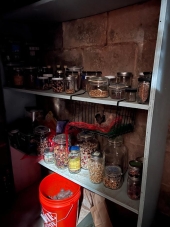
Yes, the northwest corner of my house is separated from the rest of the basement. Its ceiling is under the ground. Room size roughly 13x13 feet. with 6 feet height. There is a ventilation shaft in it, which lets enough air flow in and gas out throughout the year. It is cool in summer and cool in winter. No freeze possible and also no spoiling in the hot summers we have.  Air quality is perfect, so even flour and other dry goods keep well for a long time
Throughout the years i have experienced that everything i keep above ground level in a pantry spoils within app. 3-5 months due to moisture and heat.
In the root cellar all my preserved foods easily keep for 1-2 years , so for one cycle plus whatever you need more. Because I do not produce the same things every single year.

If it is a great berry year I want to do jams worth 2-3 years. If it is a great vegetable year I .... and so forth.

I can recommend getting a root cellar , in some sort of way. Of course an external root cellar , build into the ground , dug out , fixed with large stones, maybe even natural water flow cooling, covered with earth and natural growth - that is the dream. And it works best. But there many good alternatives , all of them better than keeping all your inventory above ground level, within your actual living area.

4 days ago
Wow , that is a great find. I am sure it works quite well!

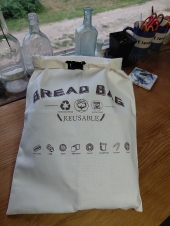
As an alternative I am using a pure cloth breadbag(no wax, just 100 cotton) to put the bread in , and that bag goes into an old enamel bread box (from grandma, but they can still be found in vintage salesvc-pure enamel with little holes in it on two sides) . The combination of the two keeps enough airflow so mold doesnt start , and yet little enough airflow that the bread stays fresh for at least 1 1/2 weeks.

4 days ago
Here are three things I like to do with my overgrown zucchini :

1.  Remove the seed part and cook it with fresh tomatoes, basil, oregano, salt , pepper (and any other vegetable you like) into nice pasta sauce. Fill hot in clean glass jars - keeps at least 6-9 months in your pantry
2. Find any kind of zucchini cream soup recepie and use for that. Still tastes great immediately , or put in freezer to keep for a long time
3. Remove seed part , slice the zucchini, put in a clean glass jar. Add garlic, herbs  and fill up with olive oil. Heat up in a cooker so it is clean and seals nicely. Keeps for ages and is delicious. The entire south part of Italy uses this way of oil conserving for all kinds of vegetables and it is amazing food that keeps without any refrigeration for a long time.
5 days ago
I think over here in Europe the price situation is still by far not so severe as over the great pond in your area. But general political climate, one crisis after the other, high energy and fuel prices, and yes also some inflation in food prices etc has made a lot of new people think about how to make ends meet.
And gardening, also in my experience, is one of the first things people want to try out. Also combined with the wish for a healthier lifestyle and diet.

I can absolutely second on what has been said about this topic in this thread so far. And I would like to add one aspect.
The learning curve. So much can go wrong growing your own food without any experience.

I am often asked on what to grow, where to get seeds , what would be a money saver and yet good , healthy sustaining food. And a lot of the answers have been given in this thread.
But more often than not, the beginner (in my area we lovingly call it "the city folk") gets overwhelmed and frustrated with plants just not working out.

We need to keep in mind, that modern life is completely away from natural growing cycles (everything is always available everywhere at any time) , routine work - daily - to keep your vegetables, beans, corn, etc growing means changing your way of daily living (your job, your family, social life, hobbies etc) so that yuor plants thrive. But foremost it also means changing your eating habits and cycling back into the rythm of nature. At least for some items, when you get started.

Most skills that still existed abundantly 2 generations - heck even 1 generation ago - have disappeared in the fundus of common knowledge of modern day people. So seeds is one thing, having a balcony, a terrace, some land is another - but having the skills, the discipline, and the passion to keep up what is need for growing your own food - thats where it often fails.

What I found really helps is letting new people interested in gardening help out on my land. Learn from seed to harvest how things are done. And then as a personal reward take some of the harvest with them, or the seeds for their small garden, or some plantlings in the beginning etc.

I can only encourage all of you , interested in helping out new garderners, also with teaching them skills. And best is not explaining but actually learning by doing.