
Professor Rich

+ Follow
since Dec 15, 2010
Merit badge: bb list bbv list
For More
Apples and Likes
Apples
Total received
In last 30 days
0
Forums and Threads

Recent posts by Professor Rich

Jen0454 wrote:
To improve my fridge and freezer I'm just going to
stick additional insulation panels on the outside.
Sometimes condensation forms on them and that to me
means the insulation is not sufficient.


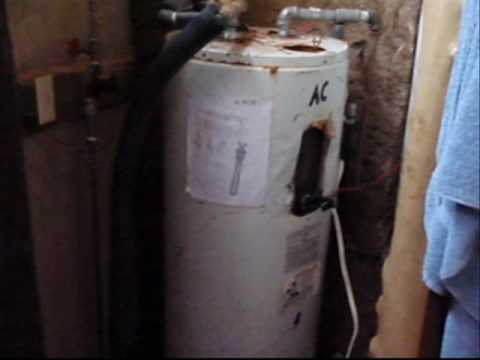
From a very realistic position, this is the best bet yet.
14 years ago
Mechanical disaster in your future.

2k pound winch will destroy that dolly and the plow if it hangs on anything.

2k is also way beyond a hand plow's capacity.

Grab a pick and shovel and git er done and remember tools serve a purpose, they can be modified within limits, but they do have limits.

The comments about not being inline with the winch cable are spot on, however add a 30 degree angle to each side as odds are whatever breaks will not break straight and clean and flying metal things are going to head the opposite direction of breakage not just cable pull.

A quick google of winch failures, cable failures, tow strap failures should be adequate to convince you this is a really bad idea.
14 years ago
It is a "clam shell" so to speak and its performance while not stellar is indeed sound and positive.

It is indeed the only type I see as a fit for the rocket design, I have no doubt it performs as described and with minor modifications it is far and beyond other designs IMHO for whatever that is worth.

Q=u*A*td never changes, you can change the u, the a, the td and in this case they have changed A in  a big way,

Perfect? Nope, but then again, the third law dictates chaos and a total lack of control lol.

14 years ago

Ernie Wisner wrote:
there are several ways many of them blow up one has worked for two years so far and will be published soon. another i am working on in a little over three weeks and if it works it to will be published. this is an area everyone gets to and most dont get very far into because of the dangers of steam.


I would be very interested in the basic heat exchanger design, they get real funky real fast and I have only been able to fathom one design that would meet my own criteria, and even then it is not field replacatable. Because of the significant dangers fooling with water in fairly short order, I tend to keep my head inside the box.
14 years ago
Wow interesting thread!

In full disclosure, it is very common for me to be armed with a pistol, depending upon circumstances it is either openly carried or concealed, however I choose.

I find the fear mongering quite disturbing and wonder how it came to be, my guess is social engineering by media.

I can not speak to the number, but a great many feral dogs and coyotes were a constant problem and rabies hazard. It was bad enough to have multiple trap lines set on the property as they are a real hazard to cattle and other livestock.

I am not sure which is more stereotypical, the assumptions about the neighbor or the unhealthy fears at the mere sight of a weapon properly holstered.

Since he is carrying it openly, it is very unlikely he got it illegally and if he got it lawfully then the FBI checked his back ground through form 4473, if the FBI says he can be trusted, why do you automatically assume the worst of him?
14 years ago

Donkey wrote:
You seem to be placing the lion's share of the success of Rocket Stoves on the mass, slow regulated movement of balanced heat into the space. (perhaps I can intuit that you would correct "balanced heat" into "matched heat". Meaning matched to the particular heating requirement (and feedback trained for proper firing, etc.) I've seen rocket stoves that work GREAT but don't entirely match the needs of the space.)

What then of the (I think) unique burn characteristics of the rocket stove? Doesn't the "burn full out, high temperature all the time" characteristic almost insure a more "efficient" burn? Certainly we're gaining THERE from rocket stoves as well? Wouldn't a complete investigation of the question START there, and what do you think would be found?


It is not so much that the RMH is a match, it is more what a mismatch a fully loaded CWS is more than anything else. Because of the limited loading capacity of a RMH and the significantly larger burn area of a CWS its variable capacity makes it a flexible unit, however most pretty much run them way over demand and losses result.

I think a RMH will win the emissions when it comes to a CWS by a little, I think the RMH will fall behind a catalytic stove significantly, but and it is a big but, because of the lower "typical" consumption, the lower emissions quantity would be a lower total. In other words higher by percent but lower overall.

This of course assumes I am correct about the first two theories of operation and that I am wrong about the third hypothesis I disclosed to you. If I am actually correct about that, the rules change significantly and it gets really interesting really fast.
14 years ago
Very hard to know for sure without inspecting, but my hypothesis would be a vaulted ceiling on the right hand side of the home with the curtains pulled closed and a standard 8’ ceiling on the left hand side with the curtains wide open.

The vaulted ceiling likely has r-11 insulation and a vapor barrier but no radiant barrier, the standard ceiling on the other side likely has r-20 or better blown in insulation with no vapor barrier or radiant barrier.

The windows are most likely a cheap builders grade that test well in a lab but lose the inert insulating gas and more or less are just two pieces of 1/8 thick glass staked in front of each other.

They are also dumping a lot of heat into that garage on the right, a fairly common cheap way is to not bother putting insulation in the walls that touch the garage or if a bathroom backs up to it not to insulate the plumbing chase which might be 4’wide by the 8’ tall and lots of heat would dump in to the air leaky garage.

These folks could save a ton of money with some improvements, unfortunately they likely would need the services of a contractor to complete it which would push the payback beyond 5 years. If they have skills to do the work, they could likely recover their full cost and begin saving some time in the second year.

Since it is winter, interested parties can see this when you get a 1 to 2” snow, look at the roofs and the patterns of the snow melt, you can spot who needs more insulation very quickly.

Best guess I have on it Donkey, could be wrong.
14 years ago
1 is a radiant graphic I spoke of

2 is a thermal image of a house, red is high loss, blue is low. Notice one part of the roof does well and another doesn't.
14 years ago

paul wheaton wrote:
Could part of the overheating factor involve how some parts of the room end up much hotter than others?


Without any doubt what so ever and is in fact a very large factor in what we are talking about.

The huge level of radiant heat along with the convection heat that travel straight up from a CWS is going to create a very large hot spot in the ceiling above. Since radiant heat is reduced at the square of the distance, if we call the ceiling flat, there could be a very significant difference from one side of the room to the other. When we are talking about our target temp of 50, I would not be at all surprised to see one side of the room ceiling at 45-50 and the area directly above the stove 100-150. The wall behind the stove also very hot while the one farthest away from the stove much much cooler.

This is the reason that many placed the stove directly in the middle of a cabin, an attempt to even out the heating of the room to get better balance. I will post a photo of a cooling set up and how the solar radiant heat impacts it, while the opposite of what we are talking about, simply pretend the sun is the stove and the cool space is outside.

Radiant heat is not “insulated” to contain it, it is reflected and different materials have different emissivity. In order to contain radiant heat one must couple a reflector with insulation to keep the heat where it is desired. With some of what I call “huts” where the RMH have been installed, a CWS would be blasting heat through the canvas materials almost as if they were not even there and the heat going to warm persons would be limited to what radiant hit them and the natural convection generated by buoyancy changes in the air.
14 years ago

charles johnson "carbonout" wrote:
What i have learned from your post is that rmh is 1/8 the effort .

How is by btu diffusion through thermal mass.

Why Thermodynamics.

What i want to know is.Could it be set up to auto tune.Is cob the best medium.
Would the thermal mass work better vertical. 


Well I am not stating that it is a 1/8, I am stating that the better matched balance of heat loss to heat gain results in far less heat escaping the space which results in folks not over firing their unit. In the case of Ernie and Erica (hope I got that right this time) they have in fact used 1/8 of the fuel they did in the past and this was simply an explanation of what is the largest factor that impacted that in contrast to efficiency losses as some thought those were the source.

Btu diffusion by thermal mass is simply taking energy that is over produced at one point, storing it for release at another point. It is not an uncommon practice at all and has in fact been used for years. Many campers have used it, warm rocks by the fire and then bury them under the space they are going to sleep. Some large buildings will run the air conditioning equipment on high overnight and make ice, then use the ice the next day to supplement cooling needs.

I do not understand the “why thermodynamics” question at all. Thermodynamics is the science of heat energy doing work. In this case it is working by heating the space, in the case of a steam engine it is converted to mechanical etc. I guess if I understood the question better I might be able to answer it, if your just asking me why I picked that, well it tripped my trigger and anything that does I become an extremist in pursuit of understanding.

Auto tune, well to some degree it already does that by itself and is governed by the size dimensions of the rocket assembly itself. As far as being able to tune it to differing outputs, that is not something I believe to be possible to the degree it is with other furnace types, I think we have some room for expansion of the range, but it will remain limited to some degree.

Is cob the best medium? When I get asked such questions I become frustrated because they are impossible to answer. The feedback from owners of the units and the choice of the words they use describing them indicate that the cob is a very good match for balancing the heat distribution, I suppose Occam would say it is the “best” as it seems the simplest.

There is no “work better” in altering the thermal mass, if it has the same mass and surface area, its heat distribution would be the same. Altering where that heat is distributed would however change the way the structure lost heat and how the persons within felt as you have taken some of the heat distribution and moved it up. Since heat rises from all practical points of view, the lower the “better” is what I would call best practice. There are photos of a system where the floor is a large part of the mass, while I am somewhat critical of it for other reasons, it is absolutely hands down the best potential heat distribution method for comfort heating.
14 years ago