jack spirko

+ Follow
since Dec 28, 2010
Merit badge: bb list bbv list
For More
Apples and Likes
Apples
Total received
In last 30 days
0
Forums and Threads

Recent posts by jack spirko

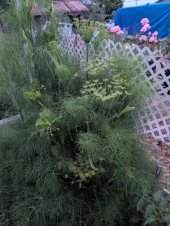
I grow a lot of fennel, I have some that has been cut and came back now three years.  (North Central Texas)

It is right in my garden next to cukes, squash, egg plant, peppers, etc.  I have never seen any of my plants do worse next to fennel than away from it.  May be some things do but nothing common in a southern garden for me ever has.  None of my winter cover crops seem to be bothered by it either.
1 week ago
Here is a video that shows my sorted sizes and what happens when you sort BEFORE you crush with the drive over it in a feedbag method.  The improvement is amazing

1 year ago
Thanks I just played with an idea to make crushing it a bit more effective with the drive over a bag of it method it worked really well.  Video will be out in about an hour as soon as it renders.  

Basically by screening before crushing it crushes a LOT better which makes a hell of a lot of sense when you think about crush vs. compact and empty spaces.  

It effectively with very little work reduced a full bucket of "large" to a third of large, a third of 1/2 and a third of fine.

I did it with a bucket of 1/2 and got about 1/3rd fine and about half of still 1/2.  

Really simple method and I don't think I will be putting it into my chipper ever again.  
1 year ago
This was a response to a thread located here https://permies.com/t/242903/Breaking-char-smaller-pieces#2834559  but I felt it would be a good stand alone post too.  

First I want to say I love the responses by Michael Cox (in the original thread), and I agree we need not stress over crushing.  That said there is some real value so here is what I do.  Also like Micheal since I do almost open top burns (cone kilns) my pieces most start pretty small anyway.  The quench alone fractures things a lot.  So I recommend start with heavy quenching alone will save a lot of work.

When my burn is done I quench, I leave it over night in the kiln and move it to buckets the next day.  

I have two screens, one is half inch and one is quarter inch.  I chop a bit at the char in the buckets with a sharp shooter shovel (if you don't know this is what I mean, https://amzn.to/4eSWAbQ ).  I put it though the 1/2 inch screen and push a bit with a hoe when I do this breaks up more.  

I then put what went though the 1/2 inch screen though a 1/4 inch screen and separate into three grades.  

1/2
1/4
Large

I get about 2/3drs of a batch into one of the smaller grades.  Now if you are going to crush further you only deal with what needs crushing based on your goals.

You can toss the big stuff into a bag and do the drive over it with a vehicle thing now MUCH more effectively as you are dealing with less and well trust me it crushes better.  Put that back though the screens.  You could also do that with the half inch but I don't.  All up to you but again you are only processing the part needing it.  

What I do with each "grade"

1/4 and finer - Goes in my feed for Ducks/Geese/Chickens, twice a week a tbs goes in the dogs food.  Also what goes in my worm bins and the big thing is it is what goes in my potting soil/starter mix.  Any I don't use for that goes into animal bedding in the coop.

1/2 if I need more 1/4 it goes in a bag and gets a crush, otherwise into the animal bedding.  That is a 1-2 year process before it gets to a garden.  Because once a year the deep litter goes into bioreactors.  By then a lot of it is smaller anyway.  If not who cares, it works wonderfully.  

Large - most of this is about the size we used to call "nut coal" in the coal industry (about a nickel to a quarter in size).  None is ever very big.  So if I need more it gets the bag and drive over trick and a couple screenings.  And sorted again, into the three classes.  But what if i don't want to crush more.  First it is also fine in bedding but I think we are missing a reality here, biochar is CHARCOAL and damn good charcoal.  

So gasp I end up with may be 20% of a run as large, I keep it separate and when I want to cook with charcoal I use it for that purpose.  It is fantastic for it.  I use the "side baskets" (like this in a weber kettle https://amzn.to/3B1BIBn ) and it works way better than briquettes and you get a lot more in due to more space efficiency.  

I can hear it now (OMG it is for muh soils and my CO2 sequestrations).  Hold on, you cook all the time the heat comes from somewhere.  I am using huge amounts of waste that would otherwise all go back to the atmosphere in break down if I didn't make the char.  I get bad ass soil amendments, but I also get fuel from scraps.  

My reasoning is despite it sounding like a ton of work, it isn't, super easy and fast.  So I spend more time making char then crushing it.  So I make a LOT more.  So more goes into the soil in the end.  

I will also say I have used a wood chipper and it works wonderfully.  WHEN you get the moisture just right which can be tricky.  But doing the big stuff after screening usually can do that.  But this all seems VERY hard on the chipper and when it is too wet it is a real tar looking mess.  One hack is after you do it put a few buckets of wood chips in to help clean it out and toss those in the compost or bedding but I have honestly quit this for a simpler model.  

Last it is really cool to make char in a grill then cook in that grill with some of the char you made.  Do you own a Weber Kettle Grill or one of the hundreds of clones of it, then you have a kiln.  Don't have one, check Craigslist or FB Marketplace you can likely get one in good shape for 50ish bucks.  Hell get two at that price.  A kettle is a PERFECT cone kiln, dare I say it works better then some you can buy marketed as kilns.  

Here is a video of me using one to make biochar, I just added a rotisserie ring, so I can up my yields by about 25%.  Any questions ask, I don't post here often but I always answer questions when I do so.



1 year ago
First I want to say I love the responses by Michael Cox, and I agree we need not stress over crushing.  That said there is some real value so here is what I do.  Also like Micheal since I do almost open top burns (cone kilns) my pieces most start pretty small anyway.  The quench alone fractures things a lot.  So I recommend start with heavy quenching alone will save a lot of work.

When my burn is done I quench, I leave it over night in the kiln and move it to buckets the next day.  

I have two screens, one is half inch and one is quarter inch.  I chop a bit at the char in the buckets with a sharp shooter shovel (if you don't know this is what I mean, https://amzn.to/4eSWAbQ ).  I put it though the 1/2 inch screen and push a bit with a hoe when I do this breaks up more.  

I then put what went though the 1/2 inch screen though a 1/4 inch screen and separate into three grades.  

1/2
1/4
Large

I get about 2/3drs of a batch into one of the smaller grades.  Now if you are going to crush further you only deal with what needs crushing based on your goals.

You can toss the big stuff into a bag and do the drive over it with a vehicle thing now MUCH more effectively as you are dealing with less and well trust me it crushes better.  Put that back though the screens.  You could also do that with the half inch but I don't.  All up to you but again you are only processing the part needing it.  

What I do with each "grade"

1/4 and finer - Goes in my feed for Ducks/Geese/Chickens, twice a week a tbs goes in the dogs food.  Also what goes in my worm bins and the big thing is it is what goes in my potting soil/starter mix.  Any I don't use for that goes into animal bedding in the coop.

1/2 if I need more 1/4 it goes in a bag and gets a crush, otherwise into the animal bedding.  That is a 1-2 year process before it gets to a garden.  Because once a year the deep litter goes into bioreactors.  By then a lot of it is smaller anyway.  If not who cares, it works wonderfully.  

Large - most of this is about the size we used to call "nut coal" in the coal industry (about a nickel to a quarter in size).  None is ever very big.  So if I need more it gets the bag and drive over trick and a couple screenings.  And sorted again, into the three classes.  But what if i don't want to crush more.  First it is also fine in bedding but I think we are missing a reality here, biochar is CHARCOAL and damn good charcoal.  

So gasp I end up with may be 20% of a run as large, I keep it separate and when I want to cook with charcoal I use it for that purpose.  It is fantastic for it.  I use the "side baskets" (like this in a weber kettle https://amzn.to/3B1BIBn ) and it works way better than briquettes and you get a lot more in due to more space efficiency.  

I can hear it now (OMG it is for muh soils and my CO2 sequestrations).  Hold on, you cook all the time the heat comes from somewhere.  I am using huge amounts of waste that would otherwise all go back to the atmosphere in break down if I didn't make the char.  I get bad ass soil amendments, but I also get fuel from scraps.  

My reasoning is despite it sounding like a ton of work, it isn't, super easy and fast.  So I spend more time making char then crushing it.  So I make a LOT more.  So more goes into the soil in the end.  

I will also say I have used a wood chipper and it works wonderfully.  WHEN you get the moisture just right which can be tricky.  But doing the big stuff after screening usually can do that.  But this all seems VERY hard on the chipper and when it is too wet it is a real tar looking mess.  One hack is after you do it put a few buckets of wood chips in to help clean it out and toss those in the compost or bedding but I have honestly quit this for a simpler model.  

Last it is really cool to make char in a grill then cook in that grill with some of the char you made.  Do you own a Weber Kettle Grill or one of the hundreds of clones of it, then you have a kiln.  Don't have one, check Craigslist or FB Marketplace you can likely get one in good shape for 50ish bucks.  Hell get two at that price.  A kettle is a PERFECT cone kiln, dare I say it works better then some you can buy marketed as kilns.  

Here is a video of me using one to make biochar, I just added a rotisserie ring, so I can up my yields by about 25%.  Any questions ask, I don't post here often but I always answer questions when I do so.


1 year ago

R Scott wrote:

Brenda Groth wrote:HOLY CRAP them are some nasty thorns.


And they are poisonous!  You get stuck and don't take care of it right you may be losing whatever got stuck, or at least lose that muscle group and leave a nasty scar.  Many old farmers in these parts had lost toes or fingers or forearm muscle to thorn infections--almost as many that lost them to the machinery.  

The thorn is the first thing that comes out of the ground, too.  A 4 inch sapling with three 3 inch spikes--natural caltrops.  I lose tires to them every year, and several pairs of shoes.  They will go through any shoe and many boots.  Hard to spot in the grass, too.


Sorry this is inaccurate,

I'd have no arms or legs and be called Bob by now if any of this were true.  
3 years ago

paul wheaton wrote:I use coinbase for crypto.  A lot of people say it is a really bad idea.  Jack Spirko says it is the best.  https://www.coinbase.com/join/wheato_2l


Great place to buy, fast easy works like PayPal.  NEVER HOLD BITCOIN ON ANY EXCHANGE.

Minimum use a good software wallet like Exodus.io

Optimum, move your long holdings to something like a Trezor.  

All my Bitcoin Tools and Apps in one place are here.  https://thebitcoinbreakout.com/bitcoin-tools/

The entire point of Bitcoin is self custody, not your keys, not your coins.

Mart Hale wrote:-->

Here is that method that you don't agree with so others may know there is a way of doing this that Paul has found effective.
https://www.backtoedenfilm.com/organicgardening.html

I do believe Paul has a right to his method just as Ruth Stout named here method of using hay, she has a right to her method and her books.    

I do run a web page on Me We that talks about this non existing method of deep mulch as well as Ruth Sout's methods.
https://mewe.com/join/deep_mulch_-_back_to_eden__gardening

Mart


I didn't say I didn't agree with it, I said it isn't a method it isn't a thing.  It is just deep mulching with wood chips, of course it works that why I said gardeners have been doing it as long as wood chippers have been around.  Of course it works, but calling it "Back to Eden Method" is like say well imagine this.  

Lots of people mulch with straw, straw was in the manger, what if we start a new method called, "Back to Bethlehem Method", we mulch with straw that has animal poop on it.  Now we take this simple thing that people have done forever and we call it something and in the minds of people it becomes complicated.  

Call it anything you want it is just organic gardening and mulching.  Which absolutely does work very well.
7 years ago