I have had terrible luck growing corn. In my first garden, only one corn plant seems to have sprouted, in my second, less than half sprouted. Each garden has a different variety of sweet corn.
My first garden has two feet of soil purchased from a garden center. I believe it is made from local soil. My second garden has had the top 6 inches of soil removed and replaced with the same garden soil. Both my natural soil and this garden soil are sandy-loam soils.
Onions, turnips, pole green beans, bush black beans, potatoes, bell peppers, and tomatoes have had no trouble growing as long as I remembered to water them daily. I had no luck germinating spinach, but I chalked that up to a late planting in warm weather.
I returned from a trip yesterday, and I have been unable to water my gardens for five days.
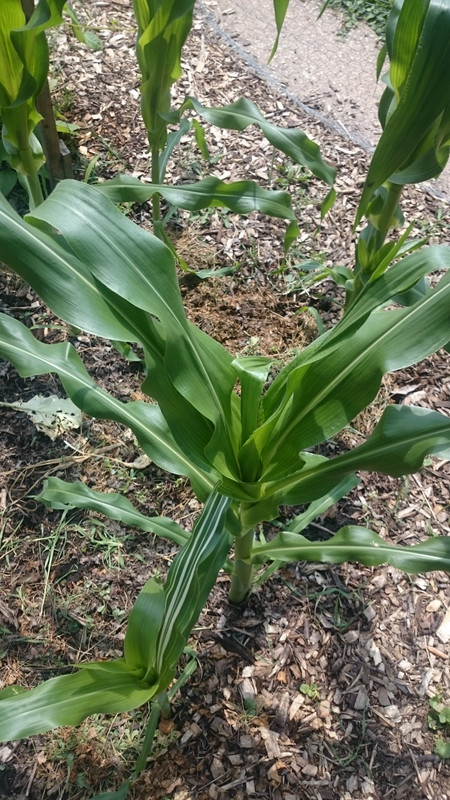
All of the corn that sprouted has at least one white stripe down the center of each leaf. One corn plant in the second garden is particularly stunted and has several white stripes across two of it's leaves. Before I left it only had one leaf with multiple white stripes. When it sprouted all it's leaves were completely white. I didn't even think it was corn, but I let it grow because I wanted to see what it became.
Before I left all the corn plants in the second garden had small parts of the bottom of their stalks that were red. Now a few no longer have that.
Here is a picture of that corn plant, along with a neighbor that features the more-typical single-white-stripe.
I read that this is caused by either iron or zinc deficiency. However, I am not sure how to tell the difference. Is there some way to tell?
I know that sometimes it takes awhile for nutrients to seep into the soil.
How can I amend the soil as quickly as possible?
My first garden has two feet of soil purchased from a garden center. I believe it is made from local soil. My second garden has had the top 6 inches of soil removed and replaced with the same garden soil. Both my natural soil and this garden soil are sandy-loam soils.
Onions, turnips, pole green beans, bush black beans, potatoes, bell peppers, and tomatoes have had no trouble growing as long as I remembered to water them daily. I had no luck germinating spinach, but I chalked that up to a late planting in warm weather.
I returned from a trip yesterday, and I have been unable to water my gardens for five days.
All of the corn that sprouted has at least one white stripe down the center of each leaf. One corn plant in the second garden is particularly stunted and has several white stripes across two of it's leaves. Before I left it only had one leaf with multiple white stripes. When it sprouted all it's leaves were completely white. I didn't even think it was corn, but I let it grow because I wanted to see what it became.
Before I left all the corn plants in the second garden had small parts of the bottom of their stalks that were red. Now a few no longer have that.
Here is a picture of that corn plant, along with a neighbor that features the more-typical single-white-stripe.
I read that this is caused by either iron or zinc deficiency. However, I am not sure how to tell the difference. Is there some way to tell?
I know that sometimes it takes awhile for nutrients to seep into the soil.
How can I amend the soil as quickly as possible?