
Mason Berry

+ Follow
since Jul 23, 2015
Merit badge: bb list bbv list
Biography
Raising five kids and building a roundwood timber frame house in central Virginia on 10 acres of sloped and wooded land with a river at the back. Reading hella books and transitioning into action. My goal is to transform a third of my land into a mostly-native restoration agriculture system, a third into a forest farm, and a third left undisturbed with limited foraging.
For More
Central VA
Apples and Likes
Apples
Total received
In last 30 days
1
Forums and Threads

Recent posts by Mason Berry

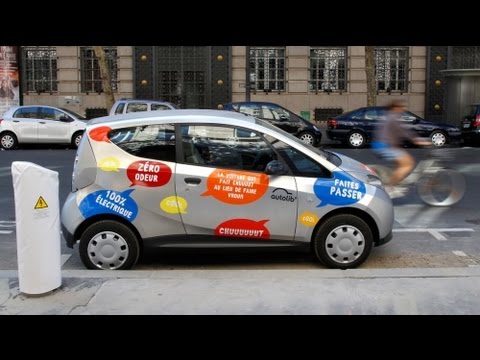
    My big concern about electric vehicles is not whether they are more or less sustainable than gas-powered vehicles; it's roads.

    When two nations are at war, the real winner isn't this nation or that nation; it's war. When smartphone manufacturers are competing to dominate their market sectors, they are merely competitors; the real victor is the smartphone itself, with all the shifts that implies in existing power dynamics and human society.
    Likewise, the current race to make long-distance, high-speed transport more sustainable (electric! hybrid! high mpg! biofuels! trains!), regardless of who wins in terms of market dominance, will serve, ultimately, to sustain long-distance, high-speed transport. If Amazon can no longer outcompete local manufacture and ditribution because long-distance, high-speed transportation (using fossil fuels) gets too expensive, then maybe that can mark the end of something destructive. Roads are all about access, for better and for worse; and, generally, the ones with greater (exploitative) power have leveraged them to their unequal advantage.
    Maybe, if we'd used electric vehicles all this time instead of fossil fuels, less damage would have been done. Maybe. But that's not the discussion here; we're at the point where we've already made the choice in favor of fossil fuels, that damage has largely been done, and the big push for alternatives appears to be coming, in large part, from the desire to keep this same machine running on different fuels. Is long-distance, high-speed transport something worth sustaining?
2 weeks ago

Philip Doherty wrote:It does seem to vary a lot.  The redwoods around here that were 500+ years old and were cut send up new suckers that become trees, and many of these are now over 100ft tall - usually a cluster of five or ten or twenty trunks all together.  None of these anywhere have reached old age yet however, so we don't really know how they will fare in the long term.


Is this a property of the individual redwood, or is it the property of an intact redwood community? I ask because I have read that neighboring trees will supply nutrients through their roots to another tree that is suffering, perhaps giving those redwoods the boost they need to get back to photosynthesizing for themselves. Maybe the areas of Kentucky where coppicing is less popular are more of the savannah type, with trees growing in a higher degree of isolation. I'm guessing on that, of course; but I do suspect that there are many more variables than only species when it comes to the viability of coppicing.

As for the mention of silver maple early on in this thread, isn't is possible that species like that are ideal for coppicing if the goal isn't lumber or firewood? Like, if I wanted stock for growing mushroom logs that could later become the basis for hugelkultur. It seems to me that what makes wood deficient for one use makes it ideal for another.

That daisugi method is incredible. It reminds me of the Pacific Northwest peoples' habit of taking boards out of living cedars without killing them - a method that is tailored to one particular species. It's the kind of idea that could only come from a very long relationship between a particular people and their particular place. Who knows what might be possible, with that degree of noticing, with whatever species are already around wherever one might be. Which trees are good and bad for coppicing is an interesting question; a complimentary one might be, "What is the proper way for me to relate to the trees and forest communities prevalent in my home place?"
2 weeks ago
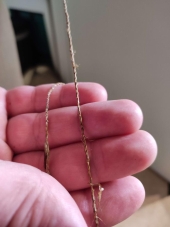
That's really cool about the shellacked hemp cord. Don't "steel strings" for guitars actually use different alloys for the thicker vs thinner strings? Just thinking that if a particular material works for only thin or only thick, that's not a failure; it's already conventional to mix materials.

I'm thinking of the limitations natural (and available) materials might impose, and appreciating that those sorts of limitations inspire the design choices that ultimately led to so many instruments existing in the first place.
1 month ago
I live in a town that was built up in the heyday of coal, and the house I'm moving into has a coal fireplace in pretty much every room. My understanding is that coal chimneys are designed differently from wood-fire chimneys because of the differences in the burn - namely, that coal tends to burn more completely (and at a higher temperature) leaving no creosote. This poses a problem, I understand, with burning wood in these fireplaces because coal fireplaces are (1) often unlined and (2) far narrower.

But, hang on - burns hotter? No creosote? It *sounds* like a coal chimney would be perfect for venting a rocket mass heater, right?

So my questions are twofold: First, could a coal chimney be used safely and effectively to vent a rocket mass heater? Second, could a rocket mass heater be designed to preserve the historical character of coal fireplaces in an historic home?

My idea for design is like this: Move the original mantle and hearth face a foot or so further into the room, build a (plastered brick?) stratification chamber between it and the chimney. The idea would be to load the coal basket with wood, batch-box-style; the fire would burn upward in the normal fashion, turn back 90 degrees and then up 90 degrees; up through the insulated burn stack; and then down the stratification chamber and out the chimney.

My hope is that my doing this successfully I can make this technology more accessible to those whose homes have an historical character they want to preserve, like mine. I also feel that this technology is more in keeping with the spirit of these coal fireplaces than leaving them merely decorative.

Thoughts? I can sketch something and add it later to help with visualization.
7 months ago
I've actually been wondering about this. Would, say, deer sinew work? I don't know how much tension is required for stringed instruments, but I imagine bowstrings and musical strings have a similar technical origin.
8 months ago

Ellen Morrow wrote:Is that $200 fee per person or per tent?


The tickets are per person, though under 16 years old is free. I've always volunteered and gone for free, but it's totally worth the price of the ticket. There's nothing else like this around here, and ever since our first time my kids have planned their whole year around it.
1 year ago
  Greetings, fellow permies!

  Have you ever heard of Mountain Run Jam? If you live anywhere near Virginia and have a passion for permaculture, self-sufficiency, localism, music, and art, then this three-day fever-dream of workshops, classes, and music is exactly where you want to be. I've been going for a few years and am trying to spread the word to those who may not already know. Just to give you a little hint of the atmosphere, picture this:

  - A genuinely family-friendly environment where kids of all ages roam free in beautiful nature and participate in learning alongside the grownups
  - So many workshops you'll be marking up the schedule with where you want to be and when
  - Local artisans and food vendors every day
  - Chill vibes during the day and truly excellent concerts at night
  - Peaceful, no-stress camping
  - Natural mountain beauty everywhere you look

  Come to Mountain Run Jam! Bring your friends! Volunteer to get in for free!
1 year ago

Mike Barkley wrote:I don't think the shells are edible. They probably aren't poisonous but just tough with little nutritional value.


Thought/question/experiment opportunity:

I know that, in Appalachia, green beans have been strung up to dry out, later to be soaked and cooked as a dish called leather britches. I've done this, and they get just as dry, brown, and papery-crackly as anything; but the broth from cooking leather britches is very good. I wonder, therefore, whether there might be any benefit to adding dry bean shells to stock vegetables. Anyone tried it?
1 year ago
  I second frijoles de la olla ("pot beans"), and that general preparation seems pretty versatile, appearing in Appalachian cuisine as soup beans and in Italy as pasta e fasule. So I'll make soup beans or frijoles de la olla (slightly varying the spices in the latter case) for one night, then heat up the rest to serve over penne as pasta e fasule a few days later. The recipe I follow uses a pressure cooker, including instructions for a crazy-fast method of soaking the beans in the pressure cooker in case I forget the pre-soak.

  Oh, and leftovers can also become refried beans!
1 year ago