Amy Gardener

gardener
+ Follow
since Aug 29, 2016
Merit badge: bb list bbv list
For More
5,000' 35.24N zone 7b Albuquerque, NM
Apples and Likes
Apples
Total received
In last 30 days
19
Forums and Threads

Recent posts by Amy Gardener

What could I use to make a warm place to sleep?
Mud!
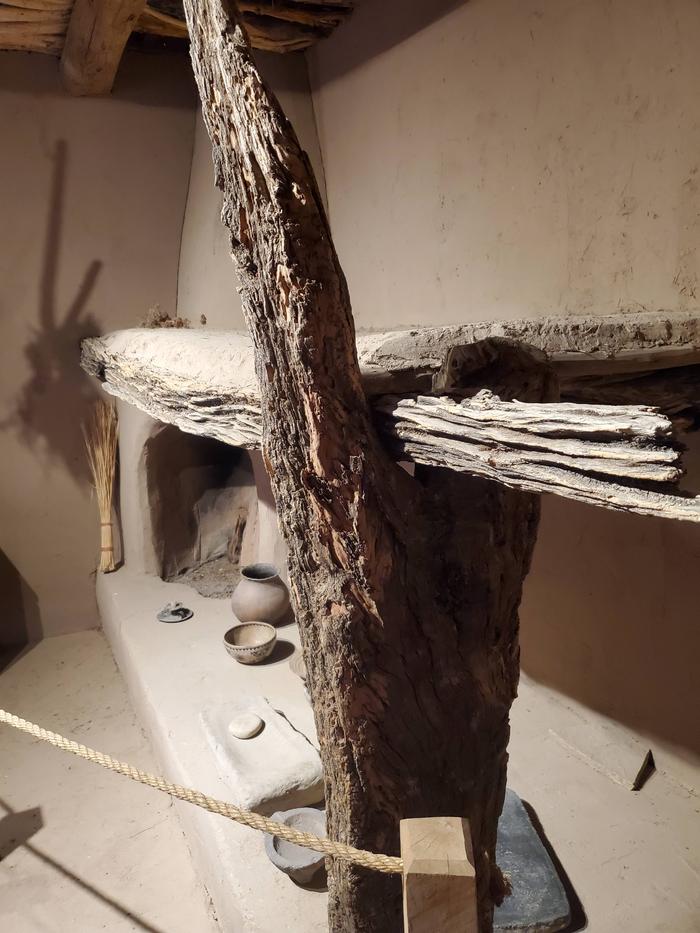
This is a Shepherd's Bed from a residence a few miles from my house. The bed was built above a fireplace and bench. All of these were constructed and plastered with locally sourced adobe.

1 day ago
Thank you for your keen observations, John!
Your regional example,

"How are we going to make miles, and Miles, and MILES of country gravel road for the rural population that doesn't just sink into the deep topsoil of the old ancient lakebed here?”

reminds me of a recent question with my driveway:
How can I modify this hard-packed clay driveway to funnel rainwater to the gardens?
By removing the softened clay on the outer edge of the driveway, I formed clay channels to a row of fruit trees. The clay slows down the infiltration in the driveway and gravity feeds the water where the trees need it. In times of severe drought, these water repellent clay channels direct storage water to the apricots, plums, cherries, apples and pears. Your pigs would love those apples!
4 days ago
HOW DO I LEVEL A BIRDBATH ON A CROOKED STUMP?
No matter how hard I tried to make an even cut on the top of an old stump, I could not make the top level enough so the shallow birdbath looks perfectly even. Then the idea came to me: MUD!
I dug some clay and sand from my driveway, sifted out the rocks, then smeared the mix onto the top of the stump. I gently pressed the birdbath into the mud until perfectly level. The mud hardened around the bath forming a smooth nest for the bowl.
The water and lip of the bowl are now aligned. I’m really pleased!
5 days ago
The intention here is to surface creative solutions to everyday homestead problems that can be solved with clay, adobe, cob or depleted dirt. The goal is to help readers experiment with mixing up a batch of dryish or wettish mud to make fixes inside and outside the home.

Please respond with the QUESTION. After the question, feel free to share the story of your actual fix or solution with us. I am looking forward to learning some new ways to use mud!
5 days ago
Kira writes,

If anyone has any specific questions, I can definitely try to pull out some research on the topic.


Leigh and Anne mentioned biochar and this is an interest of mine as well.
Is there research that links pit fire cooking and biochar? Out here in New Mexico, wood is scarce and is quickly depleted. Burning wood without using the heat for some other purpose (cooking or heating spaces) seems unlikely. Is there evidence that links biochar and pit-fire cooking? How did First Peoples use the burn pile before planting in it or moving it to a planting area? Is there a pit-fire-to-garden practice that we could replicate today?
6 days ago
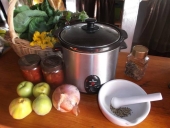
This may not use all the apples, but it will certainly add to the apple options.
Backstory:
When I was a kid, my favorite breakfast was toast with applesauce sprinkled with cinnamon sugar and crumbled bacon. The recipe came from The Betty Crocker Boy’s and Girl’s Cookbook and it was probably the first recipe that I ever made.
Later in life, I encountered another Betty Crocker recipe for Impossibly Easy French Apple Pie.

The “French Apple Pie” recipe is interesting because it doesn’t use a rolled crust (a little like a clafoutis though French readers may object):
Peel and slice 3 cups apples then toss them into a buttered 9" pie plate with 1 t cinnamon, 1/4 t nutmeg and a little sugar (the recipe calls for 1/2 cup but I use about 1/4 cup).
In medium bowl, mix together 1/2 cup milk, 2 eggs, and 1/2 cup buttermilk baking mix (for example, Bisquick or Pioneer brand, or make the dry baking mix by hand).
Pour that wet batter over the apples (this makes a thin crust and holds the pie together).

Now for the mashup of the 2 recipes that Betty Crocker hasn’t approved, but I really like:
Instead of making a sugary topping like the streusel in the “French Apple Pie” recipe (not included here), top the pie with chopped lean raw bacon (about a loose cup).
Bake the pie 45 minutes in a 325 F oven (375 F for high altitude: 3,500 - 6,500 feet).
Apple pie (including bacon and eggs): a great way to start the day while wondering what to do with the rest of the bumper crop!
1 week ago
Given that this thread was originally posted in "greening the desert" and Kevin may be looking for a simple way to describe desert root systems, here is the best example of plant survival in my area of New Mexico: the one seed juniper (Juniperus monosperma) and the prickly pear (Opuntia).
One seed junipers have a tap root that reaches down 200' to harvest ground water. The tree gives most of its energy to establishing this deep root and grows slowly (6" per year). While it has surface feeder roots, this juniper gathers most of its water deep down.
Prickly pear cactus roots are superficial, far reaching (~8' in all directions) with the roots mostly in the top 6-12 inches. The tap root is typically only 2-3 feet which is pretty shallow in the desert. The purpose of this root structure is to grab the tiny amounts of water at the surface then store that water in the fleshy pads (nopales) and the surface of the tap root. This plant gathers water all around.
Prickly pear cactus and one-seed juniper are natural companions since they harvest water differently.
2 weeks ago
Thank you all for the suggestions for cleaning up the shop. I did employ many of these ideas, specifically,
1. hooks behind a closet door for the mop, broom, telescoping duster and other long handled tools
2. boot mat next to the door
3. large recycled peanut cans for various hardware categories
4. trips to the thrift store

Organizing the shop has taught me that I’m not a tidy person. Lots of labels and jars kind of freak me out because I have to organize too often. I like general categories and containers that hold a broad variety of stuff in that category. I like flat lidded trays that stack so I can rummage through possibilities and see things. We all probably have a personal relationship with order and mine is loose.

Now to be really honest, I will share the habit that had the biggest impact on organizing the shop: tearing up paper then soaking it in compost tea.

As a member of a pre-digital generation, I saved about 30 bankers-boxes full of paper. Those who remember typing essays, writing letters, journaling, and receiving written documents probably know what I’m talking about. The paper world was vast and I saved most of it in my shop. Before paper can be thrown, it needs to be thanked, then torn, then soaked in something organic so no-one can ever read again.

For me, a long-term commitment to regularly tearing paper then soaking it in a half a bucket of compost tea, then dumping it into a compost pile for 4 years has made the shop usable again.

This is what really worked for me. There is no beautiful photo of this system, nothing to buy. But all those paper memories have become compost which feeds soil, plants, and animals. I feel lighter.
3 weeks ago

Are you packing the stones densely around the plant to create semi-continuous protective shield?
Densely packed could also deter gophers from emerging near the main stalk and chopping it off.


Thanks for your curiosity about this approach, Cristobal. My practice has been to densely pack the stones about 1' tall around the perimeter of the bed then randomly place the stones on the top surface of the bed. The goal is to place the top stones further away from the plants as the roots get established. I want airflow. The surrounding frame is a variation on the Zuni Waffle Garden. My waffles are much more curvy than the traditional beds.
The gophers have stayed out so far. I add new layers of stones as the edges submerge and some of the edges are as much as a foot underground.
Gathering stones for the garden is my favorite winter pastime. I hope this works for you!
P.S. Growers in my area frequently protect young grape vines with 2 curved pieces of hardware cloth (like a forward C and backward C) to form an overlapping circular barrier around the stem, above and underground: (O). As the stem grows, the C's can be pulled apart. The mesh pieces are removed when the plant gets woody. This works very well for protecting young plants from rodents.

3 weeks ago
In addition to the very helpful responses here, I'd like to add one approach to Maryam's question to Cristobal, "I'm curious, have you found a way to keep the soil moist without attracting too many pests?"
Many indigenous farmers in the desert regions of New Mexico have used stone mulch to prevent soil moisture from evaporating. For several years, I have been duplicating this method with success. In areas of full sun, I use only white stones to reflect the sun's light (growth spectrum) onto the plants. Black rocks absorb heat so I only use them in winter where this is needed. In areas of dense plantings, and/or northern exposure, the color makes less difference. The stones do not absorb water and heat like typical dark mulch shown in those enviable images from regions with consistent rainfall and naturally rich topsoil. Instead, the partially submerged, fist-sized stones function like a protective scab over the fragile moist roots and microbial life below.
It is important to keep the stones away from the stem to prevent abrasions on the growing plants that may occur from heavy winds.
In my experience, this ancient desert strategy of using light colored smooth stones as surface mulch has led to less sub-surface evaporation and fewer problem pests.
3 weeks ago