
• Post Reply Bookmark Topic Watch Topic
  • New Topic
permaculture forums growies critters building homesteading energy monies kitchen purity ungarbage community wilderness fiber arts art permaculture artisans regional education skip experiences global resources cider press projects digital market permies.com pie forums private forums all forums
this forum made possible by our volunteer staff, including ...
master stewards:
  • Carla Burke
  • Anne Miller
  • Nancy Reading
  • John F Dean
  • r ransom
  • paul wheaton
  • Timothy Norton
stewards:
  • Jay Angler
  • Pearl Sutton
  • Andrés Bernal
master gardeners:
  • Christopher Weeks
gardeners:
  • M Ljin
  • Thekla McDaniels
  • May Lotito

Protecting plants naturally in hot climates - what actually works?

 
Posts: 23
1
  • Likes 6
  • Mark post as helpful
  • send pies
    Number of slices to send:
    Optional 'thank-you' note:
  • Quote
  • Report post to moderator
Hi everyone!

I'm a university student in the UAE studying Sustainable Agriculture and Food Security.

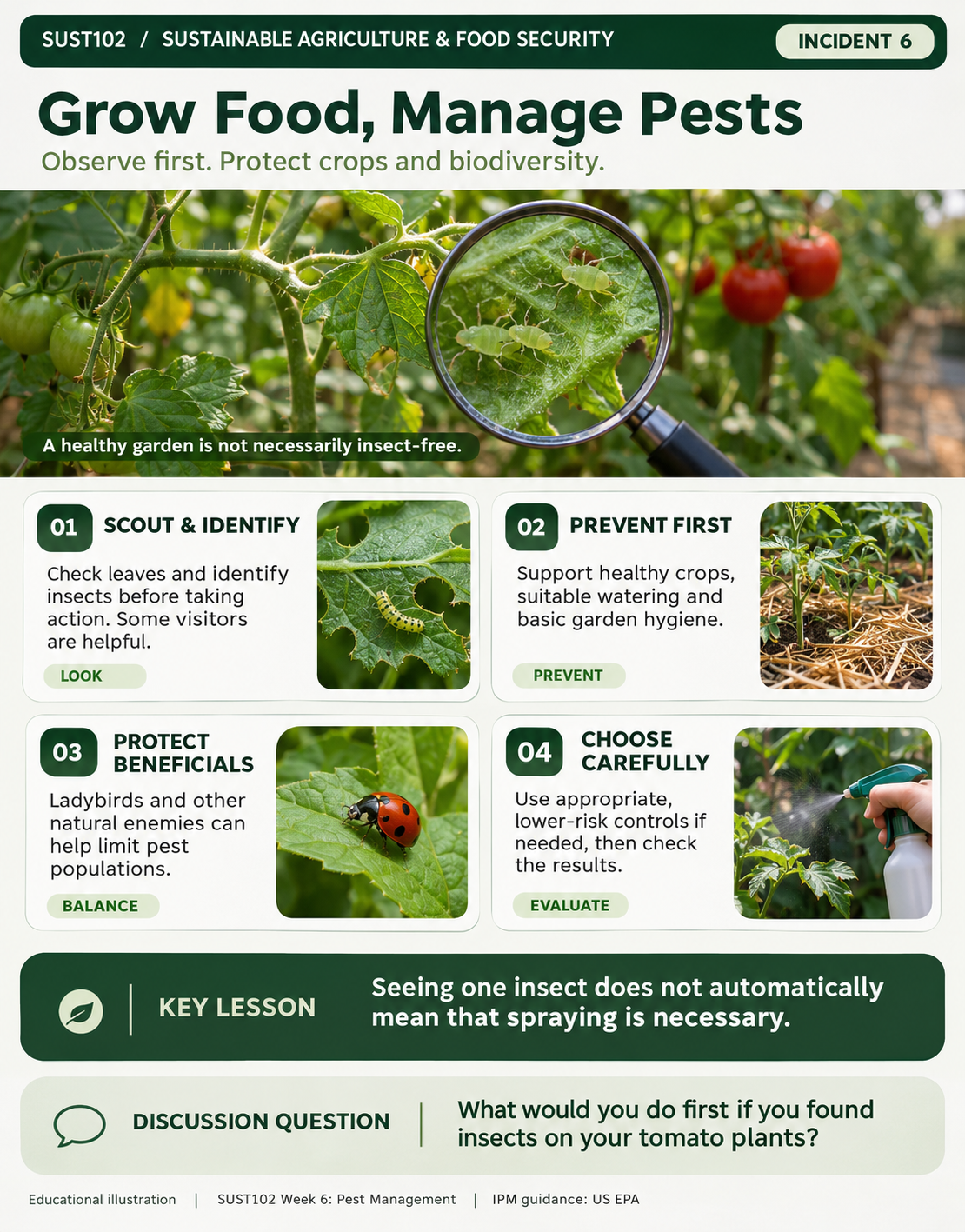
l've been learning about Integrated Pest Management (IPM) and created this infographic about protecting plants while reducing unnecessary pesticide use.

Since gardening in the UAE can be challenging because of the heat, I'd love to learn from people with real gardening experience.

I have three questions:

1. What natural pest control methods have worked best in your garden?
2. How do you know when insects are actually causing enough damage to take action?
3. Is there anything you'd improve or add to my infographic?

I'd really appreciate any practical advice, especially from gardeners in hot climates.

Thanks so much for sharing your experience!
Grow-Food-Manage-Pests.png
Educational infographic on Integrated Pest Management (IPM)
 
Posts: 1030
Location: Sierra Nevada foothills, 350 m, USDA 8b, sunset zone 7
304
  • Likes 9
  • Mark post as helpful
  • send pies
    Number of slices to send:
    Optional 'thank-you' note:
  • Quote
  • Report post to moderator
My experience with pests is limited to earwigs and gophers in my constant failure garden. My temperatures are lower than UAE, averaging 38 C in summer, reaching 44 C on hottest days. Nights are always cool, below 22 C. Very low humidity for 6 months. 400 mm average precipitation. Continentalized Mediterranean climate.

Hot places need water preservation, but it works as double edged sword.

Mulching with chips/dust attracts earwigs that destroy leaves of "protected" plants beyond self repair threshold. Now I start mulching only if temperatures reach 35 C and it's already past the earwig hatching period.

Deep irrigation attracts gophers that follow the row and destroy every single plant in the row. Planting tomatoes, peppers in wire cages (1 cm opening) protects them sufficiently. Even putting a bottomless wire cylinder around the stalk did help as gophers seemed to be attracted to the bottom part of the stalk only.
Cucurbits were also severed just above the ground. Next year I'm going to plant them over stainless (so it will last many seasons) wire mesh (40x40 cm pieces). Cages would be less practical, because all stalks lay on the ground and wider area has to be protected. Thicker stalks will probably merge with the wire.
Gopher destruction was less problematic in hand watered garden.

One year I got aphids on zucchini so I washed them off with water spray.

In early spring I notice large grasshoppers that destroy cucurbits. I try to catch them and feed to chicken.

I don't encounter anything else, probably because nothing seems to want to grow here so pests are not attracted but maybe because I'm visited by around 20 species of native small birds.
 
master steward
Posts: 20016
Location: USDA Zone 8a
5017
dog hunting food preservation cooking bee greening the desert
  • Likes 5
  • Mark post as helpful
  • send pies
    Number of slices to send:
    Optional 'thank-you' note:
  • Quote
  • Report post to moderator
I plant flowers that pests don't like, such as rosemary, marigolds, and sweet alyssum.

I use soil health to protect plants.

Also their are plants that are resistant to pest and disease.

Water is your friend.  

Can you share what you have learned about ways to make a desert sustainable.
 
rocket scientist
Posts: 601
Location: in the Middle Earth of France (18), zone 8a-8b
414
2
hugelkultur dog tiny house chicken composting toilet cooking building sheep rocket stoves homestead composting
  • Likes 7
  • Mark post as helpful
  • send pies
    Number of slices to send:
    Optional 'thank-you' note:
  • Quote
  • Report post to moderator
This past summer here in central France was extremely hot and dry, and "nothing moved" - the plants didn't grow.
The prediction for next year is repetition of the hot and dry summer, and I'm planning to pack my plants close to each other, playing with different heights and structures of plants, in order to create lots of foliage, to shade and create humidity and hold moisture in the ground.
I hope I'll get it all working.
I think air humidity might be more of a key factor than anything else.
Watching this conversation like a hawk, eager to learn


pollinator
Posts: 596
Location: UK
197
kids urban seed
  • Likes 7
  • Mark post as helpful
  • send pies
    Number of slices to send:
    Optional 'thank-you' note:
  • Quote
  • Report post to moderator
Packing plants close to shade the soil makes sense to me. Bare ground is what cooks first, even in our much milder UK heatwaves. Interesting point about humidity too, I'd not thought of that as being as important as the temperature.
 
Maryam Green
Posts: 23
1
  • Likes 8
  • Mark post as helpful
  • send pies
    Number of slices to send:
    Optional 'thank-you' note:
  • Quote
  • Report post to moderator

Anne Miller wrote:I plant flowers that pests don't like, such as rosemary, marigolds, and sweet alyssum.

I use soil health to protect plants.

Also their are plants that are resistant to pest and disease.

Water is your friend.  

Can you share what you have learned about ways to make a desert sustainable.


Thank you so much Anne! That's a really interesting question.

Although the UAE is known for its hot desert climate we actually put a lot of effort into developing agriculture and making it more sustainable.

We have local farms, greenhouses, hydroponic systems and modern irrigation methods that help us grow food despite the challenging weather. It's something I really appreciate about my country!

Through my university project, I've learned that sustainable agriculture in desert environments is not just about growing more food but also about saving water, improving soil health, choosing suitable crops and protecting plants through natural pest management.

l've also realized how important methods like mulching, providing shade and encouraging beneficial insects can be especially when adapted to our climate.

Of course, there are still challenges, but I think it's inspiring to see how agriculture continues to develop in the UAE. Your question really made me reflect on everything I've been learning.
Thank you for sharing your advice and experience!
 
Maryam Green
Posts: 23
1
  • Likes 3
  • Mark post as helpful
  • send pies
    Number of slices to send:
    Optional 'thank-you' note:
  • Quote
  • Report post to moderator

Cristobal Cristo wrote:My experience with pests is limited to earwigs and gophers in my constant failure garden. My temperatures are lower than UAE, averaging 38 C in summer, reaching 44 C on hottest days. Nights are always cool, below 22 C. Very low humidity for 6 months. 400 mm average precipitation. Continentalized Mediterranean climate.

Hot places need water preservation, but it works as double edged sword.

Mulching with chips/dust attracts earwigs that destroy leaves of "protected" plants beyond self repair threshold. Now I start mulching only if temperatures reach 35 C and it's already past the earwig hatching period.

Deep irrigation attracts gophers that follow the row and destroy every single plant in the row. Planting tomatoes, peppers in wire cages (1 cm opening) protects them sufficiently. Even putting a bottomless wire cylinder around the stalk did help as gophers seemed to be attracted to the bottom part of the stalk only.
Cucurbits were also severed just above the ground. Next year I'm going to plant them over stainless (so it will last many seasons) wire mesh (40x40 cm pieces). Cages would be less practical, because all stalks lay on the ground and wider area has to be protected. Thicker stalks will probably merge with the wire.
Gopher destruction was less problematic in hand watered garden.

One year I got aphids on zucchini so I washed them off with water spray.

In early spring I notice large grasshoppers that destroy cucurbits. I try to catch them and feed to chicken.

I don't encounter anything else, probably because nothing seems to want to grow here so pests are not attracted but maybe because I'm visited by around 20 species of native small birds.


Thank you for sharing your experience Cristobal! I hadn't considered that methods like mulching and deep watering could sometimes attract unwanted pests.

It's interesting how something that helps plants can also create new challenges. Your experience really shows how important it is to find the right balance especially in hot and dry climates.

I'm curious, have you found a way to keep the soil moist without attracting too many pests?
 
Maryam Green
Posts: 23
1
  • Likes 2
  • Mark post as helpful
  • send pies
    Number of slices to send:
    Optional 'thank-you' note:
  • Quote
  • Report post to moderator

Nina Surya wrote:This past summer here in central France was extremely hot and dry, and "nothing moved" - the plants didn't grow.
The prediction for next year is repetition of the hot and dry summer, and I'm planning to pack my plants close to each other, playing with different heights and structures of plants, in order to create lots of foliage, to shade and create humidity and hold moisture in the ground.
I hope I'll get it all working.
I think air humidity might be more of a key factor than anything else.
Watching this conversation like a hawk, eager to learn


Thank you, Nina!

I really like your idea of growing plants close together at different heights to create natural shade.

I think it's an interesting approach especially for places like the UAE where protecting plants from extreme heat is so important.

I'd love to hear how it works if you decide to try it! Thank you for sharing your idea.
 
Maryam Green
Posts: 23
1
  • Likes 2
  • Mark post as helpful
  • send pies
    Number of slices to send:
    Optional 'thank-you' note:
  • Quote
  • Report post to moderator

Joao Winckler wrote:Packing plants close to shade the soil makes sense to me. Bare ground is what cooks first, even in our much milder UK heatwaves. Interesting point about humidity too, I'd not thought of that as being as important as the temperature.


That's a really good point, Joao! I hadn't thought much about how important humidity can be alongside temperature.

Here in the UAE the intense sunlight makes protecting plants and keeping moisture in the soil especially challenging.

This discussion has helped me realize how even simple things like providing shade can make a difference.

Thank you for sharing your thoughts!
 
Cristobal Cristo
Posts: 1030
Location: Sierra Nevada foothills, 350 m, USDA 8b, sunset zone 7
304
  • Likes 7
  • Mark post as helpful
  • send pies
    Number of slices to send:
    Optional 'thank-you' note:
  • Quote
  • Report post to moderator

Maryam Green wrote:I'm curious, have you found a way to keep the soil moist without attracting too many pests?


According to my observations, providing enough moisture to popular vegetables in hot mountain climate will not compensate for the evaporative energy of intense sun I have. People in San Joaquin Valley seem to grow things that I struggle with. They experience higher temperatures, less precipitation, but somewhat hazy sun - from agricultural dust and pollution. This haziness makes the difference. So my greatest friend is shade. I have not found a way to effectively shade my garden without use of plastic that I don't want to use. I was trying to grow sunflowers, but they refuse to grow either in sufficient numbers. They would also have to be protected from gophers, and protecting the protection seems too far-fetched absurd.

My choices are:
-cutting more of the eucalyptus grove to create a garden patch, surrounded by trees, to limit intense sun to 3 hours per day and dappled for the rest of the day

-building some shading structure - but since I don't like flimsy and ugly things, it will be way more pricey than vegetables I may or not ever produce; cost wouldn't be even a problem as I love building things and do not convert anything to some imagined profits or losses, but I have zero guarantee that it would really help

-planting vegetables between the figs that next year some will reach 2.5m height

The third option seems the easiest as I will only need to add another irrigation hose (to not take away figs' water). The remaining 200 m2 garden area would grow only cucurbits that should produce if protected from rodents
 
Posts: 46
Location: New York, USA
12
  • Likes 6
  • Mark post as helpful
  • send pies
    Number of slices to send:
    Optional 'thank-you' note:
  • Quote
  • Report post to moderator
Hi Maryam, thank you for starting this thread, and I really like the observe first idea in your infographic. In my own garden, the method that has helped me most is checking plants closely a few times a week, especially under the leaves, and washing off small aphid clusters with a strong spray of plain water before they spread. I also plant marigolds and herbs like basil and rosemary near vegetables, which seems to bring in more helpful insects and gives pests somewhere else to go.

For your second question, I try not to act on the first insect I see. I look for real damage, like leaves being eaten faster than new growth appears, clusters spreading, or young seedlings wilting. A few holes on a healthy plant usually sorts itself out.

One small addition for your infographic could be a note on watering at the base in the morning, so leaves stay dry and plants cope better with heat. Good luck with your project, and I hope the hot climate tips here help.
 
Maryam Green
Posts: 23
1
  • Likes 4
  • Mark post as helpful
  • send pies
    Number of slices to send:
    Optional 'thank-you' note:
  • Quote
  • Report post to moderator

Morgan Brooks wrote:Hi Maryam, thank you for starting this thread, and I really like the observe first idea in your infographic. In my own garden, the method that has helped me most is checking plants closely a few times a week, especially under the leaves, and washing off small aphid clusters with a strong spray of plain water before they spread. I also plant marigolds and herbs like basil and rosemary near vegetables, which seems to bring in more helpful insects and gives pests somewhere else to go.

For your second question, I try not to act on the first insect I see. I look for real damage, like leaves being eaten faster than new growth appears, clusters spreading, or young seedlings wilting. A few holes on a healthy plant usually sorts itself out.

One small addition for your infographic could be a note on watering at the base in the morning, so leaves stay dry and plants cope better with heat. Good luck with your project, and I hope the hot climate tips here help.


Thank you so much Morgan! I really appreciate you answering all my questions.

I especially liked your point about checking for actual plant damage before taking action. I hadn't really thought about how a few insects might not be a problem.

Your suggestion about watering at the base in the morning is also really useful especially for our hot climate in the UAE. I'll definitely consider adding it to my infographic.
Thanks again for sharing your experience!
 
gardener
Posts: 819
Location: 5,000' 35.24N zone 7b Albuquerque, NM
596
hugelkultur forest garden fungi foraging trees cooking food preservation building solar greening the desert homestead
  • Likes 9
  • Mark post as helpful
  • send pies
    Number of slices to send:
    Optional 'thank-you' note:
  • Quote
  • Report post to moderator
In addition to the very helpful responses here, I'd like to add one approach to Maryam's question to Cristobal, "I'm curious, have you found a way to keep the soil moist without attracting too many pests?"
Many indigenous farmers in the desert regions of New Mexico have used stone mulch to prevent soil moisture from evaporating. For several years, I have been duplicating this method with success. In areas of full sun, I use only white stones to reflect the sun's light (growth spectrum) onto the plants. Black rocks absorb heat so I only use them in winter where this is needed. In areas of dense plantings, and/or northern exposure, the color makes less difference. The stones do not absorb water and heat like typical dark mulch shown in those enviable images from regions with consistent rainfall and naturally rich topsoil. Instead, the partially submerged, fist-sized stones function like a protective scab over the fragile moist roots and microbial life below.
It is important to keep the stones away from the stem to prevent abrasions on the growing plants that may occur from heavy winds.
In my experience, this ancient desert strategy of using light colored smooth stones as surface mulch has led to less sub-surface evaporation and fewer problem pests.
 
Cristobal Cristo
Posts: 1030
Location: Sierra Nevada foothills, 350 m, USDA 8b, sunset zone 7
304
  • Likes 4
  • Mark post as helpful
  • send pies
    Number of slices to send:
    Optional 'thank-you' note:
  • Quote
  • Report post to moderator
Amy,

Are you packing the stones densely around the plant to create semi-continuous protective shield?
Densly packed could also deter gophers from emerging near the main stalk and chopping it off.
I don't have white stones, only dark grey granite, but I could whitewash them. I will try stones on some plants in the next spring.
 
Amy Gardener
gardener
Posts: 819
Location: 5,000' 35.24N zone 7b Albuquerque, NM
596
hugelkultur forest garden fungi foraging trees cooking food preservation building solar greening the desert homestead
  • Likes 4
  • Mark post as helpful
  • send pies
    Number of slices to send:
    Optional 'thank-you' note:
  • Quote
  • Report post to moderator

Are you packing the stones densely around the plant to create semi-continuous protective shield?
Densely packed could also deter gophers from emerging near the main stalk and chopping it off.


Thanks for your curiosity about this approach, Cristobal. My practice has been to densely pack the stones about 1' tall around the perimeter of the bed then randomly place the stones on the top surface of the bed. The goal is to place the top stones further away from the plants as the roots get established. I want airflow. The surrounding frame is a variation on the Zuni Waffle Garden. My waffles are much more curvy than the traditional beds.
The gophers have stayed out so far. I add new layers of stones as the edges submerge and some of the edges are as much as a foot underground.
Gathering stones for the garden is my favorite winter pastime. I hope this works for you!
P.S. Growers in my area frequently protect young grape vines with 2 curved pieces of hardware cloth (like a forward C and backward C) to form an overlapping circular barrier around the stem, above and underground: (O). As the stem grows, the C's can be pulled apart. The mesh pieces are removed when the plant gets woody. This works very well for protecting young plants from rodents.
 
Morgan Brooks
Posts: 46
Location: New York, USA
12
  • Likes 1
  • Mark post as helpful
  • send pies
    Number of slices to send:
    Optional 'thank-you' note:
  • Quote
  • Report post to moderator
Thank you so much, Maryam, I really appreciate that. I am glad the shade, water and cover ideas came across clearly, because in a hot dry climate those three together make such a difference. Your infographic sounds like a really useful resource for people dealing with summer heat stress, and I hope the ideas fit in well. Thanks again for sharing your plans here, it is encouraging to hear how you are putting it into practice.
 
expectation is the root of all heartache - shakespeare. tiny ad:
Building a Better World in Your Backyard - physical book SIGNED by both authors!
https://permies.com/t/393911/Building-World-Backyard-physical-book
reply
    Bookmark Topic Watch Topic
  • New Topic