Dian Green

gardener
+ Follow
since Jul 08, 2023
Merit badge: bb list bbv list
For More
Southern Ontario, 6b
Apples and Likes
Apples
Total received
In last 30 days
13
Forums and Threads

Recent posts by Dian Green

I grew up in Newfoundland and low bush blueberries, wild picked off the barrens, was our main winter fruit. (Frozen)
Crumble is always my fave. Pie is good, but those were so intense that my mother always liked to cut them with some apple to reduce the sweetness.
I liked taking a bowl from the freezer and pouring some milk and vanilla over them and then waiting a couple of minutes until it all went slushy like a thick milkshake.

2 days ago
We moved 3 years ago to a pretty blank slate. A bit smaller than you, at just under an acre.
The first thing I did was get my next years order in for some of the slower growing fruit and nut trees.

Around here, there is really only only one good supplier for most of the rarer nuts and they sell out fast with almost a years lead time. I ordered less than a month after our offer went through.
I was able to get chestnuts, hazelnuts, pawpaw, persimmons and low tannin oaks. And most were in the "too big to ship" sizes since we were able to go pick up.
I had moved 60 + pots of things as well.
The first year was about laying out some of bones. The first fall, I put in a chunk of what we moved and prepped spots for the trees that were coming in the spring. We got lucky and scored some free arborist wood chips so I did leaf piles with chips to hold them down and didn't have to lift turf.
When the trees came in, most had at least a partial guild waiting for them.

Since then, I've been filling in our range of other fruit trees as well as shrubs and perennials and making beds and expanding and maintaining the guilds. Also hunting cheap supports, structures and supplies and running some experimental plot trials to see what works here.
Propagation is what I need to do more of now. We're still buying a few things but I'm mostly able to stick to deals and clearance specials now since the "needs" are in and it's all about "wants".
What I want is a way to map my property, mark plants and then track yields and uses over years.

Best would be if I could mark off the lines from a satellite image. Let it keep the orientation info so shade, sun and light angles and timing would be available. Be able to box off and mark buildings. Then expand in and create and fill in geometric shapes and label them as specific plants, so it needs to be able to go down quite small. Perhaps layers where you step down into beds that can be filled in with more details.
Be able to mark perennials and trees and fill in their ages and specific varieties. I'm sure being able to add it pollination types and timing would be helpful for lots of orchard types too. Then make notes for each year about pruning, feeding, issues and production and be able to sort back through the years as time goes on.
Since I'm dreaming, options to create layers or tools that would show how possible things could fit/work in the space. Like you could select a beehive and move it around on the map and it would show an overlay of their typical collection range.
6 days ago
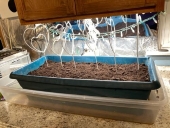
Peas are our main indoor winter crop but I do them as microgreens. The greens taste like fresh peas and you get more for the work and space.
Biggest thing to keep in mind is that I have found them to do MUCH better in inoculated potting soil than coir or any sterile medium. They really need root partners.
1 week ago
Just wanted to say that while my numbers last year may not gave been amazing, I am super happy with how things are going in the plot this year.
I just did a thick layer of leaves over it all in the fall, after planting a bunch of garlic.
Did maybe a 1/2 hour of weeding in the spring and planted.
No other work done except harvesting and it is so lush! Skirrets, tomatoes, sunflowers, radishes, beans and cucumbers are all doing great along with some purchased blackberries. (And the garlic were huge)

I am letting a large amount of the green beans go to seed since Im going to need them for next year's plot. I want to use this method for another big section!


1 week ago
Looking at the results of year 2 on my gamcod plot and my answer is now beans. Just regular, green beans, beans.
I did a big trench of them last year and while my numbers then weren't amazing, this year is shockingly good.
I just did another thick layer of leaves over it in the fall and then planted this spring. The tomatoes, skirret, garlic and blackberries that went in are doing amazing and there has been no work other than planting and harvesting this year. (Aside from killing Japanese beetles since thus years beans are a great trap crop for them. My drowning bucket has been busy)
1 week ago
After lots of dry heat we've had a couple of days of rain this week and the Shiitake are flushing.
This is the best one yet! (Inoculated in spring '24)

We love them so much I am considering buying some logs from our local tree guys this winter so I can do a bunch more stacks.

Mushrooms are back on the menu!
3 weeks ago
There are few things you can do. One of the bigger issues is if you want the manuscripts to be able to be rolled. If you are willing to keep them flat, you can fairly easily gild.
As you've already noted, a red background shows off the gold. You could also use a dark yellow ground. I haven't use egg tempura, but you may improve your chances by burnishing it a bit before adding some adhesive, to reduce the chance of it not sticking. Do either base colour and then a thin layer of rabbit/animal hide glue and then the metal foil. You do have to get the timing right with the natural glues. You want it juuuust almost fully dry, but not quite.
That is the big benefit of the modern stuff. It has almost no limit to its working time, so long as it is clean.
You could also try inks instead of the tempura, just on where you want the gilt.

Gold prices are super high. I've barely ever worked with actual gold. Most of what you can get is brass. It looks good but can tarnish over time if it's not sealed. It's been 10+ years since I did any buying so things may have changed but the Japanese stuff was hugely better than the German, which were the 2 main types out there. I always worked with loose sheets in books of usually 10 to 12 pieces rather than the stuff mounted to paper that you peel off.

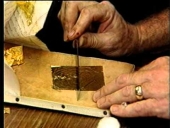
You can cut or break off small pieces that are just a bit bigger that the area you want, use a static charged clean and dry paint brush to move the scrap over and another soft clean brush to smooth it down. It will crumble and brush away where there isn't any glue.

1 month ago
art

Butter Girl wrote:Thank for all the great information and the pictures. I have a question on other sites that explain how to make them they say to use a covered dish to wait down and block out light for at least 3-4 days. So I bought two 13 x 9” foil cake pans the kind of throw away, and I put the COIR in the one I made little holes in. I put that on top of the one that does not have holes. Then I took another one and put it on top of the peas that are on the COIR and put a gallon of water on top to wait it down and I wonder if that’s sufficient.? don’t want mold growing in there because that would just about kill me to ingest any kind of mold. Please I would appreciate any advice you have.


I'm not 100% clear on your set up. (I just can't quite see it from the description) You have 2 foil pans, one has drainage holes poked in it and it has coir and the peas in it? A second intact pan is below it, to hold the water? Then you have a third pan, filled with water that is put on top of the peas?

If this correct, it really is more than is needed, at least in my experience. Once the peas are fully soaked, they just need to be kept lightly damp until they start sprouting and don't need full dark. They do like it cool but only need it a bit humid, not full wet.
If you like the foil trays, the stacking them with one having drainage holes should work. It would make it easier to keep things moist with less frequent watering. You could just have the third one empty and upside down, as a lid on it, but it would only be needed until they start sprouting. Bulldog clips would hold it on, if it is in a space where it could get knocked off.
Keeping them cool and not too wet will prevent rotting, at least as far as I have found. Once they are fully growing, they don't need as much humidity, so they do better in an open container with light.

Not all "molds" are bad. As I said above, I found a huge difference between using inoculated potting soil and coir. Peas really do SO much better with a mycorrhizal partner in their growing medium. They also really need soil, unlike some sprouts that do fine with just water.
With the inoculated soil, I got almost 100% germination and so no rotting seeds. With the plain coir, it was much lower and they struggled so it was harder to keep them from going bad. I opted for letting those trays go a bit dry, rather than risk the failed ones rotting and it worked enough that we still got some good harvest.
Overall, once they are sprouting, keeping them dryer seems to be best. They put out strong roots and they need damp, not the main pea section. Potting soil, with a bit of pearlite, does work the best for me since it holds and does a slow release on water.

That does look like it Nancy!
He did have tons of sanding stuff but maybe never needed to use this.

Since we don't have a grinding wheel, this may go into the pile for the ReStore.
1 month ago