

|

|

|

|

|

|
|
|
|
|
|
|
|
Thekla McDaniels wrote:I would love a chance at the hybrid, but we’re 6-8 months out on seed production…
It might be fun to try for a stable hybrid, but also fun to see how much variation we see in the F1 and beyond…
Or, if rooted cuttings are easy, you could name and patent your best cross.
It would be good to preserve native genetics in a disease resistant cross, like the big ones you have.
Thekla McDaniels wrote:And I think they would coppice. I had a couple huge trees removed fromma row of them and they stump sprouted with great vigor.
Thekla McDaniels wrote:We’re in elm germination research mode…..!
Have you scoured the internet?
Thekla McDaniels wrote:Thanks Reo!
It was only this summer that I gathered seed. I put huge amounts of seeds in a few places. I wasn’t aware they needed cold stratification. I was thinking they might need to be planted fresh!🤣, and that I had missed their window! I will have to keep my eye out on them in the springtime.
Thekla McDaniels wrote:Does any of your hybrid elms produce viable seed?
I have siberian elm in my region. I have been trying to get some to grow on my 6 acres.
I have collected more than a 5 gallon bucket of seeds, put them in various places I thought quite likely, and have not had a single seedling appear.
Judging from when I used to have a few big trees in my garden, I thought they would germinate in abundance.
I’m starting to think I have more to learn about them.
Can you give me any hints?

Thekla McDaniels wrote:Great!
Will you post a link here so we can all find it?
Thekla McDaniels wrote:Reo, I am intrigued by the idea of a hybrid. Is American elm the same as slippery elm?
The only things I know about slippery elm are its medicinal value and that it’s in danger of being over harvested.
I am very interested in learning more about an elm hybrid.
Do you have enough information on it to make its own thread so we don’t highjack this one?
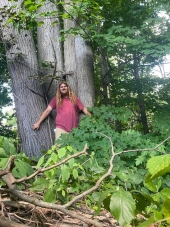
I have access to a tree that I have identified as Ulmus x intermedia, a hybrid between Slippery and Siberian elm. It’s has advantages of both species. It is a huge towering shade tree, with the broad leaves of a native elm but the massive seed productive, fast growth rate and DED resistance of a Siberian elm. It also holds its leaves longer than native hardwoods, giving it a longer growing season. I am very interested in experimenting with and sharing the seeds and cuttings if you are a fan of siberians and wanted some materialThekla McDaniels wrote:This is a great thread. Thanks to OP and all contributors.
I see there was only one mention of siberian elm. I have posted on other threads what I think are its many advantages. Very fast growing hardwood, it stump sprouts, so I guess that makes it good for coppicing. It’s excellent firewood.
It can be used for lumber, turning, and furniture building. Quite beautiful grain.
Chips well for mulch and mushroom culture and foundation layer of deep bedding.
Goats love the leaves, small branches and bark.
It flowers early (before dandelion) long before winter ends. Inconspicuous flowers, but important bee fodder in lean times.
As seeds are developing they go through a stage that is good people food.