Miranda Sieh

+ Follow
since Oct 01, 2014
Merit badge: bb list bbv list
For More
Apples and Likes
Apples
Total received
In last 30 days
0
Forums and Threads

Recent posts by Miranda Sieh

The book The Northlands Winter Greenhouse by Carol Ford has plans and plants for growing greens in cold climates during winter. They have a nice sequence of falling light to rising light varities that grow in the different light patterns of fall to winter to spring. She and her husband designed and built an insulated greenhouse attached to their garage. They used corrugated polycarbonate panels on a large portion of the walls.

Years later the University of Minnesota started a Deep Winter Greenhouse research program. They worked with Carol (her husband had passed away, sadly) to redesign an insulated greenhouse for winter food production. There are a few models in use around Minnesota and Wisconsin. They now have multiple designs available online at Deep winter greenhouses | UMN Extension https://share.google/umIn3oj1ZGaqNwAje

The University of Minnesota turned a lower cost home greenhouse into a very expensive designer project, but there are plenty of ways to cut down on costs and build it smaller. Reading through the plans and blueprints is interesting.

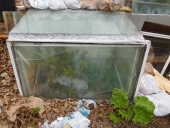
I have used sliding glass doors to make large cold frames, but they were heavy and didn't handle hail damage. I ended up repacing shattered glass with polycarbonate panels.

I have high tunnels also known as hoophouses with 6 mil uv-stabilized greenhouse plastic. They are around 50 ft long and 17ft to 30ft wide. It is a lot of plastic, and it lasts for years. When we replace the big top plastic we reuse it on smaller low tunnels, over chicken tractors, on chicken run fencing.

I would love a big glass house greenhouse, but that is not in my budget. Old windows around here are too expensive as well being sold as vintage etc.

I would love to hear what you have tried and what works for you.

3 months ago
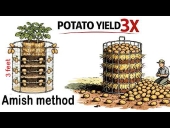
I have tried potato towers, but layered compost, seed potato, straw, compost, seed potato, straw, etc. My problem was where I located them as it was full sun, but windy and far from the water source so they didn't get watered often enough to keep from drying out.
This year I plan to move the towers closer to a water source. I like the idea that the potatoes are easier to harvest than digging in the ground. We plant 150-200 linear feet of potatoes in the ground each year (harvest is shared with family, friends, and market). Even with a plow blade to lift the potatoes, it is a lot of work.
I have a lot of large planter pots where I test plant combinations for yield in small spaces. Last year I placed a potato in each pot. Some potatoes finishes growing before the end of the season so harvesting disturbed other plants in the pots. Longer season varieties grew for most of the season. After the frost when I was clearing out the pots I harvested a few pounds of potatoes from each pot even with competition with ground cherry, basil, parsley, a couple onions and a hot pepper plant.
I have been growing food in Minnesota 44.6 latitude, USDA climate zone 4b/5a for 25 years. I would enjoy sitting in on this discussion. I have a permaculture based property with hoophouses for season extension.
4 months ago
We turned an old refrigerator into a germination chamber for starting seeds. I removed everything inside the refrigerator to make as much space available as possible. Then I sprayed sealant on the inside of the door which was a fiber-board after I took off the shelving layer. I found wire shelves at Menards. My hubby built a rack out of 1/2" pvc and cut down the wire shelves to fit. In the bottom I set a ceramic tile as a trivet and a crockpot of water. The crockpot is plugged in to an Inkbird temperature controller so it doesn't overheat the germination chamber. It is great for starting seeds in late winter/early spring. I can fit 14 10x20 trays inside. It needs cleaning out regularly to prevent mold.
3 years ago
My husband made a sourdough starter with a recipe from America's Test Kitchen 3 years ago. He uses it weekly for bread, pizza crust, English muffins etc. We sell sourdough bread at farmer's market and have many return customers. Now we are trying to use locally grown wheat, but whole wheat is too dense. We're experimenting with different grain varieties, sifting and additional grinding to get the bread flour texture. It can be a challenge.
4 years ago
My family would LOVE to test your recipes! We live in zone 4b Minnesota on a small farm with poultry and veggies and I am a vendor at the farmers market. We make jams, jellies, various preserves and from-scratch pasta. My husband makes sour dough bread and other baked items. We have a gas stove. We are a foodie family who loves to try new recipes and ingredients. I am very interest in non-cane-sugar fruit preservation.
Thank you for this opportunity!
5 years ago
Welcome John!
I can't wait to read your book. The reviews look great. I have been loving black elderberries for a few years now and always looking for more information about growing and using them. I never thought of using the wood for crafts! My daughter and I will be whittling elder this summer for sure.
6 years ago
I spent some time documenting the differences between the wild red elderberry and wild black elderberries on my 9 acre property. I have been propagating the wild black elderberries and adding in named varieties including Adams, Ranch, and Bob Gordon black elderberries.

I love using the flowers and berries of black elderberries. I soak berries in brandy with cinnamon sticks and dried rose hips. After a couple months I strain to remove solids and add honey. This is my winter tonic and my family loves it for a nightcap. I am interested to learn to make tonics without alcohol for children.

Black elderberry love!
6 years ago
My husband and I live in Minnesota (zone 4). We're looking at purchasing a property, but the oaks on it are suffering with oak wilt and it has sandy-loam soil. I'm wondering if I could use them to build hugelkultur beds/mounds. I'd like to build the mounds on contour to catch water flowing down the gently-sloped hill. Is there an edible fungus (shiitake or something) that would outgrow the oak wilt fungus once the trees are cut down and put into the mounds? Would the mushrooms fruit through the soil on the mound (under other edible plants and shrubs)? I don't know if I'm trying to combine too many things: building loam in sandy soil, berm and swale to manage water, hugelkultur beds, and edible fungi, while dealing with oak wilt infected trees.
11 years ago