Win a copy of Sourdough Without Fail this week in the Bread forum!"

Brian Cady

pollinator
+ Follow
since Nov 11, 2014
Merit badge: bb list bbv list
Biography
INTJ male. Fascinated by chestnut orcharding, Aspire to raise chestnuts, chestnut boletes, bees, pigeons, ducks, geese & maybe donkeys. Hope to breed plants like caffeine-containing hollies (Ilex) for tea, chestnuts, peanuts, tarwis, and such. Plan to research and maybe demonstrate chestnut orcharding finances. Interested in appropriate tech, sustainable energy & green politics.
For More
Colrain, MA, USA (Dfb - USDA zone 5a - ~1,000' elev.)
Apples and Likes
Apples
Total received
In last 30 days
2
Forums and Threads

Recent posts by Brian Cady

Please see this site dedicated to potato onions, and containing progress notes on breeding:
https://plantal.net/

4 days ago
While I am still nailing down orchard land access, I have assembled this vision:

‘Over-the-Hill’ Orchard Vision:

A fiscally-, socially- and environmentally-sustainable orchard featuring a mix of tree and perennial crops and support plants with complementary harvest labor requirements, so that harvest workers work steadily through a long picking season, and so that revenue flows in steadily throughout much of the year.

Crop and support plants to be chosen to also have complementary life cycles, yielding steady financial returns through the decades, in that as one crop yields, then expires, another begins yielding.

Also, plans are to include crop redundency so that one crop’s failure or one market‘s collapse will not bankrupt the orchard.

These crops and support plants are to be chosen to grow and yield well, and be harvested workably, on slopes too steep for conventional agriculture, thereby complementing and not competing with such uses of flatter land.

Such plants are to be planted in rows on contour-line-aligned berms with ditches/swales uphill. These berm-and-swale assemblages are spaced widely enough apart to facilitate mechanized haying, or pasturing between.

Plants are to be chosen as possible future breeding material, as this is a pioneering effort, hence select offspring might found a next generation of steep land horticultural farms’ plants, and offer an additional financial yield to ‘Over-the-Hill’ orchard in the sales of selected seedling or grafted  plants.

‘Pick-Your-Own’ harvesting will be thoughtfully considered as a harvesting approach.

Documenting the entire project throughly would allow others to economically forecast from this data and experience.

I invite your thoughts on this,

Brian
-

4 days ago

Mary Cook wrote:<snip> One thing I'd like to breed for is resistance to the thing that causes moldy tips in a wet year. <snip>...maybe there's a genetic solution--ears tipped down, maybe?


Mary, I've seen drooping, loose-husked silage corn ears nearby - I really think this could work.

Brian
-

David Wieland wrote:<snip>If you want a bit more height inside, the hoop "bones" can be raised onto low walls (which can even be insulated with foamboard such as Styrofoam).


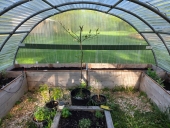
Aside the long sides of a gothic arch greenhouse that I built, grow massive snow piles in winter which have torn loose the long-lived greenhouse polyethylene-plus film glazing it, so now I shovel snow away often.

In hindsight, lifting the entire arched frame atop, say, pallets or such would spare my this shoveling work, provide more headroom and allow lower cross-bracing within the greenhouse

So I say to David Wieland: "Brilliant!".

Here's to next time,

Brian
-
3 weeks ago
Hi Meredith and son,

In case these thoughts helps:

- Perhaps a (temporary?) move to drier climes might ease mold issues.

- In Montana, Paul (powerful force behind 'Permies.com' ) and folks invite stays at their
(admittedly not East Coast) permaculture community.

Brian
-
3 weeks ago

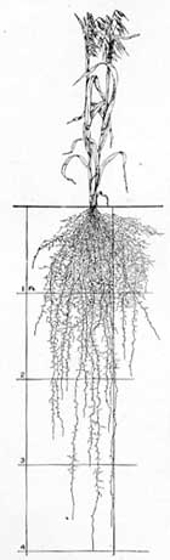
John Weiland wrote:<snip> Additionally, the roots of oat produce avenicins which are compounds known to suppress certain disease-causing fungi. <snip>


John, which fungal diseases are suppressed by avinicins?

I wonder if one might target specific fungal diseases  via oat cultivar selection, if given specific avinicins content of oat varieties.
3 weeks ago
There's Black Medic, a low-growing alfalfa genus legume that's less vigorous than White Clover: Medicago lupulina. It is difficult now to buy seed in USA, but black medic is common, and seeding now, so I've gathered a little seed - perhaps you could too. You can select for prostrate forms when gathering. https://en.wikipedia.org/wiki/Medicago_lupulina

There's also Matweed ( https://en.wikipedia.org/wiki/Guilleminea ), which spontaneusly formed a living mulch when I grew black beans on freshly-tilled ground here.

There's Matbean, but this maybe more tropical. https://en.wikipedia.org/wiki/Vigna_aconitifolia

And there's Purslane.

Brian
-
1 month ago