

|

|
.png)
|
|

|

|
|
|
|
|
|
|
|
Nancy Reading wrote:Run a compressor and store extra compressed gas.
Pump water uphill to use for microhydro later
Douglas Alpenstock wrote:I wonder, instead of dump loads is there an advantage to disconnecting some panels? Could this prolong their lifespan? Don't know -- just a notion.

Courtney Munson wrote:
Mart Hale wrote: Why am I spending so much effort making nutrient rich food, when I can just buy nutrient rich food and consume the amount I need, verses attempting to fertilize my entire farm into perfect balance for plants?
I have come to the conclusion for the $, I am much better off buying Moringa ( very nutrient dense plant ) and consuming that along with minerals and supplements that give me the nutrition my body needs. This way I can buy the food that is calorie dense and spend far less on my grocery bill than the cost of making "perfect soil"... and all of the testing required to make nutrient dense food.
Is the "nutrient rich food" you are talking about Moringa? Is your whole diet based on that and supplements? Can you verify that the moringa you're buying actually contains the nutrients it claims to?
I'm wanting my land to provide for the health of me and my children. I don't have reason to trust the claims of far away actors as to what nutrients their food contains given the well document problems of soil degradation around the world. Supplements have their own problems. Further, the global economy is extremely fragile. It doesn't seem like we can rely on these things long term to sustain our health or that of our children. I'd rather stockpile bags of rocks and oyster shells.
Also, I'm curious what you mean by "calorie dense" food. The implication is that it's calorie dense food that is not nutrient dense? Why would you eat that? My understanding is that anytime we eat food that is not nutrient dense we are taxing our bodies and taking time off our lives by making our body digest things that don't contain nutrients.
Maybe I'm misunderstanding you but your approach seems misguided and not really permaculture either.
Ac Baker wrote:
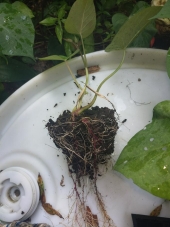
Mart Hale wrote:So... I have taken some sweet potato slips i start rooting in my 5 gal bucket air bubbler, then I put them in the wicking rope setup with air prunning pots.
I have successfully grown one and a half sweet potato plants this year (the "half" is a plant that may or may not be alive, having been dug up .. probably by badgers .. about a dozen times since July!!).
I'd appreciate thoughts on how to take & keep cuttings from the sweet potato plants, to become my slips to plant next year.
Coydon Wallham wrote:If they are partnering with the Amish and not just exploiting the name, this sounds promising. However, when the marketing starkly contradicts itself between products, I'd hesitate to order anything online from them.
Efficiency – SunStar appliances use an exclusive Keota DC compressor sized specifically for the appliance for faster cooling on start-up, combined with ultra-thick polyurethane wall and door insulation, making each appliance super-efficient.
SunStar Vs Conventional Household AC models:
No inverter required! – SunStar operates on solar and DC systems, and automatically detects and functions using 12v or 24v battery banks
and the model you originally linked:
Input Power 115VAC