Linda Johansson

+ Follow
since Aug 31, 2025
Merit badge: bb list bbv list
For More
Apples and Likes
Apples
Total received
In last 30 days
1
Forums and Threads

Recent posts by Linda Johansson

As I read forums here on permies, and watch some of Paul’s videos, I notice that it seems like many permies are located in forested regions, and for that reason the ways they manage their homesteads take advantage of their natural resource of trees/wood.

Some of us, however, reside in the prairies (or desert), where trees are scarce and the climate is different. I thought it might be fun to start a thread all about prairie things, that might work differently than in more densely wooded areas. For example, it would make no sense for me to try to use a wood stove as my primary heat/cooking source. While I find round wood timber framing to be fascinating, it’s not exactly something that is practical in my environment.

Tell me about your distinctly prairie things. This can be really broad…gardening techniques, critters, building. Does anybody have an awesome heat/power/fuel source alternative? It seems like solar or wind is the obvious choice in the prairie, but there are aspects of those that aren’t exactly permie. Has anyone coppiced a caragana? Tell me all about your unique solutions that our woodland permie friends wouldn’t do!
2 days ago
I have never halter trained my sheep besides 4h animals. I actually prefer sheep that want nothing to do with me as tame or bucket broke sheep are incredibly annoying and hard on knees. I can’t get anywhere near my sheep without having them in a crowded pen where they can’t run. When I need to pull a lamb, or fix a prolapse, or adopt a lamb, I just put a rope halter on a wild sheep and tie her up. They generally just put their head down and pull back and ignore me. I’ve never needed more restraint than that. For any individual needs like trimming hooves, giving shots to a sick animal, stitching up a torn face because sheep are sheep, flipping the animal over is the best restraint.
2 days ago
Squeeze chutes come in many arrangements depending on your needs. For someone operating with 25-50 cattle, it becomes reasonable to purchase a proper squeeze chute, a one-piece item that restrains the animal completely. If I was a homesteader and only intended to have a family milk cow and raise the calf for beef annually, I think I would focus my efforts on halter training both animals and having a sturdy milking stanchion that can do double duty if needed. In my 4H days I loaded many a halter broke cow into a trailer with no need for a force alley or chute.

If I was going to raise a handful of cattle, enough that it become cumbersome to halter break but not a full sized herd, I would look for what we call a head gate. This is simply the head catch portion of a chute and can be mounted between two sturdy posts with a single file alley leading up to it.

As others have mentioned, they can be handy for sheep and goats, but in roughly 20 years raising sheep, I’ve had at best an alley. For adopting lambs, I opt for tying the ewe in a corner of a pen and leaving the lamb in there, helping it nurse for the first day or two in case she tries to kick. The best use for the alley is loading them onto the trailer and for the sorting gate on front, makes sorting sheep so much easier as they do not sort like cattle! Also nice for shearing day of course. But there really is rarely a need to restrain a ewe that can’t be handled with a halter.

2 days ago
I have a few that come to mind. The first few happened when I was working on a large scale ranch in central ND, prairie potholes region.
In one case it was an October blizzard that blew up, after getting the main cow herds managed for the blizzard I headed home early in the tractor to try to lead a group of yearlings in from their pasture to hunker down in the yard through the storm. It was starting to snow and by the time I got home the wind was picking up too. It’s nearly a full section of pasture, and as I went driving around out there looking for the cattle the storm really turned into a blizzard. Never did find the yearlings, after the storm we found they had drifted into a neighboring pasture and all rode out the storm just fine. Of course, I was safe and warm in my nice tractor, but I drove around out there for hours in the blizzard until I realized I couldn’t tell much where I was anymore and decided I better head it back home before I lost my way completely. It was going to be a 3 day blizzard and I would’ve run out of diesel if I had had to ride it out in the tractor. Made it home, but there were definitely more than a few moments where I wasn’t sure if I was heading in the right direction.
That same February/march, it seemed like we had a blizzard consistently starting every Friday and going on until Sunday afternoon. When they forecasted a particularly bad one, I had gotten tired of being snowed in at my place until Monday afternoon when someone from work could get there with the tractor to dig me out. So I borrowed the snowmobile and rode it home about 8 miles. Had never ridden a snowmobile before, tucked my 6 month old border collie pup on my lap and took off. Storm was going prettty good and it was down below zero. I took the shortcut past the lake but really didn’t know where I was. Luckily the wind had swept the snow up into big drifts and bare spots so I could see the gravel of the road now and then and navigate. But the next stretch was just an open field for 2 miles, no fences, no landmarks, and no visibility. I can tell you I was awfully glad when all of a sudden I about fell off the edge of the earth, had found the ditch of the road I needed to turn onto and head north to my house. Lost my hat with a couple miles to go, boy did my ears hurt when I got home.

The worst one I ever experienced I fortunately was at home. This was a few years later than the others. It was a bit April storm that hit during calving season. My husband and I had about 100 head and a good percentage of those had calves on the ground. We had to hook the snowblower on the tractor in the morning and blow a path to the barn, then hurry up and get unhooked and hooked onto the bale processor to feed. Well, we had all the cow calf pairs locked in to the corrals as well as the bred cows. There wasn’t a lot of room to spread the feed out with all those cows in there, and besides, by the time we could get half the feed out the path we had snowblown was about drifted shut again. So we’d hurry it back up to the main yard, go in and have some lunch since it was about noon anyway. And then after lunch we’d switch back over to the snowblower, make a fresh path, and then run back and get the bale processor to feed the other half of the days feed. Took us most of the day to get the basic chores done. For overnight calving checks, we typically take turns getting up in the night and heading down to the barn, but the tractor with the snowblower was the only vehicle that could get through the snow. Barn is about 300 yards or so from the house. I’m talking a mfwd tractor was the only thing that could make it 300 yards without getting stuck. We were scared to go alone in case something happened, there was no way the other person could get there to help them. To try to walk the 300 yards would’ve been incredibly dangerous, we were just praying every time we got in the tractor that we found the barn. At least if we didn’t we had a climate controlled cab until we found our way. Never have I had so much respect for what nature can do, nor what the people who settled this place went through. I’ve got 2 neighbors within 2 miles as the crow flies, and there’s fences everywhere. And I could’ve been lost on the prairie in minutes in that storm. But back when it was first settled, there was just miles of nothing. I can’t imagine living through those blizzards.
1 month ago
Tim: I will definitely be considering purchase of one of these. Looks great.

Anne: some oil is a good idea. I’ll give it a shot before buying a new door. I think I will take R Scott’s suggestion and do a full “entryway”.

R Scott: the entryway idea is something I had thought of myself. The question in my mind was, what sort of door do I put on the outside so that the entryway doesn’t just blow full of snow? A traditional doggie door? Will the chickens push it open or will it confuse them? I think I may have a design in mind that will minimize snow blowing in even with no door at all.
As far as keeping a light sensor working, I use the timer function as I found the light sensor closed the door about an hour before the chickens went in for the night. So that’s not an issue, just need to make sure I build in access so I can change the settings, and clean out snow if it would blow in. Not that my terrified chickens will leave the coop if there’s a snowflake on the ground anyway 🙄.
If you would want to use the light sensor, simply build the entryway out of clear corrugated plastic, like for skylights in pole buildings. Then you just have to clean snow off the top of it when you get a fresh snowfall. I think I would build out of that material regardless, as the chickens would likely be more willing to walk through it if it’s not a dark tunnel. Last year I tried to stack small square hay bales and leave a gap for them to walk through and I could not get those birds to go out even when I tried to train them. Once I took the bale tunnel down they went out every day.
2 months ago
Tried to search previous forums but didn’t find much for this specifically.

I have an automatic coop door, had good reviews on Amazon. Worked great all summer. But…one snow event and some chilly weather and it’s failing to close. From what I can tell, there may be ice crystals or something forming in the tracks and the “anti-pinch” feature is encountering that resistance and then reopening, but never closing again. Quite annoying.

So, what’s your best “we have real winter here” recommendation for an automatic coop door, and are there any tips and tricks (locate on a certain side of the coop for better success, etc).

We have temps to -40 F. Snowfall is incredibly variable year to year, last year we had only a few light snowfalls. A few years ago we had 8 feet of snow over the course of the winter. Prevailing winds from northwest but storms can blow in from the north, east, south, or west. North Dakota has a mind of its own 🤷‍♀️. My current coop I can really only locate the door on the south side. I plan to move to a larger coop for next winter, and there it would be easiest to put the door on any side except for the south. I can live with a door that I might need to manage in the most extreme weather. But I mean it wasn’t even 0 yet and this one was failing.
2 months ago
Jay, I will definitely consider taking your suggestion. I had planned to put herbs in the orchard as so many herbs are listed as also being beneficial to the fruit trees, besides just being something I also want to grow. Sadly most culinary herbs that I’m familiar with are not hardy or only borderline hardy in my zone, but maybe close to the house and on the south side like you suggested, I might get a bit of a microclimate and some of those borderline herbs might survive?

I definitely like the idea of a few peas or something that we can just grab and snack on as we walk by, especially with the kids being so little right now. I don’t have the budget for the perennials that I want to plant in there long term anyway. For now, I could just cover crop and incorporate some of those snack plants. Who knows, with the cattle operation growing so much my current garden location might get sequestered for use by the farm. I wouldn’t mind the garden being closer to the house.

Thinking back to the annual garden plot, pros and cons of using a series of hugelbeets vs just trying to improve my soil?
What I can think of so far:
Hugelpros: long term, little to no irrigating (I love this idea, as I love designing systems that require fewer daily chores from me and allow me to do more varied things)
Good use for all the wood I have laying around rotting, as well as all the manure/ compost piling up in the corrals.
Does not require an expensive wood chipper and lots of time running the wood chipper, to create the amendments to the traditional garden beds
Probably a quicker route to good soil than amending my clay soil
Creates microclimates that, if I learn how to use them to my advantage, can improve my garden even further

Flat bed pros: easier to fence adaptively year to year, allowing chickens access to whichever part of the garden I want them to have access to
With hugelkultur, animal integration is likely limited to chickens or possibly bum lambs, whereas with a traditional garden I could allow ewes or even a milk cow or horse in to graze/trample/fertilize a cover crop
Traditional gardening may facilitate better crop rotation on my part, as I won’t be also managing the north/south or east/west side as well as top/sides/bottom of the mound dynamics
Long term, easier access in case tractors would be needed for bringing in compost, cleaning out chicken coop, etc
Having lovely perfect soil right away isn’t really a big deal to me anyway, I am willing to wait a few years
3 months ago
The water situation by the house is easy. There is a spigot right next to zone A, and there’s also a downspout that happens to dump right into that area, which I plan to incorporate by creating a sort of ephemeral creek bed for it to flow through without washing all the soil, while creating a small space for those plants that love all that extra water.
The orchard area is easily reached by a hose and I also plan to add a rainwater catchment off the house which can gravity flow down to the trees for a long term solution.
The garden has well water.
The super large shelterbelt is not easily watered, but there again, I’ll probably never actually do that one.

I haven’t got all the way through the thread on kids yet. My kids do come and help out on everything around the farm and ranch. My daughter at 3 is very good help. But still, by the time I’ve breastfed and changed diapers and washed diapers and gotten snacks and helped the toddler go potty and gotten everybody into and out of coats, hats, boots, done naps times, etc etc etc it really cuts into the amount of time I can actually do things, and then also add in the large amount of time it takes the toddler to actually accomplish whatever she’s trying to do…you get the point. It’s not that my kids can’t be helpful on the ranch, it’s just that they’re so dependent right now for every single thing that I don’t get as much done. It’s ok. Someday that will change. Right now I’m just stepping back from trying to garden and preserve lots of food and focusing my time elsewhere.
3 months ago
Recently I’ve been reconsidering the idea of hugelkultur and now every time I look around my property I feel a bit like hugelkultur Oprah…”you get a hugel! You get a hugel! Everybody gets a hugel!”
Before I start creating massive mounds everywhere I thought it best to let some cooler heads prevail and lend me some advice as I have 0 experience with hugelkultur (and really my thumb is rather yellow, I’m more of a livestock person). SW North Dakota, 15-20” of rainfall annually, mostly in May and June with a few timely rains falling outside that window usually. Zone 4ish, I tend to err on the side of zone 3. Heavy clay soil.

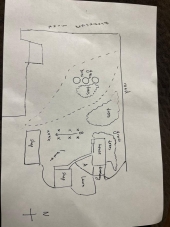
The first two locations I’m considering for hugel would be A and B in the diagram of my yard. A was formerly a rock garden (thanks to the previous owners) which fortunately got dug out last year in a water line leak situation. Unfortunately, while I had plans to eventually tear it out, that was a lot further down the 20 year plan for this property. Either way, I now have a space of bare dirt that is dug down about 6-8 inches below the level of the concrete sidewalk that borders the house and also runs from the house to the shop. I need to fill it in with something, why not a bunch of logs/brush and then compost/soil? I would not mound this area up significantly, just get it back to level with the concrete. I would likely cover crop it for a few years until I have the time and money to establish the native flowers/ grass garden that I want there. The goal for this bed is to have a nice aesthetic close to the house while providing native pollinators and other critters some habitat, and also to have it be semi-low maintenance, hence native plants that should naturally thrive here anyway. Pros/cons to this hugel idea for this space?

Space B would be a hugel mound running in between the trees (marked by x) in the mini orchard I’m in the process of establishing. I’d like to use the “fruit tree guild” concept here, the only real reasons for the hugel would be to use up excess brush laying around, create a bed for the guild plants that would require minimal watering, and ?possibly? create a tall spot to stand on that might help with harvesting apple trees, although if it’s too steep I feel it would only inhibit the ability to use a ladder where necessary. I’m kind of thinking this one is a no go unless somebody has strong reasons to advocate for it.

The next would be near my existing, but abandoned, vegetable garden. I could create a series of hugels near the greenhouse/winter chicken coop/multipurpose building that I want to add to the garden area. About 30 yards away I have a massive (see picture) pile of trees/brush/etc that’s been piling up since before we moved here. It’s probably 15’ tall x 15’ wide x 30’ long. We also have lots of dead and dying trees (keep in mind that when I say lots this is coming from someone who lives on a prairie, some of you forest dwellers may disagree) that need to come down. We are ranchers and I have access to nearly 200 cows worth of manure, hay, and straw, some of which has been nicely piled up and composting away for several years now, as well as smaller amounts of sheep, horse, and chicken manure. Oh, and I also have a nice big loader tractor that can move those logs and manure nice and easy. So, the question is whether to build hugels and use all that up or just amend my flat garden with wood chips and leaf mold and cover crops. Some helpful info: I don’t need to vertically garden for space reason, I have more space than I know what to do with. The advantage to hugelkultur for me would be the soil quality and, mostly, the minimal watering. Whichever way I go, I’m willing to wait for soil improvements. I have a 3 year old and a 3 month old, and between the livestock and grain crops and both of us working off the farm, I’ve committed to not doing any annual gardening for the next few years, but I could realistically toss a cover crop in there and run some bum lambs or the chickens through it to graze/ trample it down. Once we’ve hit what we call “the break even point” on the kids, meaning they may not be super useful yet but at least they’re not severely inhibiting the work I can accomplish in a day, I would like to get a lot more serious about gardening and growing our food. Thoughts on hugelkultur vs. amending the flat garden?

The last one is really just a fun thought but probably something I will never get around to. West of the calving barn there is an old shelter belt running north-south, many of the trees are dead or dying. They’re all in a nice row. How cool would it be to just start laying them down one on top of the other, such that the branches of one lay on top of the trunk of the previously felled tree, and then bury it all in the manure/straw/hay mixture we have located so conveniently close. Grow a U-pick strawberry farm or something like that on it. What would you plant?

3 months ago
Thank you Anne! After reading through some of the threads you linked I went in search of local wood chips. Ended up finding a guy who with loads of knowledge on trees (I’m very much a novice with trees) who believes in cover cropping and regenerative ag as much as I do…a rare individual in my neck of the woods. He’s my friend now whether he likes it or not 😂
5 months ago