Kery Hill

+ Follow
since Dec 10, 2025
Merit badge: bb list bbv list
For More
Apples and Likes
Apples
Total received
In last 30 days
0
Forums and Threads

Recent posts by Kery Hill

This is a reprint from my Patreon article.

I’ve grown them and my one issue was they fell over so you may need to support them. The stems looked thick enough but the pods are so heavy the plants tend to lean. I like the string method. Run a rope over the beans in line with the row then stake a string at the base and wrap it around the stalk once the pods start to form and tie it at the top.

The yield is excellent for beans at 2,000 to 3,000 pounds an acre. What really blew my mine is as whole fresh ponds as animal fodder the yield is 6,000 to 10,000 pounds an acre re. They say in moderation for pigs, say 10% of diet, but the are fine for cows, sheep and goats. They are 26% to 30% protein and 55% to 60%  carbohydrates. They do contain anti nutrients but these are very low in the pods so one option is to shell them for the beans and feed the shells to cattle, sheep and goats and as a treat to pigs. You are still getting 4,000 to 8,000 pounds of animal fodder after removing the beans. You can feed the whole bean to cows but I’ll recommend something that is against the religion of. Odeon farmer, cook the beans. Hes I know you’ll go to hell for doing anything other than grinding animal feed but there are three things you should cook before feeding to animals, potatoes, eggs and beans that are either mildly toxic or have anti nutrients. Raw potatoes have the anti nutrient issue and I recommend having a fall bonfire and toss in the potatoes onto the hot coals for an hour the. Fish them out with a rake for pigs. It’s fun and dramatically increases the food value. With eggs I recommend making pig and chicken omelette spent. You can add things like stinging nettles and other fodder items into massive omelets or just drizzle the mix into boiling water and scoop the cooked egg out. With eggs it frees up the protein. With beans like potatoes cooking breaks down the anti nutrients. You can even pan roast the. For a crunchy treat. Once they are pan roasted they’ll keep a long time. Baking it boiling them does the same. Farmers used to do things like this like pig slop but somewhere along the line farming became an industry and the goal is keep it simple stupid which is stupid. A few 3xtra steps dramatically increases the quality of the feed like fermenting grains. It takes an extra day or two but it’s commonplace on organic farms but rare on industrial farms.

Silage is one of the few things fermented in industrial farming. This does apply to fave beans as well. Her’s something common in Europe and rarely done in the US, feed animals the entire plant! Most animals will eat the. Stalk and all. I still recommend harvesting the beans and pods separately but the entire plant, pods and all can be used in silage. I say the beans are too valuable to be used in silage and the pods are better fresh. The point is don’t compost the stalks, feed them green to animals or if you do corn silage toss in the fave bean stalks as well.

Hope this is some useful I formation so you can make use of this miracle, nitrogen fixing plant. FYI, if that wasn’t enough fava beans produce dopamine in the brain. The L-DOPA in fava beans converts to dopamine in the brain and is as effective as commercial drugs. They fight depression and give a positive mood in winter months. They really are a forgotten miracle of nature. A word of warning, some people from the Mediterranean area including North Africa have a mutation that can cause a severe blood issue but this mutation only. Exists in that region. My people are Scot, Irish, Norse so it’s not an issue like most of the UK, it’s why the bean is still popular there.
4 weeks ago


It’s shocking the quantity of seeds that end up in the trash. If you have a farm or home garden seeds are like gold. I’ll go over seed saving in future articles but a quick example I use is just eat one melon and one squash a week for a year. Dry them then toss them in a bucket. Try to eat as many varieties as possible. During the winter mix clay with the seeds, yard clay or just the type used in construction, terracotta. Roll the clay into marble sized balls and let them dry. Add in any tomato or pepper seeds as well. After the last frost, say May 1st in northern states, toss them in a field and forget about them. They should yield around a 100,000lbs of squash and a similar amount in melons. Eat as much as you want and the rest are amazing, free animal fodder.It’s shocking the quantity of seeds that end up in the trash. If you have a farm or home garden seeds are like gold. I’ll go over seed saving in future articles but a quick example I use is just eat one melon and one squash a week for a year. Dry them then toss them in a bucket. Try to eat as many varieties as possible. During the winter mix clay with the seeds, yard clay or just the type used in construction, terracotta. Roll the clay into marble sized balls and let them dry. Add in any tomato or pepper seeds as well. After the last frost, say May 1st in northern states, toss them in a field and forget about them. They should yield around a 100,000lbs of squash and a similar amount in melons. Eat as much as you want and the rest are amazing, free animal fodder.You can get double use out of them by cutting open the squash and removing the seeds and feeding those to chickens. Also remember gourd seeds are excellent chicken fodder. Some seeds are toxic but most fruit and vegetable are perfectly safe and high in fats and protein. The ones to avoid are tree fruit seeds like peach pits. Best not to give peaches whole to pigs but chickens will just peck off the flesh.

Flower seeds can be toxic like lupine but sunflowers of all types are exceptional fodder for pigs and chickens. Black sunflower seeds are even highly medicinal. Do your homework on flower seeds but in the wild a large percentage of a chickens diet are seeds of all types. If you let a stand lettuce bolt the seeds make excellent chicken feed. Instead of picking the head of lettuce peel off mature leafs. If you let the core mature you’ll get hundreds of seeds from a single head of lettuce. Consider the seeds a secondary crop.

I mentioned walnuts but all nuts are top shelf animal fodder. For chickens you need to break the walnuts either with a hammer or I’ve seed people drive over them then turn the chickens loose, you’ll have excited chickens. If you have pine trees remember pine cones have nuts. Most types are too small for humans but perfect for chickens. You can help the chickens get at the nuts either with the hammer method or driving over them.

Hickory nuts, butternuts, hazelnuts or the smaller chinkapen nuts are all excellent. Don’t forget chuffa nuts, also called Tiger Nuts. Be careful feeding them to fish, they tend to be toxic for fish but human and domestic animal can eat them without issue. In northern states you have to replant every year but in the south they are semi invasive as in you can’t get rid of them which is why thy. Are such great animal fodder. Turkeys love them and hunters plant them to draw turkeys in for hunting. They are perfect for pigs especially if you want them to dig up an area plant Tiger Nuts.

Consider sprouting seeds especially for chickens. Sprouting seeds converts starch into sugars increasing the food value.

Grains are the most popular animal feed seeds. They are exceptional chicken feed but I have mixed feelings about feeding larger animals grain. Just because it’s standard practice doesn’t make it right. With barely sprouting increases the available food. Corn for as common as it is for cattle I’d. Ever feed cattle corn. The stalks are fine but the grain makes them sick. If you insist on feeding it to cows, soak the grain in lime water and ferment it. The lime water softens the grain making it more digestible. Make sure to rinse it before feeding it to cattle. Pigs and chickens are fine with and pigs will do anything for fermented corn. It’s best to crack the corn for chickens to avoid choking issues.

I’m a huge fan of buckwheat. I make awesome bread out of buckwheat. Farmers are wary of it because it can cause sunburn issues but darker skinned pigs, even the red ones, have no issues. The yield is lower than most grains but the leaves can be used as animal fodder especially for rabbits and cows. Most animals will eat the leafs and goats think it’s candy. The fact it’s dual use makes it an excellent chose.

Rice is an obvious choice but I’d use wild rice if available and save the white rice for humans.

Sorghum, how long have you got? I love everything about sorghum. It grows in pot soil with little water making it a good choice for arid regions. The food value is exceptional. Sorghum is another dual use crops. The stalks can be used for sugar or molasses production then the left over stalks can be fed to pigs and cattle. To cover every grain would take a novel but this can give an overview of grain uses and issues
1 month ago


This design brings it all together. Each one has five 20'X24' apartments that can be turned into either 40'X24' apartments for larger families or two story apartments with two 20'X24' levels so highly adaptable. With this approach you can house a 160 people in a little over an acre.

What's ground breaking is most of their food is grown on the top level greenhouse as well as the arched trellis between the greenhouses. There will also be a 20' arched trellis between each 100' long greenhouse so the footprint is 220' by roughly 290'. This includes a trellis at either end. The idea is to put 160 on a 300 acre farm with a 150 acres devoted to farming and standalone dome homes for the working people. It’s an added incentive that working people get the nicest homes but the apartments will be first class.

The first issue be complaints that people will be living in caves. Not an issue. There is a type of ceiling or even wall panel you can make using a fresnel lens. The final light looks exactly like daylight so ceiling lights look like skylights and wall mounted will give the impression of windows. It will mimic being on the surface. Under the trellis arches are two levels of hallways which would be like the hallways in apartment building but with the say daylight lens set ups keeping it light and airy.

Everything has double uses and shelves along the hallways would support mushroom bags or jars. The ceiling lights provide plenty of light and top hallway level would be things like Microgreens or rabbit pens. Even with rabbit pens there would still be 8' of open hallway. Chickens can even be raised below the rabbit pens so fresh eggs can be outside your door but you never have to step outside. Egg laying chickens make more sense than meat birds in the limited space.


The 20' trellis arches would also have the underground hallways would be large enough for 6' chicken pens and more rabbit hutches so meat birds would be possible. The 12' wide hallways would allow for over a 100 egg layers producing 50+ eggs a day for 5 people so there would be an excess of eggs. The roughly 24'X6' chicken area in front of each greenhouse would allow for 48 bird for 5 people every two months. More chickens would come from the main farm and given the excess of eggs some egg layers could double as meat birds and every three years the egg layers become stew hens, perfect for soups and stews or any slow cooking dish. The hallways would also produce around 300 to 600 pounds of mushrooms a week for 5 people so a large excess. Beef and some chicken would need to come from the main farm but the mushrooms and egg excesses would more than compensate for any imported chickens and beef so the greenhouse apartments would be largely self supporting.

Each ground floor greenhouse would have also have two 4'X4'X100' fish tanks for Tilapia. The main farm would produce an excess of trout so citizens could take their pick. each tank would be 12,000 gallons or 24,000 total. Tilapia with added oxygen can be stocked up to one pound per gallon so a maximum of 24,000 pounds a year. even a pound a week per person is only a little over 250 pounds so there would be a substantial excess of fish.

Greenhouse production is a 100% dependent on the type of fruits and vegetables. Tomatoes can have insane production per foot. The rule of thumb going off square foot gardening is a pound per square foot but you can rotate that 3 to 4 times a year and some crops can do considerably more. Say a vining squash plant trained vertically and each plant can produce three or more squash at 2 to 10 pounds each. I would avoid heavier varieties. I think 4 pounds a year per square foot is a solid number and this is for the greenhouse and on each level. 14' is taken up by fish tanks but don't remove this space. Food can be grown above the tanks. The only lost area is 6' of walkways so 18' by 100' per level for 3,600' sqft or 14,400 pound a year. divide that by 5 is 2,880 pounds a year or nearly 8 pounds a day so more excess. Excess food would be fed to chickens and rabbits along with food scraps and some plants can be fed to chickens and rabbits are harvest. Squash seeds also make excellent chicken feed so waste nothing.

The trellis arches will likely exceed the greenhouses per square foot but this is seasonal so at best 9 months of the year with rotational planting. Say with planning two crops a year. Most of this food is intended for animals or export but it can provide a bumper crop of things like peas and beans. The plan also calls for weaving in fruit or nut trees like apples and hazel. Check the link in another article for a guy in England growing both Apples and squash on the same trellis. The idea is to over time replace the metal trellis with trees so it becomes a living trellis. Beans and cucumbers and other vine based plants can also be woven into the fruit and nut trees. Even things like vining Zucchini can be trained up the trellis. Once established after 4 to 5 years the trellis should be one of the most productive parts of the farm.

Looking at the numbers you can see how productive the greenhouse apartments can be and can even produce an excess of food.
The toughest thing is dealing with sanitation. The goal is to eventually provide a flush toilet system but the expense makes it hard to do in the early years. I hope to install methane digesters that would handle all 1600 apartment structures. The plumbing or possibly a box sewer would be built in but not hooked up. compost toilets would serve the residents at first. These would involve 55 gallon drums and would be capped and swapped once a week. The drums would be access from the hallways so residents wouldn't be disturbed. The drums would be emptied, cleaned and replaced after the drums are allowed to set out in the sun to make sure they are sterile then a week later they would be swapped back so each resident would need two drums. The only maintenance would be adding sawdust after use.

Water would be collected from the greenhouses and fed into a system of cisterns. Each would have crushed lime stone to keep the water alkaline so no bacterial growth as well as bubblers so the water would stay fresh and aerated. Carbon water filters would remove anything that made it through the system but it's essentially rainwater.

Each home would have a wood burning cob stone as well as eventually gas on top of electric appliances like microwaves. Outdoor cob pizza and bread ovens would be available for use in good weather. The cob ovens cost next to nothing to make and are extremely useful and can provide additional heat but underground houses tend to be warm year round.
Benches, couches and bed frames can be made of concrete bricks with cushions and mattress for comfort. Kitchen counters would be similar with door less open cabinets. Everything is designed with economy and comfort in mind.






1 month ago

Kery Hill wrote:


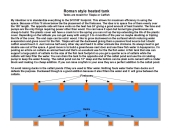
Okay, we’ll see if the images posted right. These are the concept drawings for the Roman heater system. The forum keeps crashing due to the image format. Total nightmare.


Hey, it worked! I’ll post a lot of stuff tomorrow. I need to do the text the insert images because it causes the window to zoom in and no way to zoom out.
1 month ago


Okay, we’ll see if the images posted right. These are the concept drawings for the Roman heater system. The forum keeps crashing due to the image format. Total nightmare.
1 month ago

r ranson wrote:Gray Hand,
I have merged your topic into this topic. I hope that helps.


Thanks, I’m a computer geek who used to build computers but forums and social media aren’t my thing. Just wanted to share info. I may lose access to the web in a week or two so I didn’t want all my work to go to waste. I’ve been working on farm and town designs for 15 years. I had big plans to make towns for the homeless but let’s say government response was outright hostile to any plans to actually fix anything. My current town just spent half a million in new cops to harass the homeless, they claimed they were to “help” the homeless but there’s no support system so all they do is harass them. I offered to help solve the problem and it wouldn’t cost them a cent, just their endorsement and help with any zoning issues. They were openly hostile to the idea of actually helping the homeless, they just want them to go away. I’m in Oregon and they have 20,000 homeless which is shocking considering it’s a rich state and Pennsylvania only has 16,000. It’s embarrassing to live in a country whose solution to homeless is to bring back work houses and slave labor camps. I hope to move to Canada or back to Europe one day. Thanks.