Rick Valley

+ Follow
since Mar 12, 2012
Merit badge: bb list bbv list
For More
Apples and Likes
Apples
Total received
In last 30 days
4
Forums and Threads

Recent posts by Rick Valley

I'm used to a swale being fairly broad, not super deep, with mild slopes that don't fill in quickly.  The best sites are off of a water shedding area- road, roof, big rock, trampled zone in a paddock, etc. Show me a good picture or schematic drawings and I can blather more. My suburban half-acre on the Willamette flood plain prairie is way-short on topsoil, and lacks slopes, so I dig down, and add material that is absorptive. What does a "mini swale" look like? My runoff sources are: rooves, driveways and the street. the greatest relief in miles is caused by freeway overpasses and old gravel pits (sounds depressing? ) Well, those gravel pits host a critical habitat for the officially threatened Western Pond Turtle and some beaver families. To the west there's only a couple-three traffic lights between me and the extensive Fern Ridge reservoir, Veneta and the Oregon Country Fair land (Pileated Woodpeckers and archaeological sites) Not bad for Ag land, and an airport, and from there it's the Coast Range all the way to the Pacific.
SO: I take a hoe on a rainy day and rip a furrow from any water & sediment  accumulation and rip a drain to the nearest high value plant. City water is costly. If that is a mini swale, yeah, they fill quickly. If I observe a reasonable amount of wateris coming in from the curbless shared driveway, I'll figure out a design to have the water move into the ag-zone , rip down into the subsoil clay, and backfill with pruned wood topped with leaves and finished compost on top. That strip by the 'Street" is the closest I have to the original prairie, and a toasty microclimate, and shifts into asparagus, Yucca, Knipophia, Soap Root, Lavendar, Rosehip roses. Camas and culinary herbs.  It's only irrigated when a plant goes into shock (generally it's a new planting) In the backyard, there's no runoff anywhere, so I build compost raised beds/huegel cultures on top of trenches dug into the hardpan, and backfilled with prunings and the occasional char-burn during the rainy season. Not fast, but it shit-howdy works.
5 days ago
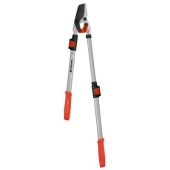
Buy it for Life-Loppers: Well- It's pruning season, so here's my batch: Pruning Shears: Felco, and esp. roll grip: I'm ambivalent (er, ambi DEXTROUS) for pruning anyway, so I have lefties AND righties, so if someone wants to borrow (!) my shears I can always pass them the wrong handed pair) But NOW... ARS (Japanese made) has entered the fray, with a design that also fits my hands, seems to have tougher steel, (holds an edge longer, unlocks with a squeeze on the grip, and locks with a push of the thumb. I've been using their long reach pruners for 25 years or more; their tools are skookum. I think they will have lefties, but I don't have them yet.  I know Japan doesn't cater much to leftists, but I can just hang on to my Felco lefty rotating handle pruners. (I'll never let them go- just for the fun having a righty ask to borrow my pruners and watch him try to figure out WTF?? ARS makes the best long reach pruners- Aluminum alloy tube, and you can swivel the shaft so the cut can be from right to left or versa vicie, when you're up on a pruning ladder. Loppers: one of the few tools still made in the USA are Hickock loppers, with KILLER Forged Blade and jaw, and NO BS. I can cut a 2 inch apple branch quick and neat. I have literally cut 2-inch + bamboos with them as well. Saws: You can still get US-made Fanno pruning saws, folding or for mounting on fiberglass poles- not light, but non-conductive: they're what the tree guys use around power lines. Unfortunately for those who are seriously up a tree, they no longer make their 2 ft. big pruning blade: check yard sales. Fanno blades can be sharpened by most saw shops: Japanese saw blades generally cannot. If you're doing an orchard of small or young trees, ARS and other Japanese companies make long reach pruners that are light enough to occasionally do a one-handed stretch cut, or do a semi-dwarf apple tree in 15 minutes without leaving the ground, at least if it's been regularly pruned. The pruners are designed so the business end swivels, so you don't need to contort your hold on the tool to make a proper 90' cut. The most recent addition to my armory is a Japanese telescoping pruning saw "Razor Saw" that will put my cut out 13 feet or so. I got one from the first batch to come in to Hida Hardware in Berkely,  and I'm gonna find out how to get the blade sharpened (or get a new blade) pretty quick now.  But it's all aluminum and swivels so you can easily change angle of cut without contortion. I'm very happy with it. Being a bambusero, I occasionally make a pole saw to order with a bit of wood shaped to accept a Fanno pruning saw blade and cut a bamboo pole to length so all I need to do is put the end of the blade holding wood-piece into the opened end of the bamboo pole and put a couple hose clamps on it to secure the mount.
1 week ago
Now I'ma startout describing a genuine spinal injury, which has had repercussions throughout my life- and has been a major factor in continuous muscle injuries. I was in kindergarden, and I fell off a grapevine swing at apogee, landing on my back on 1-2 inch caliper dead branches. It was a long walk home. I think that's how I developed my scoliosis, my right shoulder is higher. Playing disc golf I can putt or approach lefty, but for a drive it's gotta be righty, backhanded or sidewinder. Lefty I am limited to backhand. Any overuse puts me in pain radiating from the wedged vertebra in the lower zone of the shoulder blades. I have done plenty of carpentry, landscaping, heavy nursery work, and market gardening. So: I do everything I can for muscle pain!  I am currently thinking on a washable, easy to use compress that I can put herbs in and wrap on the owie. Opium poppies look really nice in the garden- the petals and leaves are good in a salad, or tea, and the ripening pods can be used in tea. (But not with a job site lunch: They "leaf" you a bit too relaxed. ) Topical ointments- I favor a coconut oil base, and clove is a usual addition and Turmeric. I also eat it raw like carrots. If I was in the tropics I would have a botanic garden of the ginger family. (Last time I was in Costa Rica I caught the dread machete elbow, so I grabbed a wild ginger in the creek and cooked it into some coconut cream, used it topically: Most Excellent! My local expert said "that's just a weed ginger!" -Well, it worked great. Compresses, hot baths with salts after work, Tiger Balm, etc. URTICATION- direct application of nettles to the zone affected, works fast, and draws blood to the area. I have nettles in my garden, the tea doesn't hurt a bit and nettles are the food plant for Red Admiral butterflies, a favorite of mine. Somehow the muscle pain is canceled by the stings, and more or less vice-versa. I also grow hemp for salves. and general CBD use. (I've brewed some nice ales- hemp is related to hops, eh? It's definitely another "after work" remedy. I also put my first wife thru acupuncture school. (She left me and forced the sale of the house I'd  put in a year of restoration on, and bought a building in town for her practice) I like acupuncture  a LOT, but finding a practicioner who's good for YOU is not necessarily easy, or achieved on the first visit. In 3 days I'll be 74, so I'm doing all right. Now, if I can find an acupuncturist I can afford, and or a massage therapist who wants to trade for skills I have. Depending on the feline, don't forget FVT: Feline Vibrational Therapy. My cat has a knack at nopping on the place in need.Sort of a purring hot water bottle. Lily cat has been napping on me while I typed this.
1 week ago
Chile con papas fritas me encanta! No idea why, but I surprised my parents by taking to chiles from early on.  
1 week ago
I have one that I've had so long I can't recall where or how,  mail order or travelling, but I think it's Japanese. two-ended eye hoe, one blade about 3.5" x 8", the other side  a bitshorter, a "U"profile with the curve at the eye, and two flat tines, finger-narrow, @6" long. It's a light tool, but the steel has lasted about 35 years so far. I mostly use it working on weeds around young trees, or opening planting holes for ground covers in established beds. For working in soft garden soil for planting, I tend towards an azadon I brought back from Oaxaca (just the forged head) It'll work up a bed to plant potatoes real quick if the soil has no rocks or solid clay. I've never purchased a blade as big as some, but a Guatemalteco a foot shorter than I am can till whole plots for planting corn in a day. If I'm trenching in soft soil that's what I use. If I am only using one tool, or the site is a long walk, I have a surplus GI entrenching pick mattock I've used for at least 50 years. (they don't make 'em no mo') I did put a longer handle on it. (I can see that the stock short-handle is what you want if you're in a foxhole under fire) But for ripping a channel for a drip line, long handle is da kine. Hit a rock? shift to the pick and pry it out. I  have one stock, and another I put a stand-up handle on it. It is not easy to find good hoes; go to a hardware section in a box store ? fuhgeddabout it. My new fave is at my fave neighborhood "home improvement center" It's a long handled double-ended chisel mattock forged in El Salvador: I tried one, and it's da kine, long handle, round-eye, one side a flat blade@ 8" long by 1.25 wide, the other end is @2.5 wide, same length. I recently found out I can chop out some weeds with the smaller width, then chop the dirt clumps with the wider end, smooth the area sideways as if it was a scraper. (you can assay the quality of a forging by tapping it with about any metal handle, rod, or spike: that little double-headed hoe rings! when you're assessing a possible acquisition, tap the steel: the more musical it sounds, mo bettah.
I confess to being fond of hoes; I have tined eye-hoes, solid forged, that can rip up hard-pan, and arrow-head shaped Allen hoes that can make a neat furrow for planting. Another I have, an eye-hoe from Japan with four flat tines is my go-to for working up a row to plant potatoes. If you have rocky soil- glacial till, say,  use picks or a heavy-tined eye-hoe. In most of the world, the most important farm implement is a broad eye-hoe (azado'n se llama) I come back from a trip with tools in my pack...
Find one that looks good, buy it, try it out. Hida Hardware in Berkely, Catalogs, Travel, Yard/estate sales at homes with big gardens, wherever you can find 'em.
'
'

1 week ago
I favor eye hoes for serious digging, including pick mattocks. I will, if given a "hoe" which is a piece of bent rod with a bit of steel sheet cut out to be a blade I will sell it or donate it. Not worth wasting space in the shed. A pointed warren hoe, shaped like an arrow head, is usefull for making furrows in soft ground. I've got a few big broad hoes, made in Salvador or elsewhere in Latin America. They can till a sofa-size garden bed ultra fast: just choke up on the handle to your liking, get in a bit of a crouch, and DON'T raise the blade up high, (less control, more work) Aim to cut around as deep as the blade, and pull towards you body. Go ultra easy the first week, and do a few shorten sessions the first day to avoid lasting soreness. Once you're getting used to it, alternate breaking ground  in an area, go over it again getting the big clods chopped up. I jude the soil's condition and try for thinner slices rather than whacking out big cubes: they're easier to chop fine on the second pass. The second pass is also when I sift some compost on the bed as I go.  For really tough ground I'll use a pick mattock, depending on the first pass, I may irrigate and fine chop the next morning, when it'll be softer (ma'suave verdad?) I have some no-longer made pick mattocks, one a prized US Army entrenching tool head on a longer handle I made, and two larger ones made in South Africa and one ol' American one I use for things like removing concrete slab that's been ravaged by a pneumatic jack hammer. If you've got the heavy work done, you can get mini versions of many of these shapes for one-handed use, like planting two-inch pot starts or dividing a clump of chives. Any good Japanese hardware has them; Hida Tools in Berkeley (I think) is the most recent one I've patronized'
1 week ago
I've been scything since the 80's with the help of the Scythe Supply business. (I'm not at all up to date on the scene, so you'll want to do your own research for sources) That all started after I learned to use a Kama (Japanese sickle) and I still have a collection of Kamas and use them year-round (I'm in W. Oregon so snow and ice are not guaranteed at any time of the year) I also carried two children at times, although I used a "baby bundler" which is a 3 yard piece of Jersey cloth and literally ties your child to you, front or back. My son especially was a bit cranky at times, but he wouldn't last long with rythmic movement, and he'd be passed-out in ten minutes. The stretchy fabric holds the child to you firmly but flexibly. Try using a gas mower with a baby on you! I totally recommend European scythes and they have a variety of blade shapes, lengths. and purposes. Also, the whole assembly is much lighter which def. reduces fatigue. The whole assembly of a European Scythe can be little more than the weight of an American snath. I have not bought many new blades or snaths,  but most recently I got a fine Italian blade from Earth Tools in Kentucky.
2 weeks ago
Most anything that requires sugar; me thinks. I've messed around with Yuzu, and it's timely. (never seen any numbers, but it sure tastes like it keeps the cold season at bay) I grew it some, a few gardens ago. It makes me want to put on my best Japanese accent. (Ahhhh! YUZU!!) I remember making a juice concentrate that kept in the fridge for months. A spoonful was good enough to banish any sore throat that was getting uppity. And I remember making a nice merang with it.
2 weeks ago
I like winter because I like fires when it's cold out. Living around the Great Lakes we always did things in the dark because the days were short, and sledding and tabogganing were fun at night. Add a fire and hot chocolate, hot dogs (good ones! not cheapos) And I was perusing the postings and realized that winter is a good time for biochar, and at least in the sub-tropical maritime NW in climate change times, It's not too hard to dig. SO: I'ma going to combine the traditional charcoal burn pit with my garden bed pattern, and use fruit-tree prunings for feedstock. When the burn is ready, quench and add fertility & some finished compost. All in the pattern of garden beds I've established. I expect to have a first report out before March.
3 weeks ago
Winter is time to head to the coast for foraging, and to go to the places the migratory birds visit (not far from here, towards Corvallis, is the first wildlife sanctuary in the world. I saw my 3rd. Trumpeter Swan (yes, confirmed, (and my first 2 were at the refuge in Harney Co. OR, nearly to NE Nevada.) It's when the Cackler Geese come to visit my neighborhood sanctuary: a small subspecies of Canada Geese,  that travel in large flocks. And it's SAUNA time! (I have friends 1 county North who have a winter Sunday Sauna & potluck, very nice. And it's hard to get my cat off my lap if I'm sitting still, like now, she's crashed out, opportunist that she is.
3 weeks ago