Ra Kenworth

+ Follow
since Sep 18, 2021
Merit badge: bb list bbv list
Biography
Female, Gatineau mountains, QC
zone 4a @600' - 3 over 1000'

Interests:
Wild plants and restoration,
Propagation,
Gardening, Foraging,
Rubris odoratus, brambles,
Road trips,
earth berming, passive solar, geeky stuff, education-unschooling, music, ambition to help build a giant ring of fire anywhere north of 66
For More
Iqaluit, Nunavut zone 0 / Mont Sainte-Marie, QC zone 4a
Apples and Likes
Apples
Total received
In last 30 days
6
Forums and Threads

Recent posts by Ra Kenworth

Acer negundo, also known as the box elder, boxelder maple, Manitoba maple or ash-leaved maple, is a species of maple native to North America from Canada to Honduras.People call them parking lot maples or just weeds, because they grow super fast.

They produce a firewood that is closer to soft wood than hardwood, but can be tapped for syrup and require about twice the sap for syrup (but if you rely on scooping the ice off the top early morning you can save a lot of energy on reducing).

They are also super for starting a tree windbreaker -- they get severely pruned or topped quite young as they have a habit of rotting out in the middle, and becoming a danger to rooftops in a storm. One plants Birch downwind from the Manitoba maple, and conifers. The Manitoba maple protects the other trees until they are established -- a common prairie technique. They are really hard to kill so tapping a young Manitoba maple is fine. And of course it's a maple so any advice about eating young leaves applies.
10 hours ago
Oh sorry just stimulants? Black tea. It's my standby up north because coffee is so expensive! I come back completely cured of cravings. I think I have enough for a couple of years. Cheap stuff in bags. I can't grow it in zone 4b
10 hours ago
Apart from sporadic volunteers upwind in my wild leeks patch, I started a patch of asparagus berries from my own plants by taking the whole dry stalks with berries attached, and placed them over the shaded plateau section of one of my compost hills/ windrows/ snow bank. That was the asparagus debris from fall 2024. I only covered slightly with leaf debris and a seedling commercial mix soil, so covering berries with about 1/2" of soil, days before the first snow.

That spot gets little sun, but enough, and the soil is fairly acidic, but rich in pigeon manure. Asparagus prefers 24-30" of rich soil and plenty of moisture in a cooler climate with slightly acidic soil. I'm zone 4a in Quebec at 850-1000', moraine, mountain mixed forest. It's moist enough with heavy clouds that wild orchids grow here.

I had to water all last year, and I am providing minimal watering this year -- and added a few more oak and maple leaf debris last week because the weather is unseasonably warm.

Sorry about the plastic soil bag -- when I started this patch 2024, I was on crutches so I bought soil in bags which I was able to maneuver, and that bag was the back of the compost pile of mostly kitchen scraps in various cardboard boxes, plus my pigeons helping. Those bags really helped me define the sides of the hill and most are now gone, but this one will have to stay until I can remove it without disturbing the seedlings.

I had to cover the seedlings with a wire cage that had 4"x6" holes on the bottom, so that my puppy didn't destroy them, while learning to leave the compost hills and grow beds alone. When I lifted the cages late summer, the few seedlings stuck to the cage got transplanted -- something asparagus really hate. They survived with intensive care but didn't come up this year. Lesson learned: leave them alone and don't waste time trying to save transplants.

I see some of our members here have had success with transplanting, and no doubt the roots weren't yanked out! I do hope to transplant most of this bed in fall to my son's house an hour away, preparing a spot in advance and digging down a whole foot before attempting to move these newbies in clumps. And protect them with a cage from the deer he gets visiting .

(We have agreed that when he takes over possession this September, I plant for the deer. Clover, yellow birch, a second apple tree, wild cherry, rubris, and plant buckwheat -- I digress but I do love the deer!)
Fenders on my 1979 full time 4x4 Dodge flat bed (with bolt on sides and a 88 Dakota plastic bed liner for manure and other sloppy loads)
A previous owner was a welder with a wheelchair. He also modified the hood to drop forward.
4 days ago
There is a saying that a good soup is inherited.

In winter, I buy food once monthly so the fresh vegetables go into a soup or stew within days. I keep it vegetarian to ensure it's safe when boiled up daily on a rapid boil.

Once I'm sick of it, I will pile it into used containers and lock it away outdoors where animals can't get at it, and it doesn't need a freezer because it's cold enough outdoors in winter. All those containers go together labeled and dated.

So I tend to have a cruciferous based soup, a root veg soups, squash based soups, and I can pick and choose from these assorted popsicles and make a stew out of the soup bases, adding lentils or peas without having to go through the soaking required with beans, or, I add cooked frozen beans. Cooked meat gets added last if any.

I really enjoy salsa based food as well, so a favorite thing I do is slow cook meat in salsa before freezing which helps prevent freezer burn.

Before springtime I start sorting out what is going in the freezers.

I have discovered frozen baked peas in bone broth and beans baked in salsa that were 18 months old and still as good as the day they were frozen.
1 week ago

Nate Magee wrote:
When backpacking with shower access, would wash once with clothes on than take off, wash the body and then rinse and twist and spin clothes and hang overnight to dry.


I use my gym showers more than the equipment especially when my hair needs pressure washing and I do the same with clothes washing but I get two complimentary towels and once I'm done with them, I place the wringed out clothes inside the towels then twist and twist until I have a tight pretzel which rings out a lot more water. Then if I have time, the clothes sit in the sauna too while I take a class or two. The socks and undies dry on the dash afterwards!
2 weeks ago
I still wash most of my clothes by hand and when on vacation I hand wash and drip dry over the tub. I bring along extra bungee cords I suspend over the tub, and leave them for cleaning staff with the tip and extra flashlights and batteries when I pack up. (My son takes me to Cuba)

When we lived up north and walked everywhere and no laundry in the building, I used an expandable rack in the tub and didn't bother wringing too much.

I make use of a laundromat 2-6 times yearly and have done this for decades: go when it's quiet and practically fill all the machines with blankets and thicker clothing.

Edit: I still use the tub for soaking clothes after a bath (when the water is still clean, agitating with squeaky clean feet!) and also for hand washing any large items, then collect the gray water for flushing down the septic tank, then hang the items to drip dry on the clothes rack right in the bath, then do a couple of rinses, reusing that water as a prewash for soiled items like floor rags / dirty socks. I've been hand washing for over 40 years -- even hand washed the diapers way back.
2 weeks ago
Last year by accident I grew a whole patch of summer squash that was supposed to be winter squash, but it was scallop squash and it endured all winter and it's still good. This has amazed me. I grate the exterior and cook it up with the homemade dog food before using up the innards, freezing the seeds and flesh together in a used paper envelope and placed in the freezer door with almost all my other seeds I save.

I hope this tip is helpful for those like me who rely heavily on squash to bulk up homegrown food.
2 weeks ago
I am guessing skirrit might grow well on my partially decomposed used hay bales? I am going to give them a try.
3 weeks ago
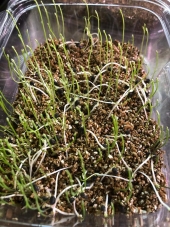
I sprout brown and yellow domestic mustard, daikon radish, peas, and buckwheat. The yellow mustard I can buy in the bulk food store in the spice section, the brown at the Indian market store, yellow peas at a commercial outlet for about twice what John pays, or, field peas at the feed store (they make better sprouts), and buckwheat in the sprouting section at the organic store if I can't find them at the feed store. Daikon radish I can usually get from the feed store that's a little further away and stocks cover crops -- by far the cheapest option other than growing my own seeds. Typically I keep back some seeds to plant each spring (and some of my sunflower and corn seeds) and buy them. But if they get too hard to find, I can grow my own, however, a little goes a long way, so I haven't grown from seed since I had trouble finding buckwheat which incidentally is super easy to grow, and I don't bother with groats at all -- I eat the sprouts and greens.
I have also sprouted wild carrots. Both them and buckwheat are best grown in peat moss.
My yellow pea sprouts taste fine.
I've tried to increase my yield of nasturtium seeds but never succeed and they are very expensive -- I'm in Quebec just an hour north of the capital.
3 weeks ago