

|

|

|

|

|

|
|
|
|
|
|
|
|
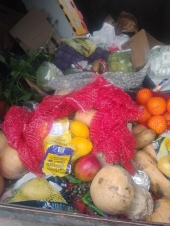
John F Dean wrote:Last Friday an old friend
contacted me, so we set up a time to meet in a restaurant about 30 miles away. Over a couple of cups of coffee we caught up on old times. He knew I had been into homesteading. His mind linked that with Prepping , and as a city dweller, he asked me what he should have in a three day survival kit. I thought for a few minutes and cautioned him I was limiting my thoughts to food. I also reminded him I saw myself as a homesteader. His train of thought was beans and rice. My administrative mind went with the following logic:
1. For three days one can survive on water alone. Get three gallons of water and call the project done.
2. Ok, he wants food. Get food that doesn’t need cooking. Add a few energy bars, a few cans of speghetti, etc. …maybe extra. Maybe water to flush the toilet. I reminded him his water heater probably already had at least 30 gallons of water.
3. Oh, he wants hot food. Add a three day supply of Mountain House or similar, some matches, an lp burner, and a few cans of lp gas. Maybe toss in a jar of instant coffee and some tea.
4. Combined the above is 6 days. Now if he wanted longer term without busting the budget, get the beans and rice…and lots more water and lp. If he needed more variety … add lentils and split peas….maybe a can of dehydrated onions….maybe dehydrated carrots….maybe a few cans of spam.
Obviously, the list could go on, but the above takes him well past 3 days. I never could understand the three day thing. I have had snow storms and tornados keep me in longer than that.
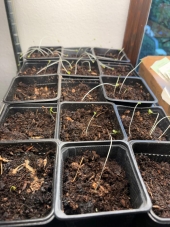
Judith Browning wrote:If the lights on now looks like there's some just emerged ones that could make it
and maybe more seed still under the soil?
That's pretty good for old seed!
How had you stored it?
r ransom wrote:Being able to buy soil is a new enough thing, I asked my dad how did he start seeds prior to when soil came in bags.
Garden soil, well aged compost, and sieve. Or more specifically, a series of sieves: 1in, half in, quarter inch. Sift the soil and compost through increasingly fine holes. Mix together. Add sand or more compost until the texture is right (make fist of soil, then see how it crumbles).
Don't start seeds too shelterd to prevent damping off.
Since starting seeds inside is labour intensive, preference is given to direct seeding. Peppers and tomatoes were sometimes started inside, depending on variety and where in the world we were.
Flowers were often started inside.
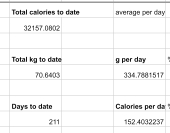
Lola Lilova wrote:For the past 211 days, I've been keeping a spreadsheet with harvest data. It's been very informative! And very satisfying to see the numbers grow. I never would have thought that I would've harvested 70kg of produce by now.
I'm sure others here may be getting much more impressive numbers. If anyone else is keeping numbers, I'd love to see them.
For context, I'm gardening on about 300 square meters of backyard in the subtropics (excluding the house), though since I live in a multi-generational household I'm not farming it as intensively as I otherwise would have, since I have to keep their wishes in mind (apparently having space to walk is important!). Some of our trees are also not producing yet and our bananas would have usually produced much more if the cyclone didn't take them out. Considering all of this, I'm very happy with all of the fruits and veggies we were able to eat!
Anne Miller wrote:
Bethany Brown wrote:I’ve started thinking about starting my own seed/plants business. Locally adapted edible plants, maybe some natives, medicinals, other particularly useful things. But I’m not sure if I would be redundant since there are already a few small companies doing similar things. I welcome any thoughts and feedback.
I would say "Go for It"!
If there are already a few small companies doing this, I would suggest looking at what they sell and pick something to work on that they are not doing.
Medicinal plants is a great idea to start with as there is so much that you can branch into. Oils, lotions, soaps,etc.
Maybe start a thread in the Projects forum to track what you are doing.
I wish you the best.
Joao Winckler wrote:The regional adaptation work Bethany is already doing for Victory Seeds is genuinely underserved commercially, that's where small breeders can carve out something the big companies won't touch. Curious how the avocado project develops, the PNW thing seems ambitious but that's kind of the point.
Thom Bri wrote:Any specific type of plant you like?
For example, I have been working with corn for over 20 years. I am just weirdly interested in corn. No idea why. My suggestion is to start small with whatever really trips your trigger and gradually expand as your skills mature.