
|

|

|

|

|

|
Win a copy of Sourdough Without Fail this week in the Bread forum!"
|
|
|
|
|
|
|
Riona Abhainn wrote:Hi Pavel, thank you for your support of permies and sharing with us here.
I want you to know that your English is very good and that you communicate extremely well in it.
John Suavecito wrote:Great clarification, Pavel. Now , you have me curious about what Suavecito means in Czech.
John S
PDX OR
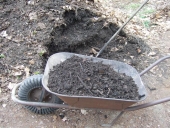
Thom Bri wrote:For me, it's such a long-term project that I don't mind if the charcoal is incompletely burned. It all gets buried in the garden anyway and mixed with all the plant matter. Maybe it takes a year or a few years to charge, I am fine with that. Last fall I dug a trench in the garden and cut through a layer of ash and charcoal from my fireplace. That layer was completely filled with roots. The plants clearly liked growing into that layer.
The original terra preta was simply cooking fire waste and burning off fields to clear them for planting. A process that took hundreds of years.
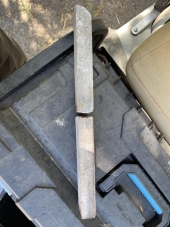
John Weiland wrote:This brick (photos below) is from a Serbian-made woodstove imported into the US. When whole, the brick is about 14 inches long. Because of the narrow dimensions of the brick, I'm not sure if there is a cement or glue that can fuse the two pieces together to be a strong as new??....... A local woodstove supplier did not have brick of that length to cut down, so would need to custom order which might be pretty expensive. I've reached out to the US importer to see of they have a stash of bricks for these stoves, but have not heard back from them yet. Opinons as to whether this could be repaired?.....and if so, what kind of glue or cement to use for a good bond? Thanks!
Douglas Alpenstock wrote:I have been told that baking soda is the miracle 15 minute solution for tenderizing meat.
I haven't tested it yet.