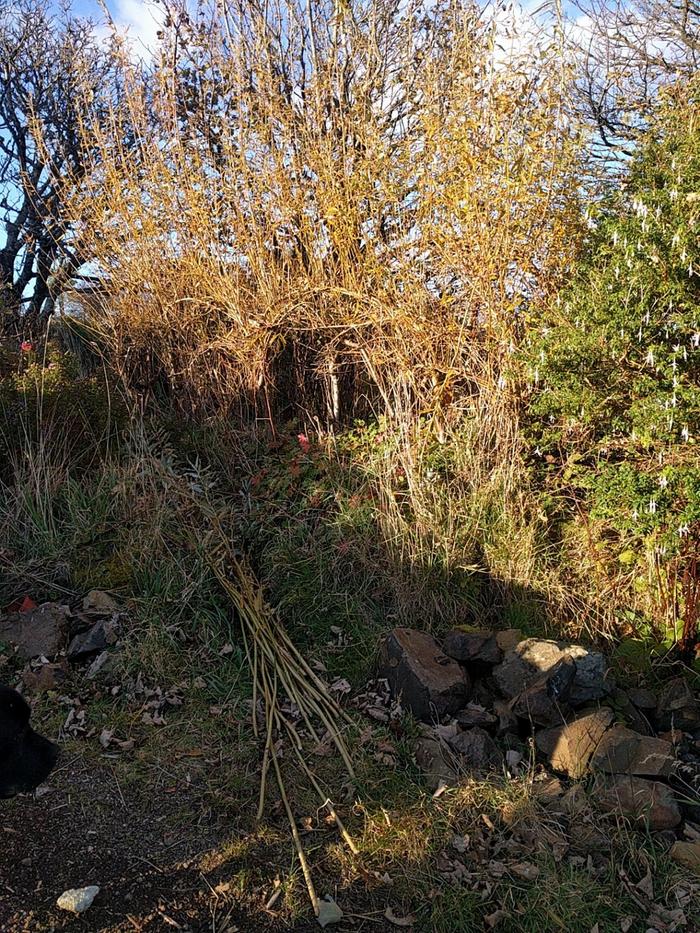
I am a 67 year old, very fit, eaten mainly organic food most of my life, still have hair on my head, even if a little discolored by time. Have no medical issues, that I am aware of, good diet, hard work and natural medicine is the way I stay in good health. I am 173cm/ 5’ 8” athletic build, still have a mainly original smile and have a happy disposition, mainly, also a positive outlook on life with all its twists and turns. I have spent a lot of time exploring to find the real me, not the one my family expected me to become, not the one society expected me to be, so I am very open minded, willing to express my own opinion, based on my knowledge and experience, no topic is off limits because to truly comprehend this world we should be able to go outside our own comfort zone. I am building an off grid future in rural France in an area called the Mayenne, I have all the practical skills needed to get this project done. I still climb trees as part of my work, restore old properties for clients and work on their projects. I would like to run courses to “ rewild “ people as I feel we are loosing the ability to be the true human animal we are meant to be, with all our, often hidden potential as it is not needed for place we have been guided to in society. I would like a partner in every sense of the word to join me in this endeavor as I know that a female perspective on this is very important aspect of this process. The smallholding/homestead has a house that I am slowly renovating, 4.8 hectares of land, with meadow, woods and a steam running along part of the boundary. It has a vegetable garden, orchard etc all is gradually fitting in to place.
Michelle Chemille wrote:Well I’m sorry that you see it that way, although I don’t understand completely what you are saying, all I was doing was reaching out with a hope to see what you’ve done and pick up some tips and get some advice. Wasn’t looking for anything else.
Hi Michelle
There are so many, on the internet who are fake and the first thing they do is send you their email, so I get the reaction from the men as I have very recently had that happen to me. I am sorry but mistrust is sown everywhere to keep us at each other, not helping each other grow, as I believe the world is meant to be. Hi
As men, I feel our role is to be a visionary and builder. Some women are pretty cool and can do this, but there's so much talk of devine masculine and feminine lately. There's so many factors to modern life and society that it appears the hurdle is a very high jump to line everything up just right so we can all let our guards down, embrace one another, and live our best lives *together*.
I agree wholeheartedly with your statement above, it is all used to keep us divided, been getting worse for years, we live in the most connected time in history, but are completely disconnected, in the main, from nature and the true nature of being alive, emotionally, spiritually, and physically.
Lachlan Mor wrote:It's actually hard to start from the bare earth. Take a look at most people, and it's all about selling the vision, and not actively homesteading yet. As a man, I'd like to have a woman to build this life together from the very beginning. It feels like right now, I'm selling a lifestyle on a futures market. Most women would feel more comfortable if the place is already up and running. It feels like they're waiting at the finish line and picking a winner.
Well, I had better get back to work!
Hi Lachlan
I have to agree, from a number of personal experiences over the last couple of years, I do think there are braver woman who are out there and willing to work at the hard tasks involved in working from the ground up, but they are very rare and most seem to still think it’s our job to prepare everything, as you say, do not think it is their fault as that is how they are brainwashed into that type of thinking where as in many countries, away from the west, they do much of the hard work on the land in all its different aspects, I feel we should work with the talents we have and ideally a partner can complement you, with a combined effort that help you both achieve your own goals as well as the combined goals. On the other hand it just maybe us, and it has nothing to do with the way we perceive things to be, I know some people find me a little scary because I am a little out there for many.
Nancy Reading wrote:Beautiful! Thanks for the pictures Paul. I know who to ask now when I come to laying my (future) hedges. I'm still planting them at the moment, although I do have a hawthorne bush I'm considering trying to lay rather than planting new bushes next to it as a deer deterent. I'm a bit worried about killing it though. Also the trunk is rather thick, so I think I would need to use my saw to cut through the trunk. That and the fact I don't have a billhook...perhaps I'll use my birthday money towards a nice one.
Thanks Nancy, a long time back, as they say, when I was about 10, I started driving tractors around to help out on my families farm, and the old chap that my father employed showed me the art of hedge laying, at the time I was more interested in moving the brash away with the tractor, but the knowledge was in there and came to my add later when I had my own rural garden business with lots of hedges to sort out.
Nancy Reading wrote:I'll start!
Here's one of my willow fedges in the process of being pruned. Annual pruning of a willow structure helps keep it tidy. Mine is a bit freestyle compared to the Irish examples in the first post. I planted it as a bit of a windbreak to the garden beyond, where I planted raspberries and blackcurrant bushes.
pruning willow fedge in the sunshine
I think I didn't make the structure tight enough when it was planted (didn't tie it together) and the wind here meant the willow stems didn't 'weld' together to make it really stiff. I just weave the upper growth in or cut it off every year or so. I quite like the organic forms....The clippings are mostly of a useful size for weaving or making wattle fences.
Hi Nancy thanks for this new forum, one of my favorite jobs is renovations on old overgrown hedges, often using laying as the way forward. Below are some of my future jobs as well as some that are already underway.
In cities, I meet plenty of people who say they dream about living in the countryside, going off-grid, growing food, restoring old places, and building a simpler, more grounded life. It sounds like half the world wants chickens, fruit trees, solar panels, and a view of the mountains. But when the moment comes to actually do it... to deal with mud, cold mornings, broken tools, uncertainty, physical work, and the long patience that this kind of life requires... the crowd suddenly gets a lot smaller.
Sometimes I feel a bit alone here in Europe, because I know there must be more people who truly want this life, not just the postcard version, but the real one: muddy boots, sore hands, fixing things, learning by failing, and still going to bed deeply satisfied. For me, this is not fantasy. I’m building a real off-grid regenerative project in the Pyrenees, restoring land and an old stone building, and trying to create something honest, useful, and alive. Not perfect. Not Instagram. Real.
So I thought I’d say hello again, in case there are others here who also believe that a meaningful life is built more with hands than with hashtags. If you’re one of those people, someone who doesn’t mind getting your hands in the mud to build something beautiful over time ... I’d be glad to hear from you.
Maybe there are more of us than it seems.
Roble
Hi Roble I am doing more or less the same as you in the Mayenne in France, seems to be no one in my area, on here, anyway if you would like a chat contact me. Paul
[quote=marie-helene kutek]Hello, deep breath to have a look at the text below, received from Jane Barlow, US herbalist.
It touched me deeply and thank you all for sharing and the text might speak to some of us
People refer to me as that crazy person and yet they appear to trust me. There you go!
In kinship, with well developed sense of humour, with blessings.
I love dogs and ........... the outside is a trusted companion most of the time.
There is something no one tells you about awakening until you’re already neck-deep in it:
It’s lonely.
Excruciatingly, bewilderingly lonely.
Even when you’re surrounded by people.
Even when you know more than ever.
Even when your heart is opening and your soul is expanding…
There’s a silence that settles.
There’s a distance that grows between who you were and who you’re becoming.
And often, there’s no one around who truly understands what it’s costing you to awaken.
This isn’t because you’re doing it wrong.
This isn’t because you’re broken and sad.
This is because truth isolates before it liberates.
You are shedding skins, roles, illusions, entire versions of yourself, many of which were crafted just to feel safe, loved, accepted. When those begin to fall away, so too does your sense of belonging in the world that reinforced them.
And that loss? It can feel unbearable.
What part of me have I silenced just to belong in a world that never truly saw me?
What would rise if I chose truth over comfort?
These are the questions that echo when you wake up in the night and nothing feels real anymore.
Loneliness in awakening is not a punishment. It’s a passage.
When you start to hear your soul clearly, you may also realize how much of your life was lived out of alignment with it. You may feel misunderstood, disconnected from old passions, intolerant of surface conversations, unsure of where you fit in the world you once called home.
This is the void between worlds.
The space where the old no longer holds you, and the new has not yet landed.
It’s not just hard. It’s sacred.
Am I willing to grieve who I thought I was, to remember who I’ve always been?
That grief is holy. That ache is a doorway.
The loneliness is the soul’s silence before it speaks again, not in words, but in knowing
So, if you’re there now, in the emptiness, the disorientation, the exhaustion that doesn’t lift, please hear me. Truly. Let this reach into the place that still wonders if you’ve taken a wrong turn.
You are not lost.
You are not behind.
You are not being punished for missing something, doing it wrong, or waking up too slowly.
You are being hollowed.
Not out of cruelty, but out of sacred design.
You are being emptied so that something deeper, truer, older than time itself can finally echo inside you again.
What if this loneliness, this aching silence that so often feels like abandonment, is not a sign of failure, but a clearing?
A preparation.
A sacred emptiness being carved so that something vast and holy can finally take root.
Let it be lonely.
Let it be quiet.
Let it be raw.
But don’t let it make you forget who you are.
Because you are not the broken thing crawling toward wholeness.
You are the Divine itself, wrapped in skin and forgetting, remembering through the language of your ache.
And yes, that remembering comes at a cost.
It costs comfort.
It costs certainty.
It costs the kind of companionship that only works when you stay asleep.
But what it gives in return… is everything.
It gives you truth.
It gives you clarity.
It gives you love, the kind that doesn't just soothe, but transfigures.
The kind that doesn’t come from fixing yourself, but from finally seeing that you were never broken to begin with.
You are walking through fire.
And yes, you’re walking it alone.
Because no one else can remember your soul for you.
No one else can walk this passage on your behalf.
But I promise you, you are not alone in your loneliness.
Others are walking too. Quietly. Invisibly. Sacredly.
Just like you.
Their footsteps echo through the same dark woods. And though you may not see them yet, you will.
And when you do, it won’t be in desperation.
It will be in recognition.
So, keep going.
Keep listening.
Keep letting go of who you thought you were.
Because you’re not becoming something new.
You’re remembering what you’ve always been.
And that? That is holy.
That is enough.
That is everything.
[/quote]
Thank you Marie-Helene your description of the process, for me is spot on, I have been on this journey of self discovery for a long time now and like you I believe it is worth the wait.
M Henderson wrote:To be honest, I stopped visiting this site a while ago, but something made me come back and check today. I saw this thread and thought it’s refreshing. Thank you for the Sun choke video, I really want to try growing and eating it sometimes!
Anyways, I’m 52F. I’ve been single for a few years now. I do feel that pursuing relationships doesn’t align with my purpose anymore. Working with nature gives me the sense of comfort and contentment more than anything right now. Not always easy of course, but through all the observations and finding solutions of my own, I found it makes me smarter and stronger both mentally physically. I love it. I appreciate all the living things around me even annoying deers and bugs… I feel alive and not alone at all.
Yes, I also go with my philosophy of being as natural as I can. So sometimes I act harsh or arrogance towards people who put chemicals on their skin. However! I realized this is the part I have to be more mindful and open minded. We are all unique. There is no single another who is identical as my being. Everyone has different story and background. A guy could have bunch of tattoos, but we don’t know his story. Maybe he got those when he was very young and is regretting about it now. A lady with heavy makeup might have a sort of insecure part about her appearance. Their trauma, up bringing, childhood… we don’t know anything. And certainly, we don’t know what stage they are in right now. Maybe they are on the way to realize they’ve been treating their bodies poorly. Maybe they are starting to doubt about this consumerism society. If they are not? Oh well, that’s the way it is. Not my business.
By the way, there are the hair colors made with natural ingredients. Or, the ways to put makeups without chemicals such as using beet powder and such. Self expression has been always a big part of the human thing in the history (using what’s naturally available) so I hope people will go back to the roots.
And finally, I just wanted to say… there is no such thing as failures in relationships to begin with. Hoping for a “successful relationship” is very unnatural to me. That’s just something this society expects us to follow?
Plants grow only in the right condition. We don’t know the result until we try. If it didn’t work, now we know. What do we do about it? Nothing. Just learn the lesson from it and move on! At least we avoid making same mistakes hopefully. Nothing fails in the natural world. Failure doesn’t exist!
Hi M Henderson
Great observations within your thread, there are partial failures in nature, in that things that do not survive, for whatever reason, then go on to feed or support another form of life. I agree with you that ever relationship should teach you things that you do not repeat, but due to societal pressure most aspire to ideas that are not theirs. I am on my own, working in nature, for work and on my smallholding in France, as with all species I do think that a partner adds to the mix, which can only truly work for humans if you build it not expect it to work on its own.
Just my thoughts about your piece, thank you.
I just noticed ... i am, right now, wearing the exact same clothes. Key brand overalls. redd-ish tshirt. Green overshirt.
Hi Paul I feel more or less the same as you, I have been on a personal journey, which seems to have given a way of looking at the world, that most people just do not get, I have leant to except who I am, love my faults as well as wide and various skills, the one thing I have never had an interest in is loads of money and the ego and falseness that goes with it, speak your truth, be honest and respectful with yourself as well as others and of course Mother Nature in all its wonder.