

|

|

|

|

|

|
|
|
|
|
|
|
|
Morgan Brooks wrote:
S.J. Vallier wrote:
Morgan Brooks wrote:Thank you for the update, S.J., and I am glad you are switching to root cuttings. Mid-spring sounds sensible if late snow is a worry, just wait until the worst frost risk has passed and the soil has warmed a little. For your new area, comfrey can work well as an early step because its deep roots help build soil and its leaves make great mulch, but I would give it its own spot at the edge rather than right in the middle of your three sisters bed, since it is vigorous and persistent once established. With olla pots and bunds for water, plus mulch, it should settle much better than seedlings in hot sun. Sunchokes and walking onions also like room, so spacing them out now will save you trouble later.
Awesome! really really good to know this I'll establish the comfrey around the perimeter then? I ask because this is going in stages, since I'm clearing (not conpletely clearing, I'm leaving the oaks in place and the mature pines, only clearing the scrub and small pines,) the unused majority of my property one area at a time. so each new hillside cleared can be first prepared with bunds, ollas and then "ringed" with comfrey before the edible plants are introduced -- is this sounding feasable?
Again thank you so much for the info!!
Yes, that staged approach sounds very sensible. Clearing one hillside at a time and preparing each area with bunds and ollas first gives the comfrey time to establish before the edibles go in, which is exactly the right order. Ringing each new area with comfrey as you clear it means that by the time you plant, the roots are already working, holding the soil and pulling up nutrients. Just give the comfrey a full season to settle before you expect much from it, and keep the rings a little back from where you plan your paths so they do not take over your walking space. Sounds like a lovely plan, and I hope the clearing goes well.
Oliver Huynh wrote:Hello,
As an aside, if comfrey can't grow where you want a dynamic accumulator, other wild plants from your area might be as fit for the purpose.
For me it has been bitter dock. Nearly as aggressive, but much more tolerant of drought.
It is now slowly displaced by nettles as the soil improves, which also meet a scythe once or twice a year.
Categorized "Noxious weed" in some parts of North America though.
Have a nice evening,
Oliver
Morgan Brooks wrote:Thank you for the update, S.J., and I am glad you are switching to root cuttings. Mid-spring sounds sensible if late snow is a worry, just wait until the worst frost risk has passed and the soil has warmed a little. For your new area, comfrey can work well as an early step because its deep roots help build soil and its leaves make great mulch, but I would give it its own spot at the edge rather than right in the middle of your three sisters bed, since it is vigorous and persistent once established. With olla pots and bunds for water, plus mulch, it should settle much better than seedlings in hot sun. Sunchokes and walking onions also like room, so spacing them out now will save you trouble later.
Morgan Brooks wrote:Hi S.J., you are not alone with this, and I had a similar start with comfrey. Seedlings are much fussier than the tough established plants everyone talks about, especially in a hot, dry summer.
What worked for me was switching to root cuttings instead of seed. I plant pieces about 4 to 6 inches long, with the top about 2 inches below the soil, and I keep that soil consistently moist for the first season. In your heat, I would water deeply two or three times a week rather than waiting until the soil dries out, and add 3 to 4 inches of mulch around, but not touching, the crown.
I also give new plants afternoon shade in their first summer. Once they have a deep root system, usually by the second year, they handle dry spells far better.
Do not give up on the ones that disappeared yet. Mine have died back above ground and then returned in spring, so mark the spots and watch for new shoots before digging them out.

Alder Burns wrote:I need to grow some next year for sure! My stash of old chewing tobacco has finally run out. A tea of tobacco is the only thing I know of that will drop large numbers of aphids dead, and quick! Nothing else works for me...not soapy water, not D.E. My rutabagas have them bad right now and I'm out there rubbing and smushing every week. I've been around some kids that grew it years ago....it's pretty easy once you get the very fine seeds to come up.
M Ljin wrote:
Chance Lunceford wrote:
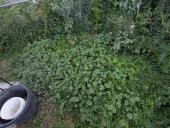
M Ljin wrote:Have you been eating any of that mallow? They are one of my favorite greens.
Just the blossoms and the cheese wheels.
Tell me what you like about the greens.
I don’t know what is not to like! They are mild, nourishing, tender, soothing to the digestion, and high in calcium. I have some by the doorstep and pick some most days.
C. Letellier wrote:I am doing the bocking 4 russian comfrey and while it is easy to kill while establishing cuttings it is incredibly durable otherwise and super easy to make cuttings to propagate.
Erika House wrote:
S.J. Vallier wrote:
Yes. I live in the sierra nevada mountains between Sacramento and Tahoe. We get 100+ degrees for a couple days a week in each summer.
I work full time so I can only water on my days off. I assumed this was at least part of the problem, but wondered if there was something more to it.
Nice to have another permie from the area!
Anne Miller wrote:What kind of comfrey are you trying to grow?