• Post Reply Bookmark Topic Watch Topic
  • New Topic
permaculture forums growies critters building homesteading energy monies kitchen purity ungarbage community wilderness fiber arts art permaculture artisans regional education skip experiences global resources cider press projects digital market permies.com pie forums private forums all forums
this forum made possible by our volunteer staff, including ...
master stewards:
  • Nancy Reading
  • Carla Burke
  • John F Dean
  • Timothy Norton
  • r ransom
  • Jay Angler
  • Pearl Sutton
stewards:
  • Devaka Cooray
  • Leigh Tate
  • paul wheaton
master gardeners:
  • Christopher Weeks
gardeners:
  • M Ljin
  • thomas rubino
  • Megan Palmer

Need some expert pruning advice for pruning older apple trees in an orchard.

 
Posts: 104
Location: PA
20
  • Likes 3
  • Mark post as helpful
  • send pies
    Number of slices to send:
    Optional 'thank-you' note:
  • Quote
  • Report post to moderator
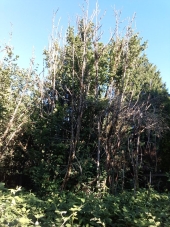
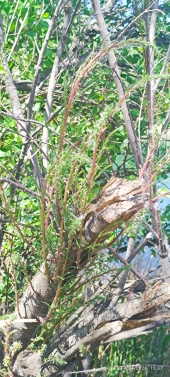
Hello,  I was wondering if anyone might have any advice on fixing what might be a pruning mistake that has been going on for years?  I have rows of apple trees which have  large pancake growths on top.  The growths were caused by pruning waterspouts and suckers off the tree tops each spring,  which in turn caused even more growth for the next pruning season.  I've removed a couple of the larger growths,  they were massive and seemed to add nothing of value to the tree.  Maybe it was a mistake to cut them off?  

I have no idea if these are normal or not.  Do all older trees have these?   I only assume that they shouldn't because my father in law (who owned the orchard)  had some health problems and had to let people who had no real pruning experience start pruning his trees, and that the growths seem unproductive.

My plan (with no experience or knowledge of pruning) was to cut these growths off and to let them sucker again and choose one sucker and train it downward to stop the apical dominance.   No idea if this would work and I have no idea if these are actually normal or bad.  My experience is just a year of pruning mistakes and a hodgepodge of youtube pruning advice mixed together from several different techniques.  

I'm sort of at a loss.  Am I making a mistake by cutting them off?  Are they normal in any older orchard?  So many questions.    :).

The top picture is a smaller  "pancake" that I've already pruned.  The bottom picture is of a branch that hasn't been pruned yet.


Any thoughts or advice would be greatly appreciated.  Thank you all.
Nest2.jpg
[Thumbnail for Nest2.jpg]
nest3.jpg
[Thumbnail for nest3.jpg]
 
Posts: 48
29
  • Likes 11
  • Mark post as helpful
  • send pies
    Number of slices to send:
    Optional 'thank-you' note:
  • Quote
  • Report post to moderator
Hi Tim,
Oops that got out of controle!
I am in no way an expert, but I did manage to get some old apple trees back in check.

The good news:
1. The apple trees behave (biologically) normal;
2. The problem can be fixed.
3. Your plan is good, but needs some refinement;
4. We permies are here to help.

What you need to understand:
1. The visible part of the tree has an equally sized, invisible part under ground. They are in balance.
2. If we disturb the balance (by pruning), the tree will try to restore the balance (by vigourous growth)
3. NEVER take away more than one third of the tree at once (some people say even less).
4. Prune in winter for shape.
5. Prune in summer to reduce vigour.
6. Always cut above a bud that is in the direction in which you want the branch to grow.

Back to your plan:
1. It is winter, so prune for shape:
Take away the "4 D's": Dead, Diseased, Damaged or Disfunctional branches.
Examples of disfunctional branches: Branches that grow through or towards the center of the tree; Branches that are too close to other branches and will be future trouble when they get big. Branches that are crossing and will rub on each other when heavy with fruit (not damaged yet).
Please be aware: you can remove ONLY ONE in three branches, because otherwise you will get more disbalance and more vigourous regrowth.

2. Take a good look at your tree. It has no leaves, you can see the structure very well.
Think of what you want to keep. Make notes for later if necessary.
If you have removed less than 1 third of the branches, you can prune some more if you want.

3. In spring, watch what happens. Your tree responds with new growth. Do nothing yet.

4. After summer solstice start pruning your tree again:
Start with the "4 D's" again: Dead, Diseased, Damaged or Disfunctional branches.
Now is a good time to bend young branches (watersprouts if there are no other options) in a functional direction.
Be sure to remove ALL other vertical watersprouts this time.
But NEVER more than one third of the problem.
Take a good look at the new growth: if it is very long, you can remove half of the length (with the apial bud) and promote side shoots and blossom for next year.

Next year you will have apples again.
Rinse and repeat the pruning. Over time the balance will return, together with the shape of the tree.
When the balance starts to return, you can start pruning for light (shape) in winter, and you will only cut long vigourous shoots in summer.

In the mean time, continue to watch good apple pruning movies. Good people to learn from:
- Stefan Sobkowiak
- Michael Phillips
And some more that I don't remember right now.

Good luck Tim,
Please post a picture when you're done pruning and one of each season, so we can follow the response from the tree and help you with more advice when necessary.
 
Tim Mackson
Posts: 104
Location: PA
20
  • Likes 4
  • Mark post as helpful
  • send pies
    Number of slices to send:
    Optional 'thank-you' note:
  • Quote
  • Report post to moderator
Thank you Nynke,

You've given me a ton of good information and I really appreciate it.  I need all the help I can get.
I might be pruning too aggressively and I'll have to slow down and take less off the trees.
This will be our second year of pruning ourselves and we have a lot to learn.

I wonder about the summer pruning though.  We are very hesitant about pruning then because of our location in Central Pa where we always seem to have very hot and humid conditions.  We're really careful because of the disease potential.  I don't think that my father in law pruned at all then.  I'm not sure.  

We still have much to learn and maybe I should be considering summer pruning?

Thank you again!    :)

Thank you for the video links.  Very good information.  I've actually been watching Stefan Sobkowiak and he's sort of the origination for my idea of leaving a central leader and then bending it down.

 
Nynke Muller
Posts: 48
29
  • Likes 4
  • Mark post as helpful
  • send pies
    Number of slices to send:
    Optional 'thank-you' note:
  • Quote
  • Report post to moderator
You are welcome Tim.

I am not familiar with your climate nor your area. Maybe someone else can step in.

I actually do most of my pruning in summer. I only cut young fresh shoots then, so the wounds are small. Actually I "correct" my trees all summer with small cuts, leaving small wounds that close quickely. My last pruning is in august, so there is still some slow growth afterwards.

For me, winterpruning is only for big corrections, which I try to avoid. During winterpruning I correct mistakes from the past, when I did not know what I was doing yet. The winterpruning causes much larger wounds that take much more time to close, and maybe never close at all.

Never the less, I pruned a large branche of one apple tree this year, because my tree becomes too big. Now I expect this tree to react with extra growth because of the small disbalance I have caused. I will keep an eye on this tree this summer and hope to restore the balance in the same year. Than next years will be only small cuts during summer.

I saw in one of your pictures, a branche entangled in the mess, that is not connected to a tree anymore. Such (dead) branches are more likely to cause disease than any clean cut in healthy tissue. You should remove such branches first. They help cleaning up  the mess. Clearing them, will give you a better view of the structure. These loose branches don't count for the "max one third" that you are allowed to remove.

Good luck with the pruning. It will be all right some day!
 
Did you have a mustache before? This tiny ad says it's new.
Learn Permaculture through a little hard work
https://wheaton-labs.com/bootcamp
reply
    Bookmark Topic Watch Topic
  • New Topic