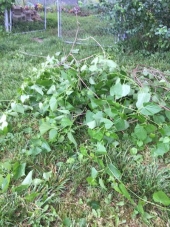
I already posted these photos in another thread, but I promised to expand on the idea here.
Every spring, we have a profusion of new saplings in the wooded border of our half-acre lot, including invasive privet and thorny olive, elm, mulberry and especially redbuds. I like the redbuds because they are among the first plants to bloom and help the dandelions feed hungry bees. What I do not like is having to deal with redbud seedpods for the rest of the year. So, after the flowers are spent and the tomato seedlings are beginning to sprout in their starter pots, I'm out trimming branches, cutting saplings, and weaving them into tomato cages. ('Weaving' is a very generous term for bending a bunch of branching sticks into cone-ish shapes.)
Redbud branches also offer an extra benefit. You can peel the bark off of them and use it immediately for tying the cages together, without having to bother with twisting it into cordage.
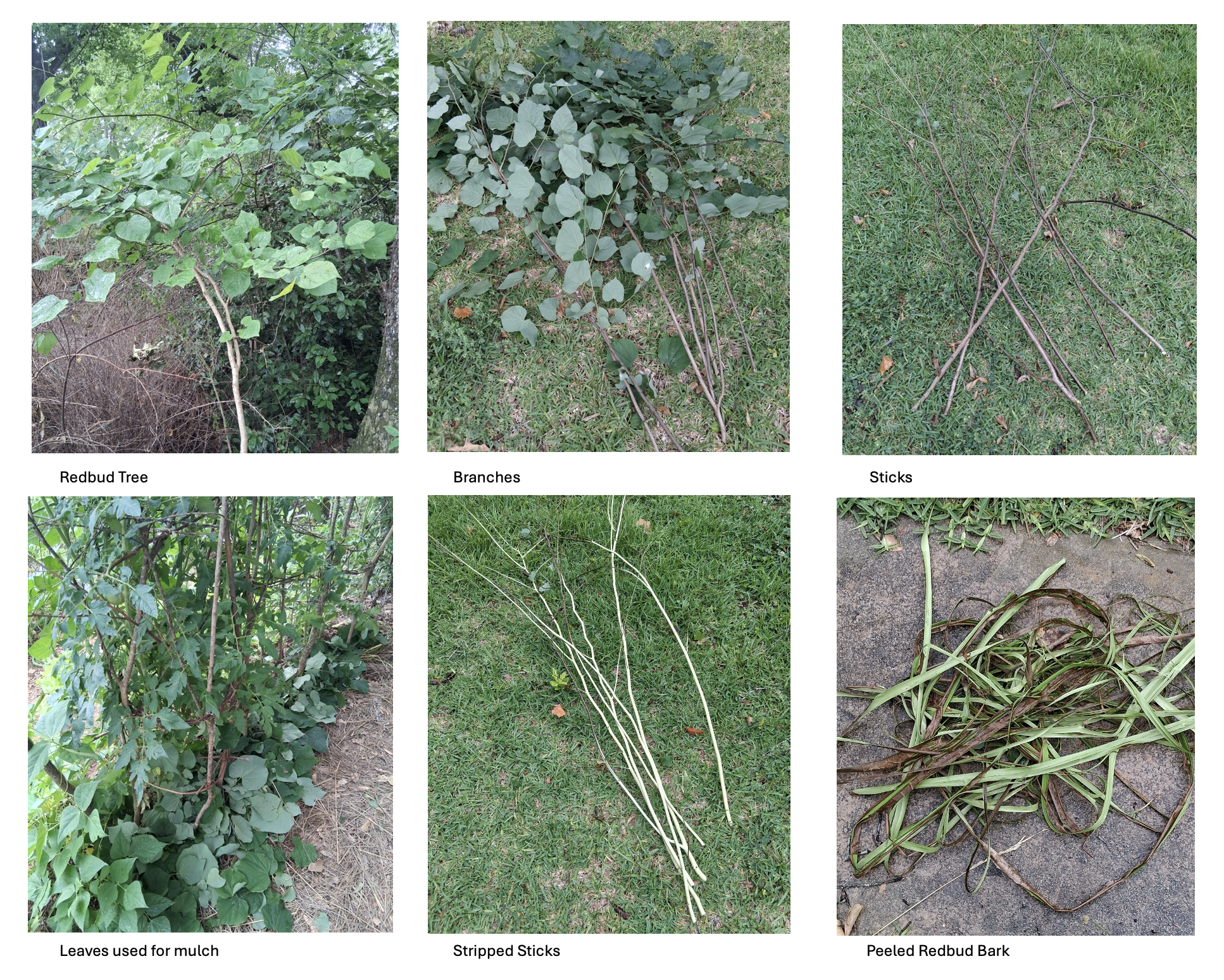
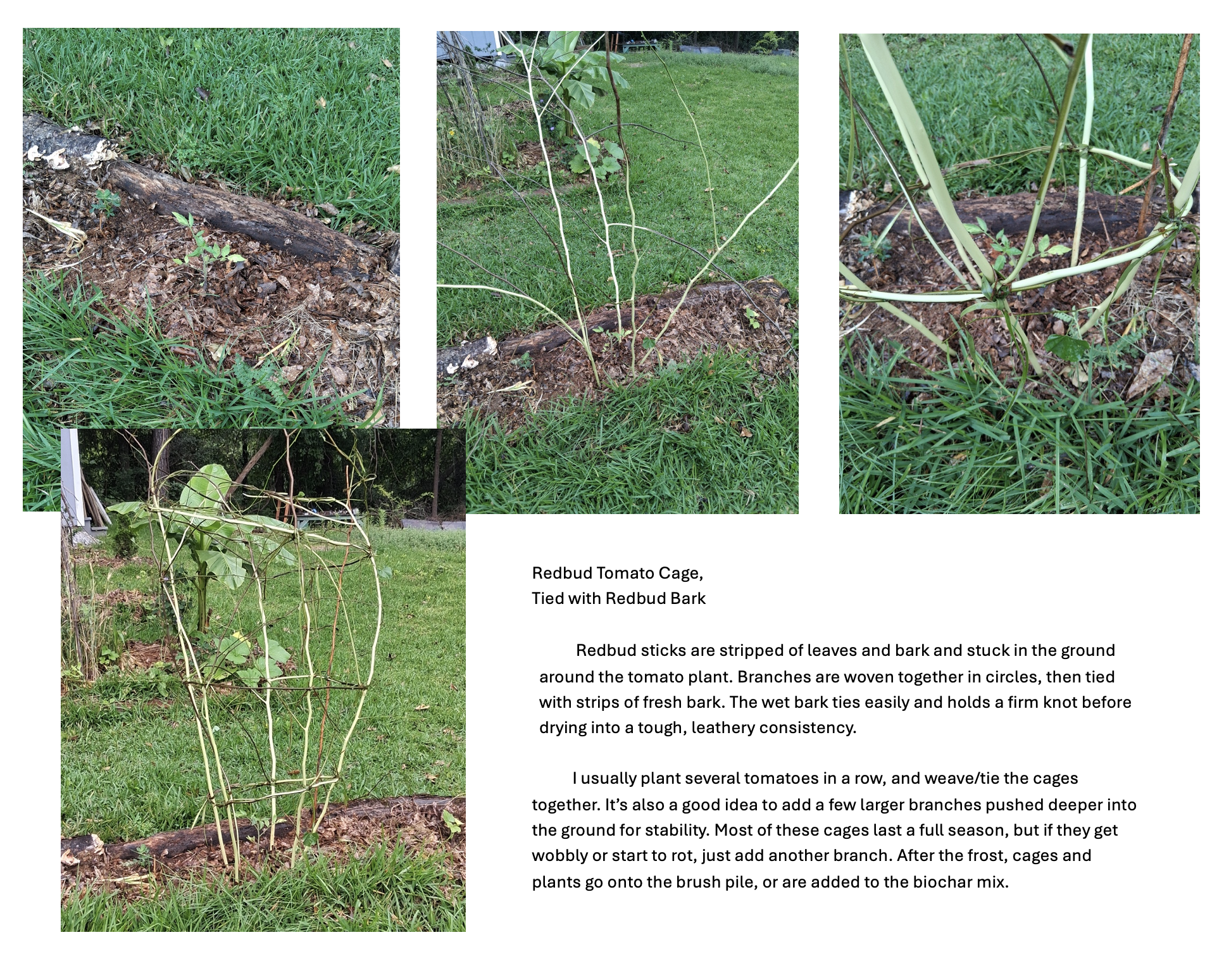
The process is simple and straightforward: Cut the branches, strip the bark, stick the saplings in the ground in a circle and twist/tie the branches together. Fresh redbud bark is easy to peel, and easy to separate into thin strips, which have the feel of soft leather and hold a tight knot without breaking. Removing the bark has another advantage. If you leave it in place, the saplings will set new roots through the bark wherever you plant them, and sprout leaves that will compete with your tomatoes.
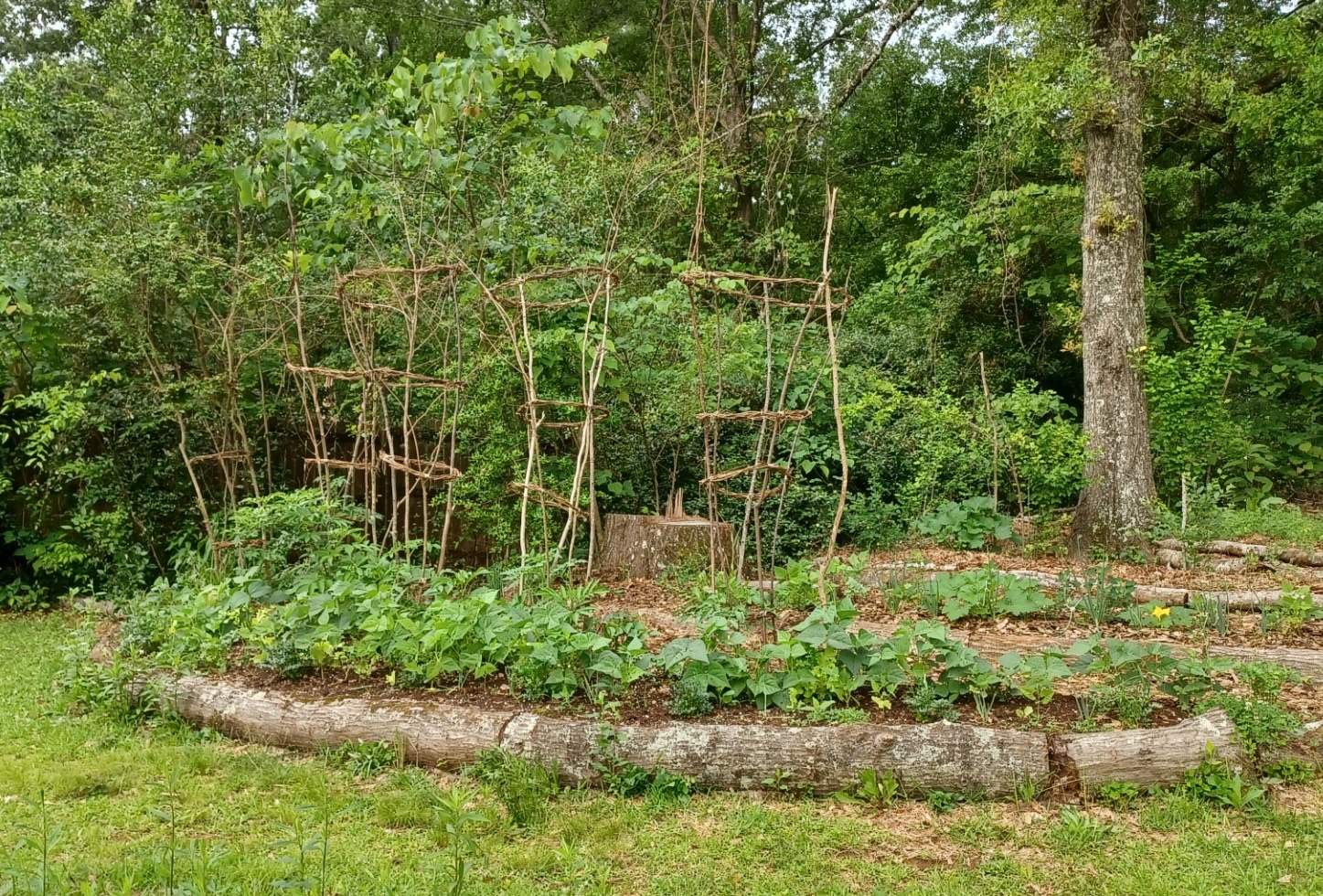
These cages are amazingly sturdy and withstand wind surprisingly well, especially in rows. They also scale up for indeterminate plants, depending on how tall your tomatoes and your saplings are. My first efforts to twist wreaths from vines and twigs turned into eight-foot Tomato Tornadoes, which still weren't tall enough for our vines that year.
Redbud-Bark.png
After you've decided what sticks need to go, just cut, peel and strip. The broad leaves make a good covering of mulch.
Redbud-Tomato-Cage.png
Push the cut saplings into the ground in a circle, each stick angling up and out. Wind the branches together in a cone shape, then tie them with twine or strips of bark.
TomatoTornadoes.jpg
Eight foot tall tomato cages made of saplings tied to vine wreaths.






 2
2