



Val Vetter

+ Follow
since Feb 28, 2012
Merit badge: bb list bbv list
For More
Apples and Likes
Apples
Total received
In last 30 days
5
Forums and Threads

Recent posts by Val Vetter

All good reasons - and up until a few years ago - I was right there with you.

I started life as a mechanic back in the late 70’s and have been amassing tools and building/repair skills ever since. I was always a DIY kinda guy and back in the day, always drove POS cars. (That’s a technical term…) did everything from oil changes and tune-ups to clutches and timing belts, brake jobs, rack & pinion replacement’s, even ball joints a couple of times.

When I bought my first home in 2986 - a MUCH older home - I found that even “professionals” that charge high prices can do really terrible work. I had to tear out a floor a local (Chicago) “builder” did and re-do it properly. Did all my own wiring and completion of a shell firmer in that 150 year old house that didn’t have a level floor or a plumb wall. My Swiss Army knife became my constant companion.

When we bought the ranch - I did it all myself. Even rebuild a bridge twice. Cleaned my own septic tank, etc, etc. Had to maintain all my power equipment then as well.

As for appliances and the like - if it was at all fixable - I’d fix it. I’d even bought “broken” items on eBay and garage sales to fix and use.

At 67 (this week) I am slowing down a bit. These days - I drive a new, late model truck. Because it’s still under warranty - I have the dealer do everything. Even oil changes. By the time I buy the special oil (diesel) and filter - I’m not saving much $$$. I get to stay clean, not crawl under a truck, or find a place to recycle the oil.

I had a nail in a tire a few months back. Even though I always keep a full-size floor jack, my torque wrench, and enough tools in the truck to do just about anything - I’ve vowed that I’ll seldom if ever even rotate my own tires. Mounted wheel on that truck weighs in at 90 pounds - and hoisting that tire into the bed of the truck just about gave me a hernia.

I won’t part with my tools - and I’ll still fix everything I can - but time, practicality, and a desire to preserve what’s left of my body is making me a bit more selective in my repair choices.
6 days ago

Christopher Weeks wrote:I mostly don't.
So -- do you peel potatoes? And when do you or do you not?


Assuming the potato is thoroughly washed - and you know its history (pesticides, handling) I wouldn’t peel them unless there is an aesthetic reason - like if I was making Vichyssoise.
3 weeks ago

Michael Qulek wrote:There are table-top propane burners you can purchase.  In my own cabin, I used one for years before I bought a standard gas model from Home Depot.  I suppose you could even set it on top of your regular stove as long as none of the burners can turn on.  It ran to a 5-gallon barbeque tank I squirreled away under the table I was cooking on.

That would allow you to pressure can anything you want without acidifiers.  Once you the ability to pressure can, a new world will open up for you.


Getting into pressure canning would open up a whole new world to you. I was a beginner and jumped into it.

Get a “camp chef” or “Bayou Burner” portable propane burner and a 20# propane tank. Outdoors is best, but with good ventilation and proper flame adjustment - you can use it inside as well. (CO detector recommended!)

I bought an “All American Pressure Canner. They’re pricey, but the gold standard of pressure canners.

We canned EVERYTHING with that setup - our own pork, chicken, turkey, tons of broth, pretty much any veggies. You don’t need to add any acid or sugar.

Never have a can (mason jar) spoil or taste off. I recently used a jar of our pork broth that was five years old. Once properly processed - foods stay useable for ages. They may lose some flavor, color, or some nutritional value - but as long as they stay sealed, they won’t go bad.

If you can’t afford or don’t want to buy the equipment yourself. You might hook up with a fellow homesteader to use their equipment (and expertise).

When I gave up the farm - I sold the pressure canner - for more than it cost me to buy. That brand is a lifetime buy!
3 weeks ago
If you see where the main line or “soil pipe” leaves your home, the septic tank -should- be straight out in that direction. Though I suppose if property lines, other building, or trees are in the way - it could head off in another direction.

The tongue-in-cheek answer I got from the local good ole boys about finding the septic tank was “when it has a problem, it will show itself”. (True, but hardly proactive.)

I found ours with the probe - straight out from where the main line exited the crawl space.

If you have a clean-out access, you could run a flat sewer tape out. That would tell you if there’s a turn, or when the tape hits the far wall of the tank.

Or - you could just leave it up your septic service guy. Tell him to pump out your tank - and leave the (hopefully) expert figure out where it is.

Regarding Texas - in our county (Wood) there were no inspections regarding existing systems. Only new ones. It was pretty common for folks to service their own tanks. (Don’t ask, don’t tell.)
4 months ago
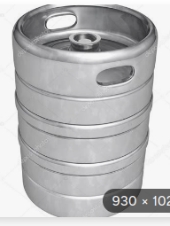
Another fun tidbit - at brew pubs and microbreweries, I’ve seen these repurposed into urinals….
5 months ago
If you - or anybody you know - are into home brewing, these old retired kegs make great vessels for boil kettles or sparge water heating.

I had a welder friend cut out the top (with the funky connector) with a plasma torch and weld a stainless nipple onto the side near the bottom. Thread on a valve and you can heat water or boil your brew.

Yes, you can cut this material with conventional tonal blades or abrasive wheels - but being a lot of them and eye AND ear protection as it gets real noisy real fast.
5 months ago
Hey Simon,

I sent you a "purple Mooseage" - email me.

Val
9 years ago

Dale Hodgins wrote:Hi Val. This sounds like something that is going to need a good contract, so that you can protect yourself in the event that the world's laziest people show up.

Another important thing to watch for is the accumulation of unwanted stuff. My useless tenants gathered many truckloads of stuff that I later had to dispose of.

It would probably be good to have a neighbor or some other trusted person check up on your tenants regularly, especially in the beginning.

I would never have anyone, who claims to not have a cell phone or the ability to get one. I would also make a consistent pattern of not answering that phone, grounds for eviction. Those who aren't performing their duties, will not want to talk to you very often. Those who are performing, are likely to answer their phone and send you pictures. That's been my experience.


Unfortunately, all too true Dale, which is why I hesitate to even go down this road.

We've even had somebody who was personally recommended to us and vouched for string us along and then bow out after we had stopped looking for people, making us start the whole process over again.

Val
9 years ago

Anne Miller wrote:

Having a good contract drawn up by a lawyer would be worthwhile.  Having worked with many volunteers it is true that there are many good ones and just as many that will load up anything of value and leave in the middle of the night. .. and  leave their trash behind.  


Excellent points Anne, and having seen how lame and opportunistic many "WOOFERS" have been, I hesitate to even look for people and consider other options.

My other options are: sell the property, pay somebody (still no guarantee of competence or honesty) or continue to mooch off friends good-natured enough to watch the place.

Val
9 years ago

David Livingston wrote:Also I don't think the term sharecropper helps bad historical vibes

David


True David, "Sharecroppers" does have a bad "vibe" to it, but it's not really deserved and only the bad, dishonest owners who violated the agreement gave it this bad reputation. Evicting tenants after they have done all the hard work and keeping the harvest is hardly living up to the agreement.

Val

9 years ago