Lauren Pfaff

+ Follow
since Jan 16, 2025
Merit badge: bb list bbv list
For More
Southwestern US
Apples and Likes
Apples
Total received
In last 30 days
1
Forums and Threads

Recent posts by Lauren Pfaff

Wants: Really good insulation (passivehouse or similar), solar panels, passive solar, energy/water efficient appliances and fixtures, built-ins everywhere, giant kitchen, root cellar, kitchen greenhouse...
Love: Not much, currently renting
1 week ago
I think the best way to consider your house's sustainability is either in terms of inputs/outputs or in terms of the life cycle of your home/belongings.

Inputs: What does your house use/contain? How was your house built? How much water and electricity do you use? Am I buying things to keep up with my neighbors materially or because I want/need those things for myself?

Outputs: How much waste are you generating? Is that waste being reused or composted? Can you harvest rainwater or install solar panels? Are you growing some of your own food (or perhaps extra for your neighbors too)?

Life Cycle: Am I buying/replacing things too often? How were the items made? Who made your stuff? Are the products long lasting and high quality or a fad that you'll replace in a month since it's not well built? What happens when you get rid of an item (it doesn't disappear)? How long will my house last? Am I going with the latest home decor trend that I'll replace in a year or am I buying something that I'll use for decades or even pass down?
1 week ago
One of the things I've been thinking about is to have a driveway lined with fruit/nut trees (perhaps food forest style) and direct rainwater to swales on either side of the driveway. There'd be a slight slope and in the end, the rainwater would overflow into a pond. My idea is for it to go trees, swale, trees, driveway, trees, swale, trees. You'd probably stagger the fruit tree rows to help spacing. When you dig the swales, you'd find rocks which you could use to create several check dams to slow down the rainwater to help it infiltrate into the soil better.

I found this article: https://wiki.sustainabletechnologies.ca/wiki/Check_dams

1 week ago

Lauren Pfaff wrote:Maybe a database made with spreadsheet or google sheets might be a good idea. Perhaps we could make one then make it a wiki page. I would be glad to start working on a google sheet for that. Think it might be a cool idea where everyone could add their favorite permaculture videos and then people trying to find media could filter by stuff like topic, channel, etc.


Link to a google sheet where I'm trying to make a demonstration of my idea:
https://docs.google.com/spreadsheets/d/13XUBEB5skwF_u7bXY-WkTzQ_NeOJXs3gFRK_Y49k77U/edit?gid=0#gid=0
Maybe a database made with spreadsheet or google sheets might be a good idea. Perhaps we could make one then make it a wiki page. I would be glad to start working on a google sheet for that. Think it might be a cool idea where everyone could add their favorite permaculture videos and then people trying to find media could filter by stuff like topic, channel, etc.
In terms of YouTube videos/channels, Crash Course has some pretty good introductory stuff in several fields. Might also be cool to find some reading related to what you're learning about. It could be a book or article (for example, NPR's climate solutions week) but, depending on age/level, you might also find scientific papers. New research tends to be ultra-specific and technical, but if you can find a review paper (which basically summarizes the existing body of knowledge on a given field), those can be a bit easier of a read. One note on the scientific papers/articles: I would recommend seeing what you have access to via your library. Some research databases are expensive for individuals but some organizations can give access (for example, the Arizona State Library has this (link: https://azlibrary.gov/dazl/online-reference_ online reference). Could try having a "journal club" where you all read/learn about something and come back together to discuss what you learned both as a means of learning and to gauge everyone's progress. In terms of note-taking, you probably want to make sure they are taking good notes. Note-taking is a skill and if you are learning through taking notes, you need to be taking good notes. Might also look at state standards for science or any other subject just to make sure they are getting enough instruction. They have specific learning goals for each age (ex: graduating kindergarteners should be able to count to 100).

7 months ago
The best one for me is figuring out which leaves of different root vegetables are edible. For example, I sometimes take the greens from onions and garlic and sauté that with some spices as a flavor base for some meals. In addition, beet greens are good as a substitute for spinach. Edible weeds are also cool as part of a salad. I wouldn't want to eat a giant bunch of dandelion greens, but a couple in a salad along with some other stuff (lettuce, arugula, purslane...) would be nice. One day, I want some chickens and other animals that I can feed some weeds/garden scraps as part of their feed and then return their (aged/composted) droppings as fertilizer.
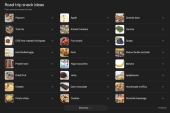
This is an example of why you double check with AI. Find the google AI summary of "road trip snacks" where it recommends "alcoholic beverages" (last entry).
8 months ago
Would be cool to make a "moving in kit." Bring some toilet paper/paper towels, some snacks/food, or something else that they might need immediately but still need to unpack or shop for.
8 months ago
Potential Consideration: Depending on how many ducks/how small the pond is, you may get nitrogen buildup (algae blooms and bad if there are fish in the pond).
Potential Solution: Do you have somewhere else to put the ducks if that were to happen? For example, if you saw algae build up or the ammonia levels got too high, you could plan on having the ducks go to the orchard or on pasture for a while.
Idea: I think a cool system would be a pond with ducks, fish, and aquatic plants. I'd figure out some sort of system to keep the water aerated and a filter to keep it relatively clean. You'd have to worry about the ammonia levels, but a biofilter could turn the ammonia (byproduct of/toxin for the fish) into nitrite into nitrate (fertilizer for the plants in your system). Would also be cool to have some sort of low-tech aquaponics raft system.
9 months ago