Syd Smith

+ Follow
since Jun 03, 2026
Merit badge: bb list bbv list
For More
Southeastern Pennsylvania (Zone 7a)
Apples and Likes
Apples
Total received
In last 30 days
5
Forums and Threads

Recent posts by Syd Smith

Similarly, for me it always seems to be the unexpected native volunteers that just show up: the jack-in-the-pulpit, jewelweed with its orange flowers, the unexpected sassafras sapling grove, some sneezeweed that just popped up in the pasture, the little group of 7 pawpaw saplings that I just discovered peeking up out of that annoying patch of Japanese stiltgrass.
1 week ago
Wickson crabs (https://pomiferous.com/applebyname/wickson-crab-id-6690) are really delicious and grow vigorously, fwiw! That said (contrary to a commenter above), they are moderately susceptible to rust and some other diseases, so it's not a good choice for every area. Apparently amazing for cider, though. I didn't get more than a dozen fruit before I had to move from my last house, so I never had enough to try cider; I just ate them straight. I now plan to plant a Dolgo, a Chestnut, and a Trailman crab if I can find them all for my forest garden (all disease resistant in my area). All are supposed to be tasty crabs that also work well for jelly or cider.

Unlike many people, I do really love to eat intensely flavored, tiny apples straight from the tree, so I think I'm just a crabapple sort of person! I also just chop the sides off the core of an apple, which isn't much of a hassle. It's a little less perfect than a proper corer, but it's fast, and it works fine for small apples, too.
2 weeks ago
The general wisdom for pome and stone fruits is to strategically prune when dormant (late winter/very early spring before breaking dormancy, but during a warmer spell that stays above freezing for a few days) to encourage growth, because it stimulates the most growth hormone, and to prune in late summer to slow down growth because it doesn't cause the same level of hormone release.

But once they are out of dormancy, in many areas it's better not to prune pome fruits and to wait until closer to the fall, because pruning increases the risk of fireblight exposure in early to mid-summer. Some fruits like paw paws also apparently recover much better from pruning when they are growing, not dormant, so those specific types should only be pruned during the growing season.

But all of this wisdom really depends on the types of fruit, where you are located with your specific disease pressures, and your goals for each tree at that specific stage of growth (like you might want to be stimulating annual growth for the first few years, and then slow them down for easier management once they are bearing).
2 weeks ago
I've been planning for some hardy figs here in zone 7a, and have been reading the "Fig Boss" recommendations about winter protection here in my area (https://www.figboss.com/post/fig-tree-hardy). He does something similar with bending to the ground and covering/wrapping, apparently with a lot of success!
2 weeks ago
I'm a geology prof! I'm what you might call mid-career, but I just relocated and started over at a different university. I research the geochemistry of natural systems to better understand how Earth's deep chemical processes really work, but I spend most of my time teaching undergraduates and the occasional graduate student about rocks and minerals. I love teaching and thinking about geologic puzzles, so it's been the perfect career path for me. I think I will do it until I don't want to anymore, which might work out to be around retirement age.

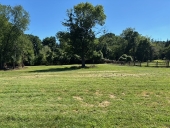
I honestly don't really think of myself as a homesteader, but I love doing things with my hands and figuring out how things work, and I love eating fresh fruits and vegetables, so I suppose I am essentially becoming one! I've gradually worked my way up from my first house, with a tiny yard where I put in my first little keyhole garden of mixed vegetable beds and an alternative wildflower lawn; to a third of an acre with a few fruit trees and vegetable beds and my first hand-built wood frame greenhouse; to the new property. We now have 3 acres of mostly compacted former horse pasture, but about half an acre of it is wooded. We're planting and planning our vineyard, the forest garden orchard, the veggie beds, wildflower meadows, the woodland understory additions, and a windbreak hedge. Putting the solar on the barn, and planning the house renovation so we can work from home and give our menagerie of animals a happy place to live (and add an attached greenhouse for my plants!). Gradually turning this property over to the kind of home that can feed us and keep us happily living with nature.
3 weeks ago
There are mine dumps, and then there are mine dumps.

All of this depends on the commodities (elements) mined, the types of ore (actual minerals), and how the ore and non-ore waste were treated, used, and disposed. Some modern mines treat their waste on-site and it is okay. Others... have not done this. Some were mining building materials and basically all the waste and tailings are inert. Others... far less so. Some are would qualify as Superfund sites in the United States, but have never been remediated in any way.

This really runs the gamut, and may go beyond what a person can do alone without professional input. It's really important to look into the questions above, and then do follow-up testing, and research those particular element contaminants (knowing that the contaminants are not necessarily the same elements as the commodities that were mined), including their oxidation and mineral status and leachability.
3 weeks ago
Linen is pretty great! It's not the best defense against a really determined mosquito (like the dreaded tiger mosquitoes that can bite through thick jeans), but it's at least a first layer defense, and it's really good for sun protection without overheating. Lightweight wool can be wicking and cooling in hot weather, too.

I also have a mix of old assorted outdoor hiking clothes and athletic wear, mostly from thrift stores, and I just rotate through them and wash them every week. If you don't care what hideous colors you wear outside in the yard, you can find a LOT of good quality outdoor clothing at thrift stores, much of it never worn! You just might wind up pairing fluorescent yellow wool socks with bright green pants and a coral orange shirt. I consider it a fashion statement!
3 weeks ago
Bought a piece of property a year ago, read about 10 permaculture books while observing and planning the property's future, and then started the nitty-gritty, nuts-and-bolts planning stage for my future forest garden... which involves a whole lot of online research. Deep research about each specific plant and fruit variety and root type and compatibility. Deep research for every step of the process and how to do it in the most effective but affordable and approachable and eco-friendly way. Making my maps and layers on paper and digitally, taking notes, building spreadsheets. Research, research, research!

And as I did all of that, posts from the permies forums kept coming up in my search hits, over and over. After a while, I finally took a closer look, and I decided that maybe it would be helpful to join and have a place to actually ask some of my questions and keep up with discussions, instead of going it alone at every step. Et voilĂ .
3 weeks ago
I think if you have healthy soil, worms will come, and you won't need to add any. Wood chips and leaf matter and mulch should all help attract them!
3 weeks ago
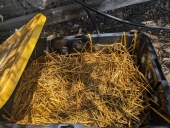
It's my favorite vermicompost bedding. I always keep a bucket of it next to the worm bin, so I can just throw in enough carbon to balance the kitchen scraps with every feeding!