posted 4 months ago
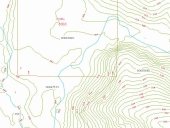
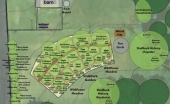
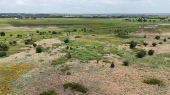
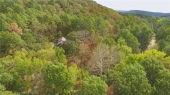
Hi permie friends! We bought an interesting 3-acre property in the Northeast US last year and have been gradually clearing and knocking back invasives to get access to all of it, and I am now getting into the design stages for a future food forest. The plan is to primarily use parts of the open pasture and existing woodland edge for most of this, even though that area is a little farther from the house, because it has quite a few advantages for farming and for our use of the rest of the yard.
However, the property is, on the whole, nearly riparian, though the creek beds are intermittent and we wouldn't be able to pump them. There is a small catchment pond, but out near the road on the other side of the property, so it's nice but we aren't planning to irrigate from it right now. Irrigation will instead probably either run off the house and barn (more expensive, not ideal to waste treated water for a garden, but it can work if needed), or mostly we'll collect rainwater in a couple locations and pump it out to the beds.
The pasture area should be high enough in elevation to grow in, and the slope is extremely gentle, so runoff isn't bad, aside from the compaction. But I think it is really only a few feet above the water table height during the wettest parts of the spring and early summer, maybe 4-5 feet at most? We've also been doing soil mapping and testing, and about half of the pasture has also already been partly amended and it's not terrible.
But I have two concerns that are making me consider some earthworks like swales in at least two areas. I just don't know if it's really a good idea or worth the trouble. First, some the fruit and nut trees I'm planning to plant do detest wet feet and are documented as being much more prone to disease if waterlogged, so some increased elevation on mounds is recommended for at least some of them. Second, we do have occasional dry spells and droughts; in fact, last fall was so severe that our catchment pond actually went completely dry! — so I don't mind the idea of retaining more water near the planted beds.
We do also meet most of the criteria I've seen for when swales and at least broad, shallowly sloped berms could be useful: gentle grade, pretty compacted soil, pretty high and extremely variable water table, unpredictable rain intensity with climate change (we all have that!), it's already pastureland, and we have some of the equipment on hand for it (we have a subcompact tractor with a backhoe). I've also seen the discussions of how traditional, steep hugelkulture mounds are far too unstable for trees, so I imagine shallow swales for water catchment with broad built-up berms would be best if I do this.
But is this generally worth the trouble in circumstances like ours? Would it make more sense to just build up small, gentle mounds for specific trees that really need it, and otherwise not bother with swales because the land is pretty flat anyway? I am very unsure, and although I've read a small library of books on this subject, they are a bit contradictory. Thanks for any wisdom you can share!!
IMG_9600.jpeg
![[Thumbnail for IMG_9600.jpeg]](/t/373876/a/290529/IMG_9600.jpeg "Filename: IMG_9600.jpeg
Description:")







 2
2