gift
Rocket Mass Heater Plans: Annex 6" L-shaped Bench by Ernie and Erica
will be released to subscribers in: soon!

Syd Smith

+ Follow
since Jun 03, 2026
Merit badge: bb list bbv list
For More
Apples and Likes
Apples
Total received
In last 30 days
5
Forums and Threads

Recent posts by Syd Smith

Oh, and the hazels will definitely get some gentle mounds. These are also all Rutgers varieties, where they thrive, and we're not far from Rutgers, same general climate. Hopefully they'll make it!
3 hours ago

Nancy Reading wrote:I'm too far away from your climate to be really useful, but wish you well! I'm taking it that North is at the top.

Some thoughts:

If things get too congested and shady you can coppice hazel and it will regrow (in my climate) in a couple of years. It's a good way of getting straight poles for craft and plant supports.

I thought pawpaw needed it shady? Is that as seedlings only or as mature trees?

Exciting that camellia will grow well for you. I'm trying some tea camellia outside on raised beds. I'm hoping that will keep them dry enough that they will survive well for me - wind blowing off the leaves (and rocking the plants) over winter tends to be my issue with evergreens.

Had you thought about planting in 'sunscoop' designs to shelter more tender plants and create a bit of a microclimate?

Having something that will crop well in the sun in the early years as the trees get established is a good plan - like strawberries - that spread and form a ground cover but might get shaded out as succession occurs.


The coppicing is a good point, if they don't take off but do survive, or if they start to die back sooner than hoped. I would love some nuts for a while, though! I love hazelnuts, if the squirrels will share any. The Beast is primarily for pollinating all the others, so I do want it to flower; that's why it is west of everything else (we're in the prevailing westerlies). (Slate can also pollinate Raritan. The others don't pollinate each other.)

Pawpaws do best with some shade as sapling (first 1-2 years, really), but then it thrives in sun to part shade. That's why I switched the nitrogen fixers for the pawpaws to the faster growing goumi shrubs, actually, to help shade them when they are young; I'm also prepared to add some shade for the first couple years, like by growing beans over them. The southern corner of that upper plot is also close enough to the white ash to get a little shade during the day, unlike the rest of the plot, which should mostly be in full sun by mid-morning.

And ha! The camellias are my biggest experiment, and I'm honestly prepared for them to fail! Ornamentals can do okay here, but we're right on the edge of the tolerance range for the proper tea plants. I'd just like to try. The rest of these plants should all be pretty hardy in our zone, at least if I can get them established, so the camellia is the only real experiment. It would be fun if they work out! I'm going to give them some gentle planting mounds so they have extra happy drainage.

And yes! My guilds are only sketched out for now, but lots of strawberries and edible bulbs and such. I'm looking forward to experimenting with strawberry varieties.
3 hours ago

Anne Miller wrote:Is your sketch North to South?


Yes, sorry! These are segments of a larger map of the property that I screenshotted to share here, so the scale and compass got cut off. The background is a local Google satellite image and I kept it oriented north towards the top. The tallest trees are on the north sides of each plot.
3 hours ago

Joao Winckler wrote:This is really well thought out, especially the layering. Interested to see how the hazels do in that bottomland setting. I planted a few in similar conditions and they handled the moisture better than expected but took a couple years to really get going. The only thing I'd watch is the spacing between your fruit trees and the nitrogen fixers, mine ended up competing for light more than I planned for once everything hit year three.


Oh thanks for that tip! I was actually worried about the shrub nitrogen fixers being too far away to be as effective as desired, and I've read some really conflicting suggestions about that distance (heck, Gaia's Garden would have me put them RIGHT up against the trees, but I didn't want to do that). The goumi will be large, though those aren't huge varieties, but the false indigo and New Jersey tea should stay smaller and I think they're pretty slow growing. I'll spread them back a bit but maybe not too far?
3 hours ago
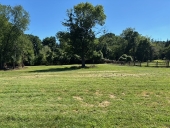
All right, permies, I've been working on this for the past year, and I think my preliminary planting plans are finally coming together. I am located in southeast Pennsylvania, zone 7a, pretty wet climate but late summer/fall can be dry-ish, and in basically bottomland or slightly above it, with pretty flat to gently sloping pastures. I keep tweaking and revising these plans, but it is starting to feel closer to ready for some actual execution! I'm a little nervous sharing it, but I am open to any initial feedback or suggestions, if anyone happens to feel very generous and enjoys looking at permaculture/forest garden designs. Otherwise, this is mostly to mark my own progress in a public place, just for my own goals and accountability!

Some notes on the maps and current plans:
I'll mention that the "zone 1" raised vegetable beds are not shown on the attached map segments; they are on the north side of the barn within a smaller fenced barnyard, closer to the house and to more intensive irrigation options (the barn has a plumbing extension line from the house, and lots of roof for rainwater harvesting). The raised beds will also have more substantial deer and groundhog protection (work in progress!), and I plan for the beds to contain combinations of rotating annuals and beneficial/edible perennials. I'm also planning a small wildflower/insectary patch right next to the raised beds, between the barnyard and our fenced backyard. (There will be no serious gardening in the backyard because our dogs are trouble!)

The attached map sections have only the trees and larger shrubs marked (approx. mature and immature sizes) within the main two planting areas, which will be surrounded by tall deer fences. Light green is for new plantings, dark green for the existing woodland and a few solo trees in the landscape (the marked white ash is old, large, beautiful, treated for borers, and pretty likely to come down within the next ~10 years due to extensive heart rot). The soil in the more northern planting zone on the map (the central pasture) is neutral to mildly basic from past lime amendments, while the southern pasture planting zone is pretty acid (pH 5.5-6), and should be relatively easy to amend so that specific parts of it are a bit more or less acidic for the plants, where necessary. While I hope to get a lot of delicious fruits and nuts that we love to eat and use for juice and cider, I am also seriously prioritizing disease resistance for our local disease pressures as much as possible. (My spouse and I both have demanding full-time jobs, and I want this to be pretty self-maintaining once it's reasonably established!) I'm also planning a rhizome barrier and pergola within the fenced southern planting zone. More detailed guilds/superguilds and foot path plans are now taking shape, but are still mostly lists and general sketches, not shown on these maps.

Other plans: I expect it to take a good 1-2 years to recondition the soil through mulching and cover cropping for these zones, but I might be able to start a round of tree planting sooner, and then mulch around them, just to give the trees a head start. I am prepared to do pest checks, maintenance, composting/mulching, and healthy organic sprays like surround or spot treatments where needed, but my long-term goal is to minimize this work for my own sanity! For irrigation, I'm currently thinking of installing some shallow fishtail swales with small gentle planting mounds downhill for at least some of these zones; the slopes are very gentle, but I think it will still help to reduce irrigation in dry spells. I also plan to add some large rainwater containers to the barn for the central bed and to a roof over some wood chip piles at the southwest corner, only to supplement rainwater in drier years. Note that we do not have farm animals and mostly are not allowed to in our township and zone (and our dogs and barn cats would be extremely delighted to eat small animals that might be allowed, like rabbits, chickens, and quail), so this is basically a plants + wildlife plan.

I've started sketching out some other zones on the maps, but they are more preliminary (two shellnut hickories along the existing woodland edge, where things get a bit swampier, a windbreak hedge on the western border, and areas where we might turn pasture grass over to wildflower/nectary/insectary zones and sitting areas). Those will probably wait another year or two to be mulched and then installed.

Thanks for reading this personal progress report!!
23 hours ago

M Ljin wrote:Oh, I forgot! Mountain mint! They are delicious in teas, very strong taste. A little tough for fresh eating but they aren’t excessively enthusiastic either, and appreciate drier soils.


I've started researching these! It sounds like narrow-leaved mountain mint is especially tasty, but yeah, pretty leathery in texture, and Virginia mountain mint tastes a bit more savory but isn't quite as tough to chew.
1 day ago

M Ljin wrote:I haven’t found mint to be bothersome in a permaculture jungle garden setting. They grow as a ground cover, and I love eating them as greens raw or cooked.

I grow a wild species, water mint, which I love. On land, they are milder tasting than by the water. There are three species of mint nearby—corn mint, water mint, and apple mint. Apple mint is the highly invasive kind that grows four or five feet tall and makes a monoculture. The leaves are very hairy, but good in tea. The other two are well behaved. Corn mint has some incredible, rich, diverse flavors too. They are all quite variable based on conditions. The strongest tasting one I know was some water mint growing in an old beaver marsh.


I've never even heard of corn mint! Are you in Europe?
1 day ago
Mints clearly have a lot of benefits. They taste good, they may repel some pests and attract some friends, and they can be a good mid-high ground cover. But they also do earn their reputation for spreading uncontrollably in many settings!

How well do you find that mints fit into a permaculture forest garden, perhaps under fruit trees, without becoming too much of a nuisance? Thoughts on best placements, where they tend to be both useful and manageable? Favorite varieties? (I'm aware that it's best to mostly keep to one variety within a planted area, since unplanned hybrids don't always taste so good.) I'm also very mindful of the long-term goal of minimal maintenance!
1 day ago

Richard Henry wrote:If the roof pitch is east-west, then I would suggest using a lean to roof.  Placing a winter night/storm cover of metal over foam would allow decent insulation during the coldest periods.  Placing closed cell foam over at least the upper three feet of the wall would be useful and I would double the foam on the north side.  Placing barrels of water in strategic locations could allow a decent thermal buffer.  The barrels along the north wall could serve as supports for a table for holding plants.  As a secondary thought, along the south wall, construct a cold frame below ground level with insulated panels to cover the clear ones similar to the roof.  Design the cold frame to allow placing fresh horse manure in the fall.  The composting of that manure should provide some good heat and against the thermal mass of the south wall of the spring house, would add some longevity to the growing season for curcibars at least.  While the system may not withstand the rigors of a full Pennsylvania winter, I would bet you could harvest till nearly January and restart around March for hardened plants.  Just some thoughts.


Interesting ideas, but I don't think I want to damage the concrete floor or the original stone, so I'm not going to cut out the floor for a cold frame. The floor is designed to be right above the water table level, so anything excavated would just be another flooded pool, anyway. And since we don't plan to remove the high masonry walls, the problem with sun never reaching the floor would still be an issue, even with a lean-to roof and a steeper pitch. I think a springhouse greenhouse is an interesting idea, but it wouldn't work with this specific structure.

Happily, we're already planning an attached greenhouse/conservatory space on the house after a coming renovation, we have six 4x8 raised beds in front of the barn, and I'm converting probably an acre of the property to forest garden plots, so we won't lack for growing space. I think it will probably make more sense to update the springhouse with insulation so it works for storage.
2 days ago

Richard Henry wrote:A quick glance at the roof indicates it is far newer than the original one.  I wonder if the original roof was, perhaps sod?  That would allow for cooler inside temperatures than this chipboard and shingle one.  I would be careful and regularly test any water seeping in as this is shallow enough to allow seepage of surface water.  Any animals around the lawn could be providing bacteria that would not be helpful.  Placing closed cell foam on the outside of the walls would be much less picturesque, but good to keep out surface seepage with associated fungi, bacteria, etc. and maintaining temperatures more in a continuous range. The zone indicates much of NC and the upland region of SC, North Georgia (outside taller mountainous areas) and much of north Alabama.  Current soil temps at 8" down are showing temps in the mid-to upper 70's.  I would not suggest this would work as a decent tornado shelter. That roof is not likely structurally attached to the walls and even then, the cement on what appears to be limestone looks quite old and showing its age.  Does the home have a basement?  I would guess not or it would be wetter than this. In the areas most commonly identified as zone 8a, tornadoes have a bad habit of hiding until they pounce.  It is not a good idea to have a shelter outside the home in such areas, too much exposed travel in potentially deadly conditions.

The vegetation beyond the springhouse in the first picture with the home appears to be heading down into a channel.  That would indicate potential for flooding and if so, the remnants of a flood in a building like this are less than desirable.

It definately looks cool and I really wish it could be easily modified to be worth the upkeep.  Perhaps there are other homes with such structures in the area?  If so, ask the owners if they know what they were used for.  On meditating on the photo of the interior, what if the roof was modified to a greenhouse and then used for starting plants in the spring.  I could really see that as a use since drought would be past the plant starting portion of the season, but the chances of frost past February inside would be minimal.  Any open water on the floor would help to maintain a frost-free growing area with favorable humidity.  Just a wild thought.


The floor floods every time there is heavy rain, for what it's worth. It's kind of built for that. But the masonry needs some restoration for sure. That said, any flooding in the past year that we've been on the property has been very brief, since the catchment pond slows all the water and any additional runoff drains out pretty quickly through the drain pipe to the creek bed.

I have wondered whether it would work to put a well-insulated greenhouse roof on a spring house structure! It would be a combination spring house and walipini, in that case. The internet seems to think this is a bad idea and just wouldn't work, but with the buffering effects of the spring, I'm not sure about that. But I'm honestly not sure it will work in this specific case. We get substantial freezes in Pennsylvania, and at the moment the air temperature gets well below freezing. The masonry walls are also quite high and the roof pitch is east and west, so solar angles would be poor to heat anything but the roof line except in the dead of summer, when you mostly want things cooler.
3 days ago