posted 2 months ago
I prune in summer and winter. One bad time to prune is when the sap is actively rising. Too much life effort running out. I don’t know for sure, but it also seems one more substance to attract and invite pests parasites and diseases.
I’m in agreement with the poster who said “it depends.”
I have posted about the ancient apricot orchard I once had. The trees were so big that all the parts of the trees that could be easily harvested didn’t fruit, and all the fruit were out of reach. Commercial orchards would have knocked them over long ago, but I had small children and that orchard was a magical playground! Besides, the trees were so beautiful, provided wonderful shade and fruit I didn’t want to do that.
Rehabbing an old orchard is a legitimate reason to prune. Think of it as a 3-5 year process
You want the sun light to reach lower down into the tree, because the buds for flower then fruit develop where the sunlight reaches.
You’ll end up removing large branches.
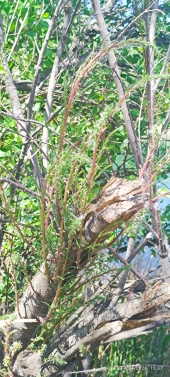
If you prune too much in the winter, then in the spring, you’ll get “water sprouts”. Also called witches’ brooms. Too much sap rising for the number of branches, sprouts and buds to feed
Even if you don’t have the presence of fruit to guide you, wait for summer pruning until after the harvest.
In winter I prune for shape and structure. In the summer after harvest time and before the trees begin sending their sap down for the winter, prune for size, and the other things.
That’s apricots. Apples fruit much later than apricots. I have never had apple trees, so anything I might say would be conjecture. It might have a high degree of accuracy, but it’s not the same as having had decades to study the effects of my efforts.
I would say, learn all you can about plants. What is and where is the meristem. What is the plant’s annual cycle. What stimulates growth and what suppresses it. What plant hormones exist and how do individual species utilize them? How do rooted cuttings differ from seedlings…. And so on. Assume plants are complex. Learn all you can! You need to know what the variables are to make good decisions, decisions that are going to bring about desired results.
And a caveat to make it a little harder: not everyone who puts him or herself forward as knowledgeable is. You need to know as much as possible about the teacher as you do about plants. I have nothing against the master gardener programs and the extension offices, but, do they believe in pesticides and commercial fertilizers, soil amendments drip systems, whatever? What do they consider “mulch”. If they believe other than you do, then they can teach you plant physiology, but probably not the farming you want to do.
Surely there’s an Eastern Wisdom aphorism about the search for the teacher teaching the most valuable lessons.
If not, one is sure to pop up soon.
Happy pruning.
Best luck: satisfaction
Greatest curse, greed




.png)

 1
1